So Long, Moby

4914589824_e1b054ec79_b.jpg

Moby, the van, visits Yosemite’s White Wolf Campground in August 2010.

I’m reading a book right now called “Shop Class as Soulcraft,” by Matthew B. Crawford. It makes a convincing argument that we’ve largely banished what used to be called “the manual arts”–generally speaking, skills developed using tools, making stuff, and fixing stuff–at a large cost in lost competence and career opportunity and, in both tangible and intangible ways, engagement with our world of machines.

There’s a lot more to the book than that (if you want a sample, here’s the original essay upon which it’s based). For instance, it questions some of the essential assumptions of current assumptions about the purpose of educations and the role of people in the economy. But the part that immediately resonates with me is the piece about learning to fix things yourself, and actually doing the fixing.

It’s not that I don’t know how to fix some stuff. I’ve done a reasonable amount of work on my own bicycles and have even (it’s a sensitive enough job I think of it as “even”) overhauled a bottom bracket. Once upon a time I did some of the demolition work on what seemed at the time a very ambitious kitchen remodel. Of course, the part some friends still remember is how long our kitchen was a construction zone, with no ceiling and a nice view right up through the joists to the rafters (we eventually hired folks and got some help from skilled neighbors to finish the job).

For the most part, a complicated fix is a fix that I feel most comfortable handing to someone else, especially when it comes to cars. I’m competent to check the oil (and have changed it once or twice, though, wow, it seems like oil filters are getting harder and harder to reach). I have replaced light bulbs and whole light units. I take pride in having handled my own tire chains in the slush and snow (once–and they stayed on). I know how to jump-start a car. When the Number 1 cylinder on our Toyota Echo started missing on a trip out to California from Chicago with my brother, I was able to follow the mechanic’s explanation of what was wrong (and what was needed to fix it permanently, as opposed to the temporary repair we got that’s still in place) despite his Texas Panhandle accent. But like most of us, I’ve never done a brake job or tuned up a car (is that something that’s still done?) or replaced a belt, much less removed and torn down and rebuilt an engine.

All of that became relevant in the last few weeks when our semi-beloved 1998 Dodge Grand Caravan SE (six-cylinder, 3.3-liter engine), which had performed relatively faithfully despite getting pushed hard for much of its life, suddenly developed a critical illness. For most of its fourteen and a half years and 208,515 miles, the most trouble it had given us was a transmission that balked at long mountain grades. That issue appeared during a drive up to Eugene, Oregon, in 2008, when at 70 mph on a long 6 or 7 percent grade into the town of Mount Shasta, the van suddenly shifted into a lower gear, which led to the engine turning at much higher RPM, which forced me to slow down, which led to the engine shifting into an even lower gear, which forced me to slow down even more. Luckily, I was coming to an exit, got off the highway, and managed to find a garage in town that quickly and cheaply diagnosed the problem via computer: a solenoid inside the transmission was fouled, and since the car worked fine on a test drive, we’d probably be OK (we were, except for one subsequent trip into the Sierra two years later). Aside from that, and the failure of a power steering pump once when I was driving home with a couple other cyclists after a 190-mile ride in the rain, the only real complaint I had with the car was its lousy around-town gas mileage.

But last month, the van suddenly overheated one morning when Kate was driving it to school. We had it towed to the garage that had been taking care of it the last five or six years. I figured that the water pump had finally quit. But the news was worse: a cracked head gasket. Fixing it would require taking the engine apart and installing a new gasket (and hoping that the head hadn’t warped as the result of the overheating that probably cracked the gasket). It would be a big-ticket item to fix–minimum $1,500, probably, and more than we figured the car was worth (though checking now, the Kelley Blue Book price on our wreck is $2,500).

Our first thought was to donate the van to some worthy organization. I like the one up in Marin County that’s working to save the last wild coho salmon stream on our part of the coast. But Kate had another idea. A family at her school needed a car. The mom, Mirian, volunteers a lot, and the dad, Carlos, is a competent and confident mechanic. They came over and took a look at the van, and Carlos thought it would be no sweat to get it running again. He also wasn’t put off by the long list of minor maladies we’d been living with–a cracked windshield, a windshield washer that no longer works, a rear vent window that no longer opens, one pretty significant dent where I backed into a tree, paint peeling from the roof, and the fact the car has its original transmission, which is at double its predicted life. He took in the list of problems one by one and smiled–he’d fix them.

I admit I had a moment, just a moment, where I thought, “Gee, maybe I ought to be able to take this on.” But the truth is–“Shop Class as Soulcraft” notwithstanding–getting this car back on the road would probably be a project that for me would last for years, anyway.

So today, Carlos came with a tow truck and took the van away. I went out and shot pictures of the departure, the end of our Grand Caravan Era. The van, which we nicknamed Moby when we bought it (because we also had a Ford Escort, nicknamed Toby), had made one cross-country trip; Eamon and I drove it to Chicago in June 2004 to help my dad move (we left at 5:30 on a Saturday morning and made it into Chicago at 10:30 Sunday night). I drove it up to Coeur d’Alene, Idaho, back in 2007 with my friend, Pete, so we could test-ride the bike circuit used by the Ironman triathlon there (Pete did the race in 2008 and 2009). The van made more than two dozen trips back and forth to Eugene (1,025 miles round trip) when Thom was at the University of Oregon; we hauled stuff up there for his move-in in 2005 and back down when he graduated in ’08. Kate was driving the van on an excursion to Carrizo Plain back in May 2006 on the trip where she encountered and wound up adopting Scout (aka The Dog); he was initially too weak to get up into the car by himself. The last big trip we took in the van was in August 2010, when we went car camping in the Sierra (including a night in the Yosemite high country, pictured above) and did some extended bushwhacking along some Forest Service roads).

It’s gone, and hopefully it has more miles and adventures ahead for Carlos, Mirian, and their family.

Mudville

section129a.jpg section129.jpg

Two shots from last night’s A’s game. The local nine was overwhelmed by the Detroit Tigers and Justin Verlander, a pitcher who seemed completely in command of the game–though the fans had several little two-out-type rallies to get excited over. I’m in the habit of counting the outs a team has left in a game: 12 when they go to bat in the sixth, nine in the seventh, and so on. I took these shots when the A’s were down to their last four or five outs and trailing 6-0. Most of the crowd seemed to accept that the miracle of the night before, when the Athletics ripped the game away from the Tigers in their very last at bat, probably wasn’t going to be repeated.

After the final out, the crowd booed the Tigers briefly as they began their celebration for the cameras on the infield. But after a few seconds, the whole place started to cheer and chant “Let’s Go Oakland!” That’s what’s happening in the shot below. The players hung out near the home dugout for five, maybe even 10 minutes. I hoped they’d take a lap around the Coliseum, but maybe that would be seen as showing up the Tigers and maybe they were dealing with a disappointment that was much bigger than the fans were going through. One by one, they walked off the field. When we made our way out of the stadium about 20 minutes after the game, a lot of people were still lingering, apparently trying to hang on to the last glimmer of a season that surprised and pleased just about every fan who made it to the ballpark this year. As we left, a couple of the A’s drummers were giving a final spirited performance before the Coliseum is locked to baseball for the winter, the infield is sodded over, and football takes over for the rest of the year.

section129b.jpg

Cat at Work

glovecat092912.jpg

I recently heard a story on NPR about how Berliners use lampposts as “virtual totem poles of information.” In some parts of the city, the posts are covered by layer after layer of flyers and personal announcements. One that attracted the reporter’s attention said, “A HORRIBLE ACCIDENT HAS HAPPENED.” It turned out a woman had lost one of her favorite stiletto shoes. A guy who collects samples of the Berlin notices describes them as affording “a deep insight of the soul of the city. These are real treasures that need to be documented, because it’s part of our everyday life culture.”

There are places in Berkeley (and elsewhere nearby) where lampposts and telephone poles and have been converted into conduits of information (or requests for information). Notices reporting yard sales and lost pets are the most common. Sometimes the inquiries are more unusual: a guy looking for a lost belt buckle, a neighbor berating the thief who broke into their car. Occasionally the postings become more elaborate. The person who lectured the break-in artist, for instance, augmented the note with the charger for a flashlight that had been stolen.

Pictured here is a uniquely elaborate example of the Berkeley street notice, over on Sonoma Avenue. The sign reads: “Bentley, our cat, loves to hunt, and brings us garden gloves he finds. Please take those you own with our apologies.” The best part is the improvised mini-clothesline with the stray gloves pinned to it.

glovecat092912a.jpg

Looks Like Home

sfoapproach091112.jpg

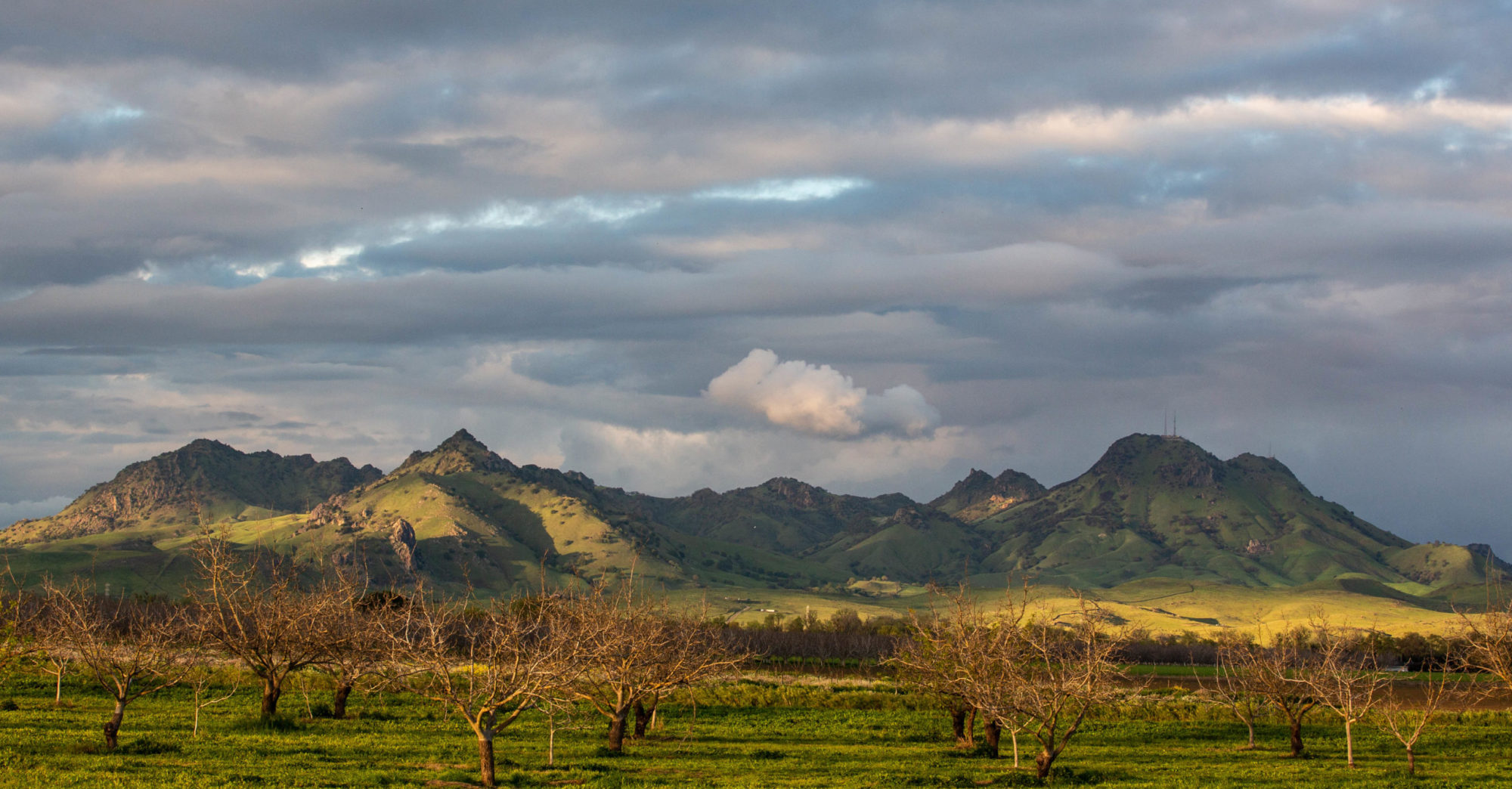
As noted often before, my Number 1 favorite activity during a plane flight is staring out the window at what’s below. My Number 2 favorite activity is taking pictures of whatever it is. Above is a shot from Tuesday evening, as we approached San Francisco International Airport on our flight home from Chicago. This shot looks north across Sunol Regional Wilderness to San Antonio Reservoir (one of the many reservoirs in the San Francisco water system). I love the light on the contours of this landscape. (The air? I believe it was smoky from fires we’ve been having in Northern California, though I never followed up on that to figure out where the closes fires were.)

Your Friendly Neighborhood Low-Flying Radiation-Detecting Helicopter

Helicopters circling over a local news event: That’s just one of those noises you get used to in our modern urban soundscape. When you hear the sound of choppers orbiting over some downtown or campus or some random intersection, you know a protest is going on or maybe a fire or maybe someone’s spotted a picturesque car crash.

This morning’s helicopter visit is different. Starting sometime in the groggy hour before 8 a.m., I started to hear a helicopter nearby. It would pass, then return. It sounded like it was flying low. Once I was up and attending to the morning’s first ritual, making coffee, I heard the helicopter coming back and went out and took a look. It looked like it was only about 500 feet up, if that, and it was not orbiting or following anything at that height.

I remembered seeing an article somewhere about some government agency taking radiation measurements over parts of the Bay Area. This helicopter must be part of that whole thing, I thought. After the chopper passed, I went in and tried to find some information.

The summary, by way of the excellent Oakland North blog: “Some government agency” is the Department of Homeland Security’s Nuclear Detection Office and the National Nuclear Security Administration. Despite what I say in the video above, the helicopter is a Bell 412, and it’s outfitted with equipment to measure background radiation levels in the area. The stated purpose: to assist research and development on airborne radiation detection systems. (More on the chopper(s) at Berkeleyside: Low-flying helicopters over Berkeley.)

Ruminants Among Us

deerscat082312.jpg

Yes, that up there is common deer poop, left right next to a manzanita bush in our front yard. Or so I believe from previous experience in wilder parts of the country. I can’t think of another animal in our parts that would leave scat that looks quite like this. More circumstantial evidence: a deer hoof print in our next-door neighbor’s front-yard garden, which contains lots of roses, reputedly a favorite food of our semi-urban deer.

Joking aside: the deer have moved in. There’s not enough cover in our yard for them to stay full time, but I’ve heard of places within three or four blocks where deer families have taken up residence. I don’t object, though they are larger than our average wild neighbor and the thing that sometimes worries me about them is scaring one at night and getting run over. Hasn’t happened yet, though.

Carved in Stone: Epitaphs, Actual and Proposed

With my dad’s recent passing, and having made several (unrelated, except for my mood) recent visits to Chicago cemeteries, I’ve been thinking about epitaphs. Webster’s defines epitaph as “1. an inscription on or at a tomb or a grave in memory of the one buried there. 2.: a brief statement commemorating or epitomizing a deceased person or something past.”

Most of what’s carved on graveyard monuments is pretty simple: names, dates, and relationships. Beyond that, most of the common people buy at most a brief fragment of a sentiment. In Catholic cemeteries, I’ve seen a lot of “My Jesus Mercy.” On my dad’s parents’ grave, In largely Scandinavian-American (and Lutheran) ground, the message is “Christ My Hope.”

But except for the expense involved–I think we’re paying $150 to have “2012” carved on my dad’s headstone–I think a secular message might be reflect more the concerns of today’s future deceased Americans. I’m thinking of phrases that reflect the preoccupations of most of us for most of our waking life: Phrases like:

Has anyone seen my keys?

Do you mind getting me another beer?

It’s time to get up already?

Turn here. No–here!

Have change for a 20?

Hey–there’s no toilet paper in here!

Sorry I’m late–traffic was terrible!

I meant to get in touch.

Don’t blame me.

What time is it?

Yeah–I’ll send that check tomorrow.

Later–we’ll discuss it later.

For Dad: Three Readings

“…When I look behind,
as I am compelled to look
before I can gather strength
to proceed on my journey,
I see the milestones dwindling
toward the horizon
and the slow fires trailing
from the abandoned camp-sites,
over which scavenger angels
wheel on heavy wings.
Oh, I have made myself a tribe
out of my true affections,
and my tribe is scattered!
How shall the heart be reconciled
to its feast of losses?
In a rising wind
the manic dust of my friends,
those who fell along the way,
bitterly stings my face.
Yet I turn, I turn,
exulting somewhat,
with my will intact to go
wherever I need to go,
and every stone on the road
precious to me. …”

Stanley Kunitz

* * *

“I sauntered about from rock to rock, from grove to grove, from stream to stream, and whenever I met a new plant I would sit down beside it for a minute or a day, to make its acquaintance, hear what it had to tell. I asked the boulders where they had been and whither they were going, and when night found me, there I camped. I took no more heed to save time or to make haste than did the trees or the stars. This is true freedom, a good, practical sort of immortality.”

John Muir

* * *
“The spotted hawk swoops by and accuses me—he complains of my gab and my loitering.

I too am not a bit tamed—I too am untranslatable;
I sound my barbaric yawp over the roofs of the world.

The last scud of day holds back for me;
It flings my likeness after the rest, and true as any, on the shadow’d wilds;
It coaxes me to the vapor and the dusk.

I depart as air—I shake my white locks at the runaway sun;
I effuse my flesh in eddies, and drift it in lacy jags.

I bequeathe myself to the dirt, to grow from the grass I love;
If you want me again, look for me under your boot-soles.

You will hardly know who I am, or what I mean;
But I shall be good health to you nevertheless,
And filter and fibre your blood.

Failing to fetch me at first, keep encouraged;
Missing me one place, search another;
I stop somewhere, waiting for you.”

Walt Whitman

Red Tails, Berkeley Hills Edition

hawk072012.jpg

We went for an afternoon hike up on the Seaview Trail in the Berkeley Hills. It was hot up there for the dog, but it was apparently perfect flying weather for red-tailed hawks. We saw a couple of them as we got up onto the ridge, apparently young one without the darker adult plumage. At the top of the ridge, another one appeared–that’s the picture above. And when we were lower down, returning to the car on the Quarry Trail, what appeared to me to be an adult began circling close by. The pictures aren’t National Geographic quality, but they give an idea of the intricacy of the plumage, and I love the translucence of the feathers. What beautiful birds.