Road Blog: Butte to Spearfish

i90montana.jpg

The charm and allure of travel: visiting new places, seeing new things, meeting new people, and perhaps choosing not to eat at a chain or “American cuisine” restaurant when you’re in unfamiliar territory (that assumes of course that you’re motel stop for the night is within hailing distance of that non-chain eatery, but I digress).

Today we hit the road in Butte about half past 8 in the morning and got off the road–the same Interstate 90 on which we’d been pounding our way eastward all day–at about half past 8 in the evening. Our major stop during that 12 hours: the Little Bighorn battlefield, a little more than 60 road miles east and south of Billings. I’d been there before; Eamon and Sakura never had been, but were game.

Much has changed on the battlefield since I visited with my dad in 1988. We were motivated by both having read Evan Connell’s “Son of the Morning Star,” his discursive, wandering appraisal of Custer and the Little Bighorn–both in myth and reality, as far as anyone can get to the “reality” of Yellow Hair’s climactic moment. (The interpretive efforts at the site have become a lot more sophisticated over the past couple of decades, but today I still came across a signboard of recent vintage that said something like, “no one can know Custer’s motives” in the decisions he made before his attack and during the battle itself. One hundred thirty-five years later, and the “what ifs” abound.)

I believe that around the year we visited, 1988 remember, some Lakota or other Native American activists had caused a stir by daring to stage a parallel event and place their own memorial marker on the battle’s anniversary days, June 25 and 26. That was probably not the first time, but it was a prelude to something serious and enduring. I saw several red granite markers on the field–red, one assumes, in contrast to the white marble markers placed in 1890 to mark the locations of where members of Custer’s command had fallen–that noted the location where Lakota and Cheyenne fighters died “defending their homeland and their way of life (see photos below, and click for larger versions). And in an apparent answer to the red stones, several new white headstones have appeared noting the deaths of several of Custer’s Arikara scouts; these stones note the scouts died defending their way of life. (American history: It’s too new to be over.) Beyond the stone wars, there are other signs, too: Native American guides conducting tourists through the battle sites and a beautiful memorial to the tribes present at the battle on both sides and the losses they suffered there (bottom photo).

Anyway, we spent a couple of hours driving and strolling sections of the battlefield. I made my companions wait while I tried to record sound and take pictures and visit just one more thing over there I’ll be right back! When I finally returned to the car, I apologized and said I hope it didn’t seem to be a repeat of a long ago (1988, too) trip to the Antietam battlefield with Eamon and my brother John. Eamon was going on 9 and didn’t quite grasp what was so interesting in the landscape that every 90 seconds or so we had to pull over and start pointing and jabbering. His moment came when we made it to a famous bridge on the battlefield. Eamon climbed up on one of the sides and walked across Antietam Creek while I held my breath–it was a long way down.

After Little Bighorn, we got back on I-90 for the drive southeast into Wyoming (the route I hoped to take, U.S. 212, is closed about 50 miles east of the battlefield because of a big slide). We whirred past Sheridan and Gillette, the distant Devil’s Tower, and within sight of the Black Hills. We decided to call it quits in Spearfish instead of going on to Deadwood: cheaper motel (I got my room for fifty dollars cash paid to a Hungarian tourist. True story), earlier night.

Tomorrow, we’re looking to make Omaha. What’s between here and there?

vincentcharles060111.jpg longroad060111.jpg scouts060111.jpg

warriors060111.jpg

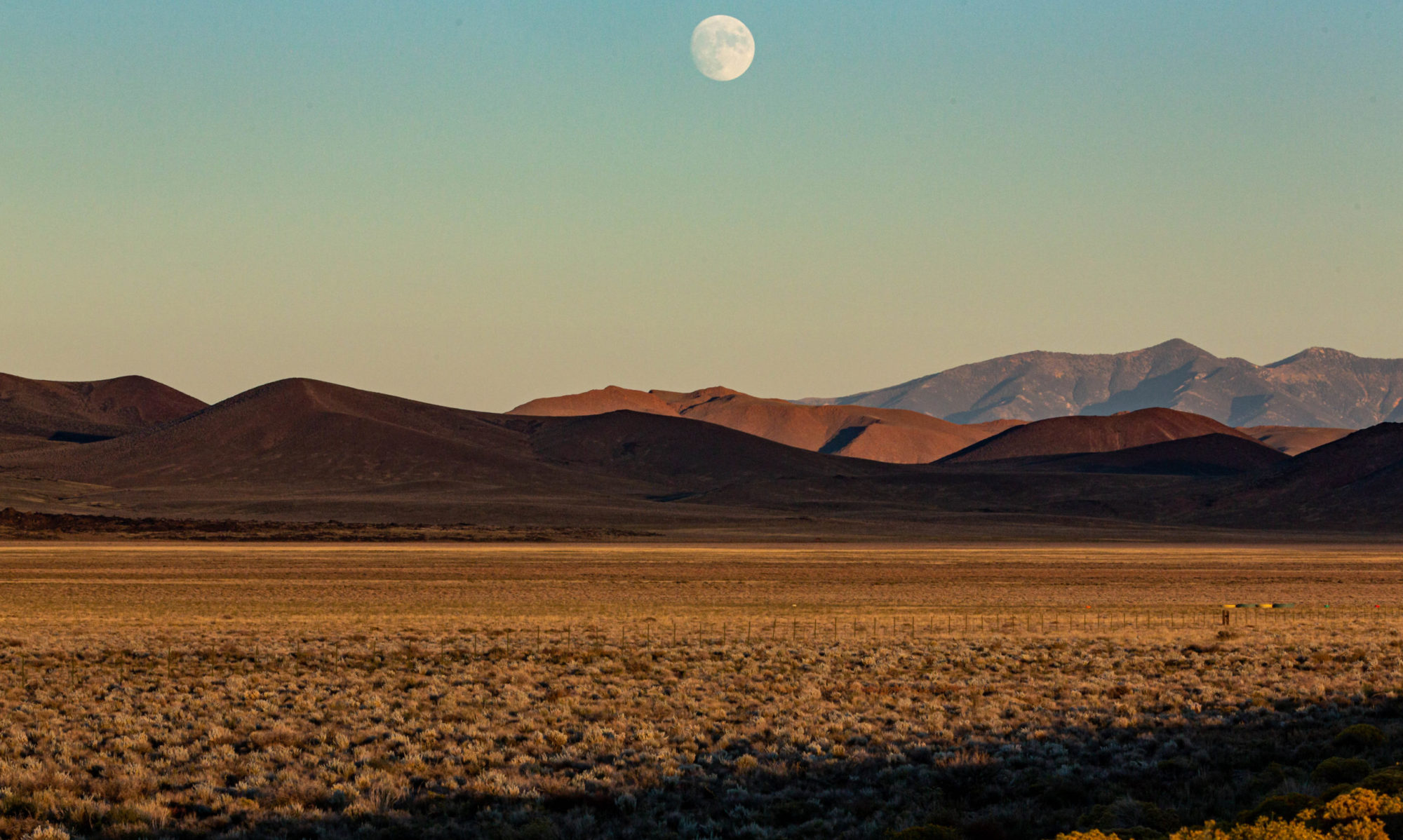
From top: On Interstate 90, looking back from Big Timber to the Absaroka Mountains. Three photo panel from left: a stone marking the death of a civilian member of Custer’s regiment on the Little Bighorn battlefield; a stone marking the death of a Sans Arc Sioux warrior at the southern end of the battlefield, and stones for three Arikara scouts who died fighting with Custer’s command. Bottom: Sculpture at Native American memorial at battlefield, on the northern slope of “Last Stand Hill.” Click for larger images.

Memorial Day

By way of my friend Steve, this piece of World War II reporting from Ernie Pyle: “This One Is Captain Waskow.”

“I was at the foot of the mule trail the night they brought Captain Waskow down. The moon was nearly full, and you could see far up the trail, and even part way across the valley. Soldiers made shadows as they walked.”

The dispatch was written in Italy in 1943,during the battle of San Pietro Infine. The filmmaker John Huston, who was somewhere between making “The Maltese Falcon” and “Treasure of the Sierra Madre,” was there, too, shooting a documentary about the battle. The battle isn’t widely remembered, but I remember seeing the movie in a film class in the mid-70s. From that, and from reading some Ernie Pyle dispatches someone handed me in high school, what I remember was that U.S. troops had been given the job of dislodging German forces from a nearly impregnable strategic position on a mountain. That, and that a lot of men died.

Go read the Captain Waskow piece. You won’t forget it. It makes me reflect on whether any of the wars in our era–and for me, that stretches back to the beginning of the Vietnam War–has produced a voice like Ernie Pyle’s. Someone who served so authentically as the chronicler of soldiers’ lives and deaths for the public back home. I think some great writing has emerged from our later wars–thinking about books like those by Michael Herr (“Dispatches“) and Tim O’Brien (“Going After Cacciato” and all the rest). But I can’t think of the journalist creating a contemporaneous record of the war as it unfolded the way Pyle did.

I think maybe the difference is partly that the nature of our wars have been different–conflicts with either no clearly defined enemy awaiting us on the battlefield (“Global War on Terrorism,” anyone?) or those that were elective affairs (Vietnam, the Gulf War, “Operation Iraqi Freedom”). Maybe the difference is partly due to the fact most Americans living today have grown up in a nation that doesn’t require military service; we give the most strenuous lip service to the importance of sacrifice, but we don’t live it and the reality of it barely touches most of us. Maybe that accounts for a fundamental divide between our soldiers and the men and women sent to report on them (see “When the Bodies Don’t Want to Be Shown“). And maybe the difference is that media and communications have moved far beyond the reporter filing from the front “by wireless”; our news/entertainment outlets create an illusion of immediacy, not to mention lots of light and noise, that can drown out the written word.

Buried at Sea?

OK–it’s easy to figure the reasons someone decided it was a good idea to ditch Osama bin Laden’s corpse at sea. First, there’s the putative sensitity to Muslim tradition: the body of the departed must be put to rest with in a day. Second, you want to avoid a lurid body-viewing spectacle that could inflame opinion, Muslim and non-Muslim alike. Third, you want to avoid creating a mecca for would-be jihadis to visit.

But if the reaction of my mild-mannered and not rabidly political spouse is any indication, getting rid of the body without first providing some very public and very convincing show of proof that the official account of bin Laden’s demise is accurate is a serious mistake. “They just said he was buried at sea,” my not-rabid partner said. “Why would they do that? I want to see some evidence that he’s really dead.”

We don’t live in a world where anyone’s going to be willing to just take the government’s word for something this big and let it go at that. Without a body, someone in the White House better be ready to offer a complete narrative of how this all happened complete with the gory show and tell they want to avoid.

Save the Date

savethedate.jpg

Judgment Day (a.k.a, The Rapture) is May 21, in case you’re interested. At least that’s what these billboards around the Bay Area (this one’s at 17th and Folsom in San Francisco), in English and Spanish, proclaim. Also of note: End of the world is October 21. Which renders the whole NFL labor situation sort of moot.

‘Lybian Women Have Guns’

libyanwomen042611.jpg

San Francisco: Harrison Street between 17th and Mariposa. This is, or convincingly/insistently purports to be, the work of a muralist named Dan Plasma. An attention-getter for sure, especially the legend “Libyan women have guns.” Kind of makes you want to read the graphic novel that this could be the cover for.

Watched in Horror

KTVU’s increasingly loathsome (or maybe just pathetic and strange) “The Ten O’Clock News” offered these items back-to-back tonight:

“Take a look at this surveillance video, and you will understand why a motorcyclist is thankful to be alive. Twenty-five-year-old Zach Perez was rear-ended on a Dallas freeway last month, and he went flying, but managed to roll away from other cars despite being in intense pain. Perez broke two ribs, four vertebrae, and lost his spleen, but he is alive. “

Last month? You mean March? That’s news? Are you kidding me? Where’s his spleen? Well, it’s graphic video, and such an upbeat ending. Unlike our next story.

“A daredevil stunt at a county fair in England went wrong, and a man called ‘The Human Cannonball’ has died. Police in Kent say the 23-year-old man was fired out of the cannon 40 feet into the air, but the safety net failed to open properly and the man fell to earth as the crowd watched in horror. The stunt show has been canceled while authorities investigate.”

Me, too. Watched in horror. No need to investigate.

The Lighter Side of Getting Nailed to a Cross

On Friday night’s “10 O’Clock News” on KTVU, anchor Ken Wayne narrated video showing Christian penitents in Jerusalem bearing crosses through the streets amid throngs of faithful. What did the pictures show? Ken announced that people were re-enacting the “crucification of Jesus Christ.”

A Voice from ’06

Update: About half an hour after I posted this, we had a little earthquake. The U.S. Geological Survey says it was a 3.8 magnitude shake, centered on the San Andreas Fault near the town of Pacifica, about 10 miles or so from where the 1906 quake hit.

A nice feature in the Chronicle marking the 105th anniversary of San Francisco’s signature catastrophe: ’06 Quake Through Eyes of Woman Ahead of Her Time. It’s a glimpse of the disaster from Leonie von Zesch, 23 when the temblor struck and one of the few women anywhere practicing dentistry at the time. (A contemporary newspaper clipping headlined “Woman Wields Forceps” describes her working “night and day” in a field hospital after the quake “battling that arch enemy of comfort–the toothache. [She] … is attractive as she is young.” Further, the article notes, “Race and caste make no difference to this dainty little lady. The dirty foreign boy receives the same gentle treatment as the daughter of a military officer.”)

Von Zesch’s account was part of an autobiography said to have run to thousands of pages, typed on onionskin paper and left among her personal effects when she died in 1944. The Chronicle’s account says von Zesch left her belongings to a niece who stashed them in an attic without looking at them. When she finally did, she discovered the writings, which will be published next month as “Leonie: A Woman Ahead of Her Time” ($19.95 plus shipping and, if you live in California, sales tax).

If the rest of the book is on a par with her description of the earthquake and its aftermath, it ought to be a good read. It’s not clear how long after the fact she wrote her account, but it begins with the scene in the Nob Hill home she shared with her mother rocking violently as china, Mason jars, and a variety of other household goods crash to the floor. “All the while, a seeming eternity of a few minutes, there was an unforgettable humming, grinding sound that not even the walls shut out, the grinding and breaking of myriad things all over the city.” She and her mother ate a cold breakfast–a man from the gas company had already come through the neighborhood to warn against lighting fires–and then “decided to walk downtown to see whether anything had happened to the tall buildings. No one, as yet, seemed to have the remotest idea of the magnitude of the disaster.”

By the time von Zesch and her mother neared Market Street, though, it was clear the city was beginning to burn.

“In spite of the horror, the air was electric with a sort of holiday spirit, either because the disaster was a novel experience which released people from the humdrum of everyday life, or because there were in a mood of thanksgiving and glad to be alive.

“There was something of hysteria in it, too. To Mother and me, everything was fearfully exciting. We did not anticipate personal loss. Our own home on Hyde, now rented, was out of the supposed fire zone; the Sutter place where we lived, of course, would not burn! Why we and thousands of others were so optimistic, I’d like to know. The water mains were broken. People all over town were daring to light gas stoves. The wind was blowing. How could the city fail to burn?”

The Chronicle ran part two of von Zesch’s earthquake reminiscence today. It includes an excellent slideshow of images from 1906.

And while we’re talking about contemporary images and walking through the ruins, a couple of good references came to hand while I was trying to figure out where Dr. von Zesch and her mother lived (she mentions Sutter and Leavenworth, and the ruined Granada Hotel nearby; I can’t get any closer than that, and a rebuilt Granada Hotel, guaranteed at its opening in 1908 to be fireproof, is at that corner today.

Below is a film discovered by way of the Internet Archive. It’s a 1905 streetcar trip down Market Street; the Ferry Building is the structure way down the street in the distance. What’s most arresting here is the life on the street–the mix of streetcars, automobiles, horse carts, pedestrians, and the random cyclist.

That’s an 11-minute tour through the heart of downtown. For contrast, here’s a snippet of some of the same area of Market Street (note the tower of the Call Building to the right) after the earthquake.

And one last graphic take on the 1906 earthquake. The U.S. Geological Survey has published a cool gallery of animations that try to convey the quake’s magnitude and the extent of the destructive shaking in the Bay Area. The image below is linked to an animation of the shaking in San Francisco:

quakeanimation041811.png

No Adverse Comment Here

Here’s a beautiful and troubling piece from The New York Times this past week: “As the Mountaintops Fall, a Coal Town Vanishes.”

The Times’ Dan Barry, one of the most eloquent and sensitive voices in American journalism (and a fine reporter, too), writes about Lindytown, West Virginia, a hamlet in the southern part of the state that has all but vanished because of nearby surface coal mining:

To reach a lost American place, here just a moment ago, follow a thin country road as it unspools across an Appalachian valley’s grimy floor, past a coal operation or two, a church or two, a village called Twilight. Beware of the truck traffic. Watch out for that car-chasing dog.

The people Barry meets recount the disappearance of Lindytown and other communities because of coal companies’ preference for mountaintop removal mining. Among the details that stick out: A subsidiary of Massey Energy, the giant coal concern, bought out the former residents of Lindytown. To get payments that amounted to a pittance for most people, they had to sign an agreement “not to sue, testify against, seek inspection of or ‘make adverse comment’ about coal-mining operations.”

“To make adverse comment about”? It’s not enough to forfeit the right to go to court or to promise to let the company do what it wants without seeking the protection of government regulations. You’d better not say anything mean about the mining, either, if you want to get the money the company is handing out. You can’t blame people who have next to nothing for signing away their rights, but you can’t turn a blind eye, either, to the fact this is more and more the way we do business: You can have your First Amendment and Fourteenth Amendment and all the free speech and due process you want–but we can buy you out and shut you up. Reading the article, which certainly reflects adversely on the changes the coal companies are wreaking on the landscape of Appalachia, you wonder if any of the people the reporter talked to (including one who called the payment he got “hush money”) will suffer for having done so.

Several times, the story mentions the bedrock argument behind the mountaintop removal mining: we city people and the country at large need the coal to provide the unlimited supplies of electricity we take for granted. Of course, that argument doesn’t justify extracting coal (or other energy sources) at any cost. But our conscious choices and unconscious habits do have an impact in a wider world. Me: I’ll switch off my laptop as soon as I hit send on this post.

Salmon: The Slideshow

Well, I might not have caught my first salmon yesterday, but I did get some pictures of the trip out of Moss Landing. Here’s a slideshow I just posted to Flickr: