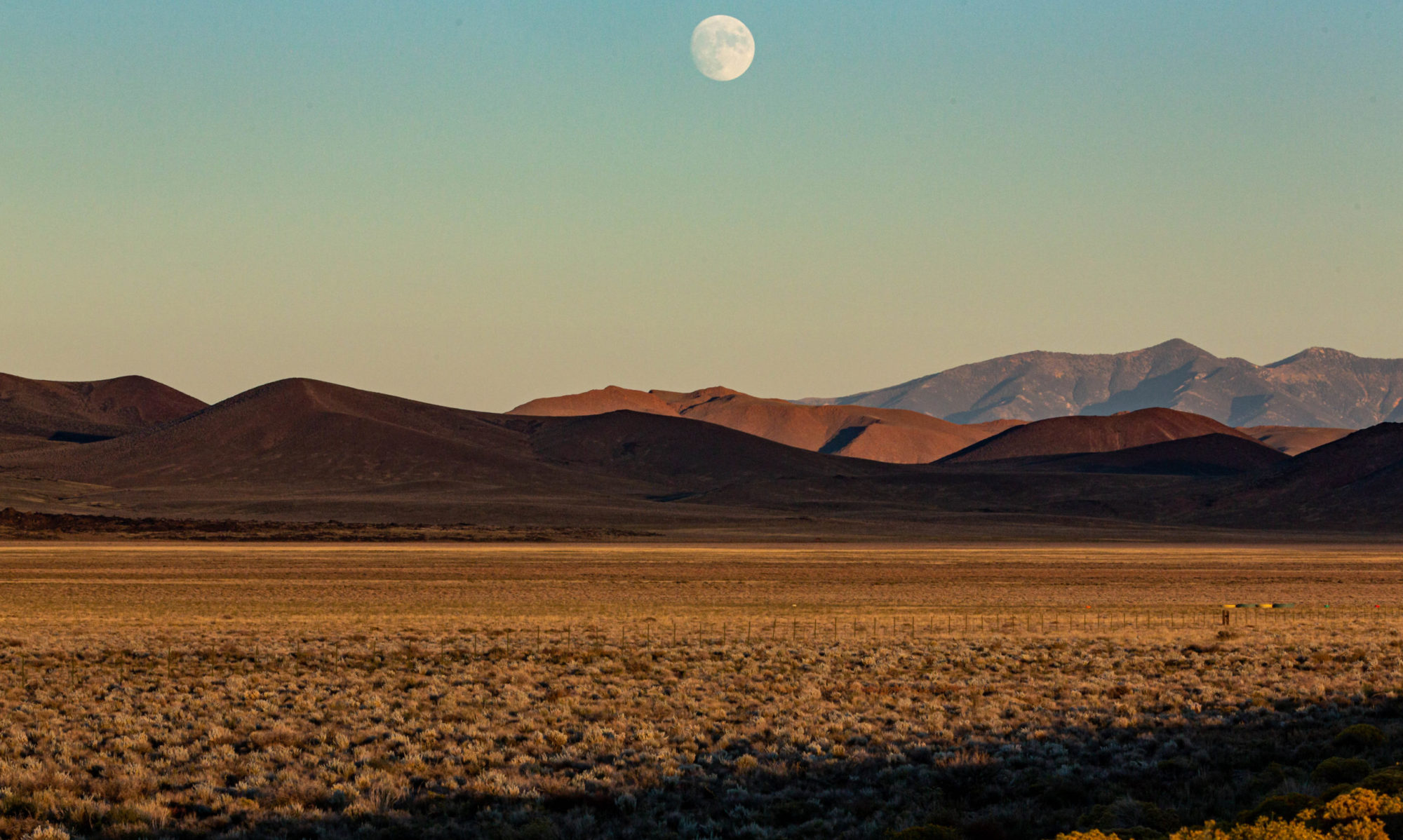
Can you say “happy solstice”? Darkness, short days, cold, and all. At least up north, which is where I’ve experienced every single solstice in my lifetime. In any case, it’s here, this very minute. Come back, sun!
Space Visitors, Again


As I just wrote to my brother John;
“… I wasn’t so lucky with the pictures last night. It
started clouding up about an hour before sunset, and
the space station and ISS were crossing well to the
north (maximum elevation was about 27 degrees). So it
was doubtful they’d be as bright even if they were
visible. At the scheduled time — the shuttle was
supposed to appear at 6:03, the ISS at 6:04 — I
couldn’t see anything, but I released the shutter
anyway. After about 30 seconds, I could see something
moving dimly above the clouds in the northwest. After
the first 60-second shot, I reaimed the camera further
east, and realized there were two objects moving by; I
had missed the first, the shuttle, but both were
clearly visible as they crossed through the north to
the northeast. I tried another 60-second shot and got
both of them, though they don’t look nearly as bright
as they did just looking at them. Looking at the shots
now, there was so much ambient light that the sky
became very washed out, and a shorter exposure might
have shown them better Something to remember for next
time.
“Still — pretty amazing stuff. I was seeing them about
four hours after they had separated; if you assume
they were exactly a minute apart, that means the
distance between them was just under 300 miles (the
distance they travel in 60 seconds at 17,500 mph).
Looks like it will be too cloudy here to see the
shuttle again before it lands.”
Space Visitors
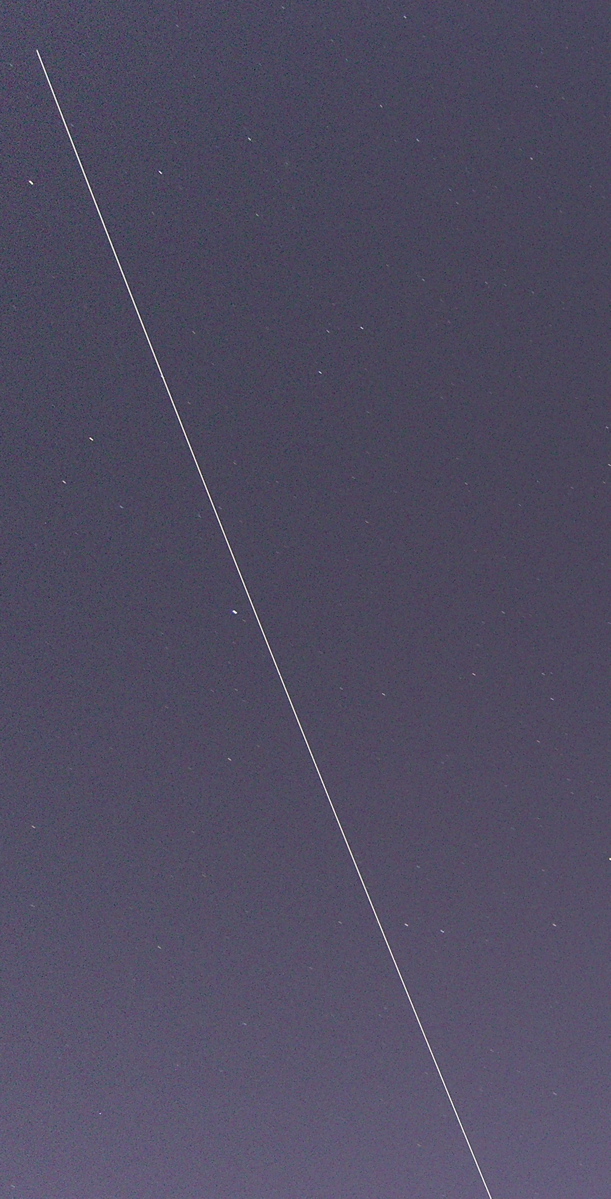
The International Space Station and space shuttle (docked) passing nearly overhead 5:42 p.m. this evening; they moved from southwest (bottom right) to northeast (top left). Forty second time exposure; pretty sure the brighter stars just to the left of the vehicles’ path are part of the great square of Pegasus.
Today’s Frost Report
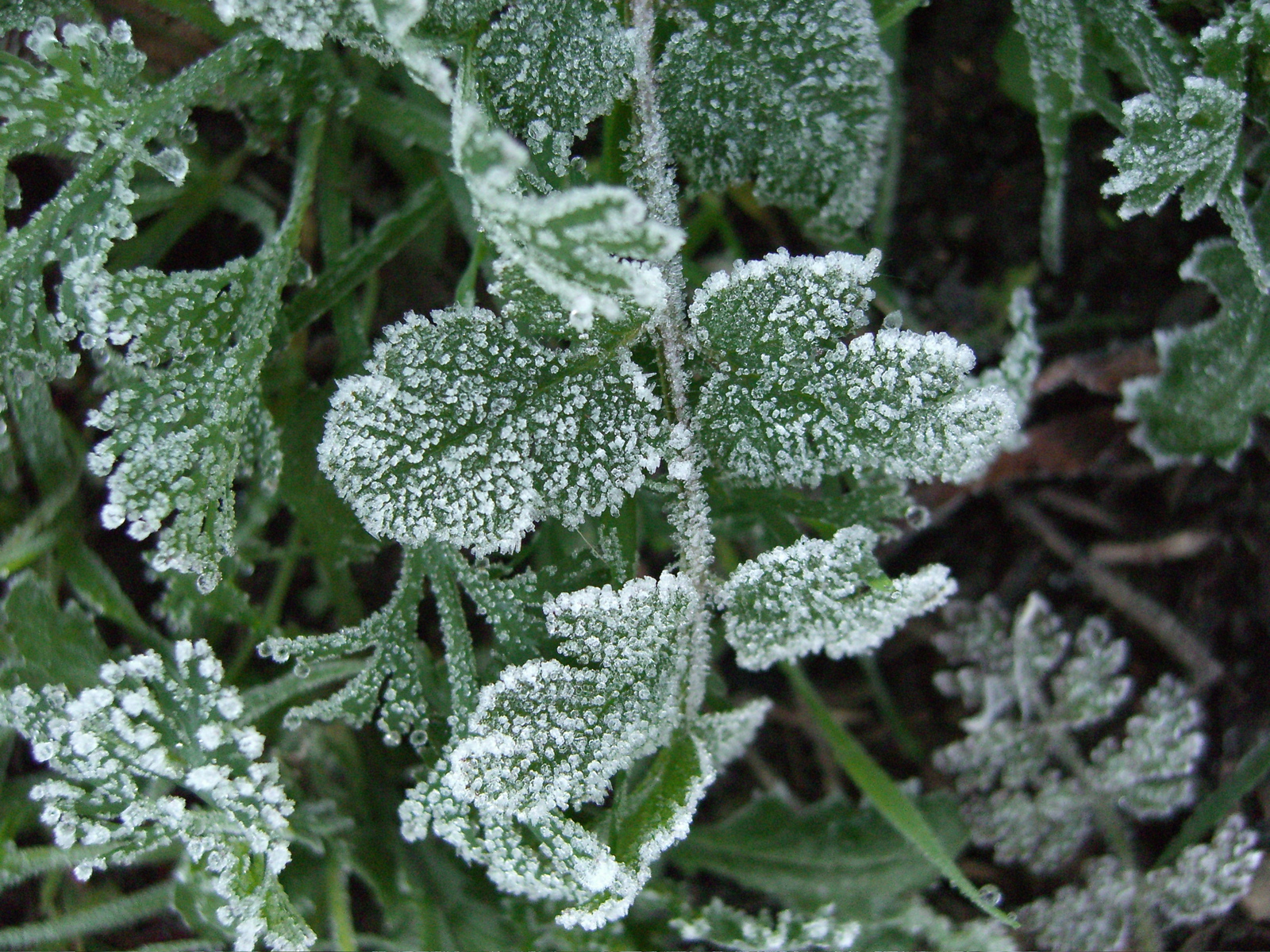
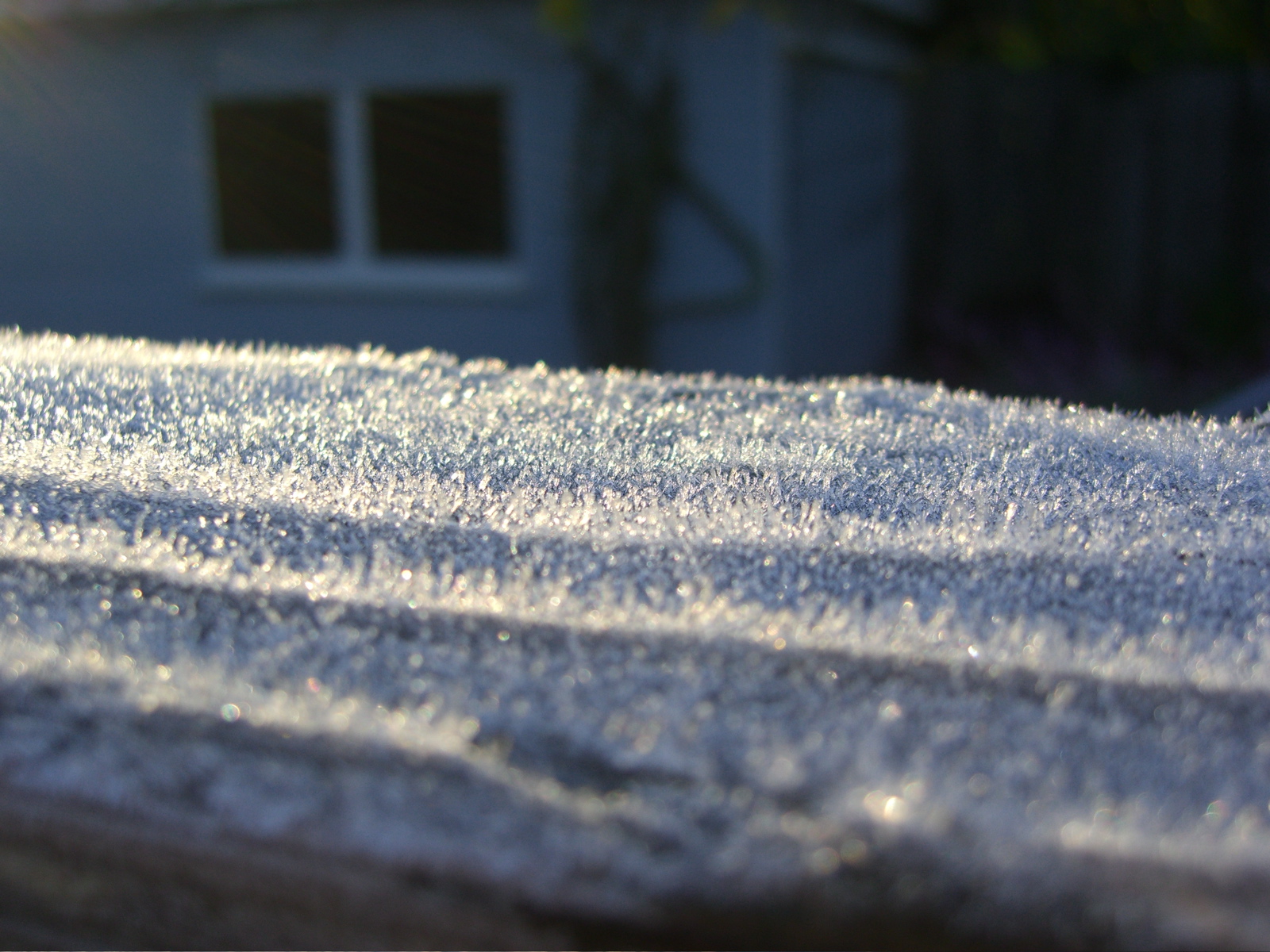
Down to freezing again overnight (yes, I’m conscious that most of the vegetation on which the frost forms here is green, not Northern Hemisphere winter brown). Those little crystals of ice? They’re called spicules (according to the OED, which refers to them as spicula, a spicule is “1. A sharp-pointed or acicular crystal or similar formation … b. esp. A formation of this nature caused by the action of frost”).
Jack Frost Nipping at Your Ankles
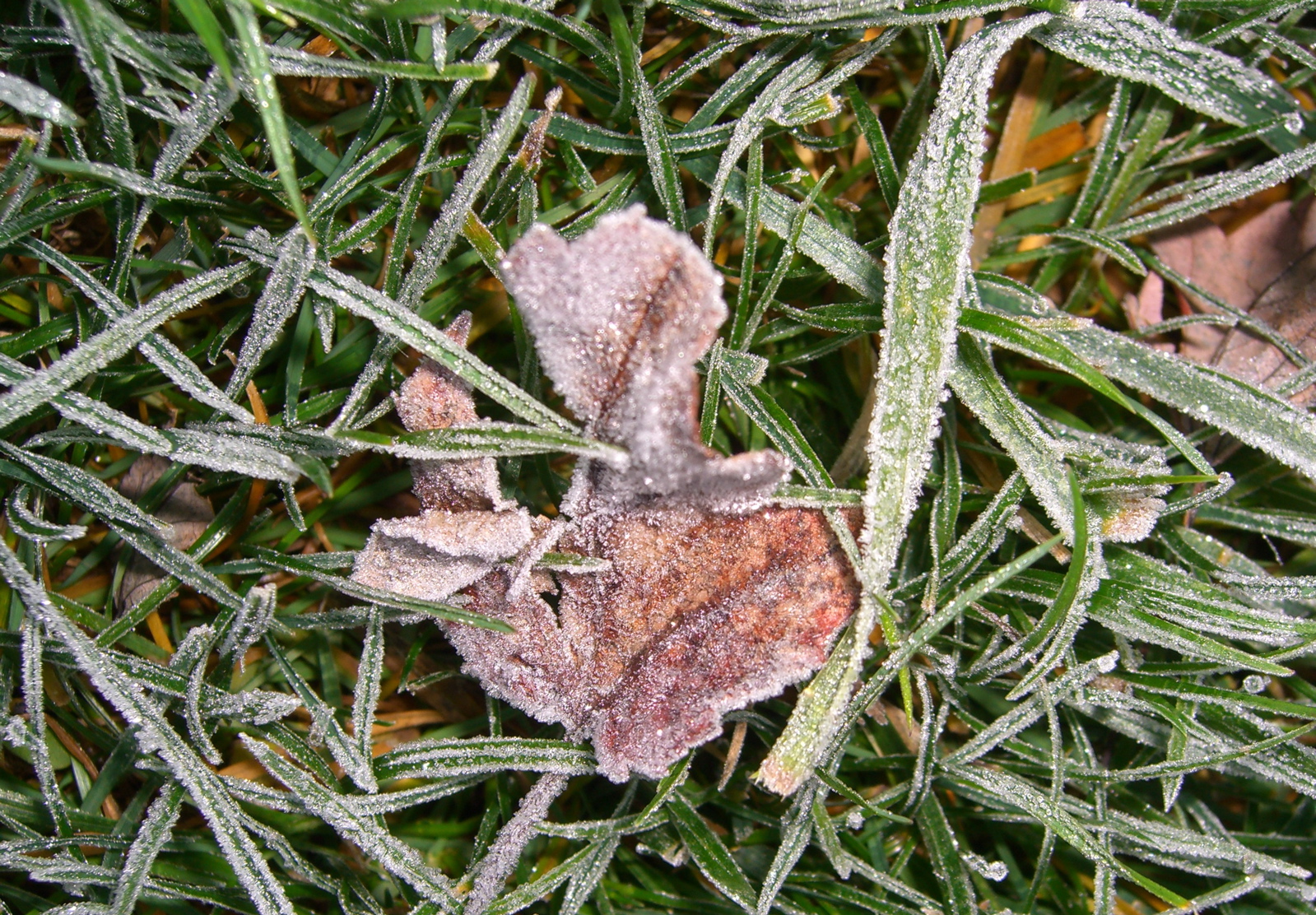
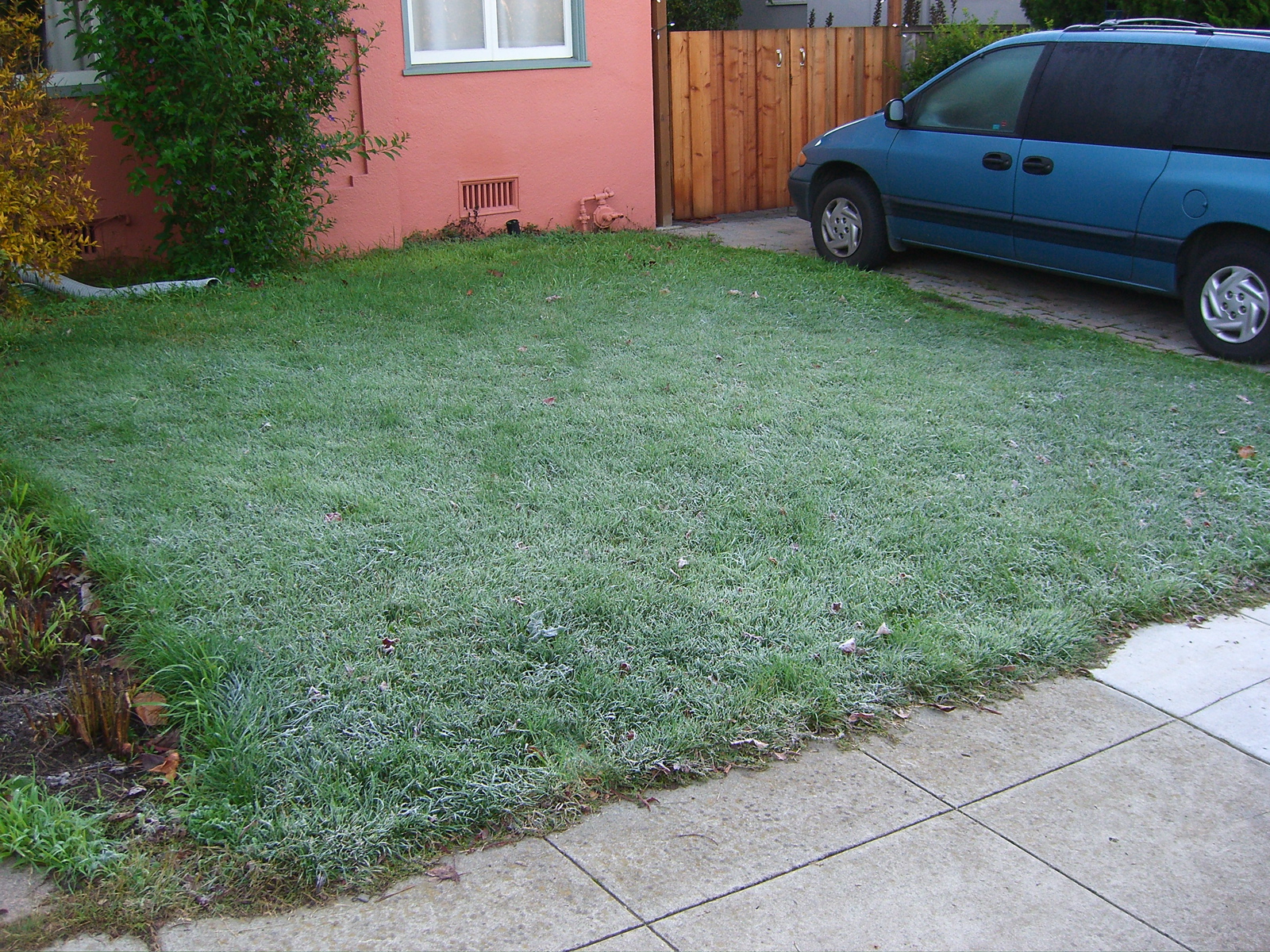
Frost this morning, leading to today’s inquiry: How does frost form if the air temperature is above freezing? Frost is ice, after all, so where does it come from if your reasonably accurate thermometer (ours: on the back porch, six feet above the ground) shows that it’s 38 degrees outside? What accounts for car roofs getting frosted when there’s no other sign of frost in the area?
I never thought about this much growing up in Illinois because when you saw frost, it was usually well below freezing. Here, I started to wonder about it because wintertime frost is common in our relatively mild bayside climes, mostly when the thermometer is showing a temperature five or six degrees or more above freezing.
The short answer (from a couple of just-OK references, here and here) is that frost only forms (it sublimates, from water vapor directly to ice) in the presence of freezing temperatures. The temperature that’s critical in the process is not the air temperature several feet off the ground, where most thermometers are placed, but at the surface where frost is formed. Among the factors that make ground temperatures significantly colder than the air several feet above are radiative cooling–the process by which the ground is surrendering heat energy into the atmosphere in the absence of some input (sunlight, for instance)–and the tendency of cold air to sink. So while it’s 38 degrees at an altitude of six feet, it can be 32 or below on the ground; if there’s sufficient moisture in the air, frost will form.
And the presence of frost on car roofs, etc., when there’s little or no frost nearby? The same general explanation holds; the difference is that exposed metal and glass radiate heat faster and more completely than ground surfaces and thus reach the frost point more quickly. A car roof is an example of a sort of micro-micro-climate, I guess.
[Update, 12/19: I found a second thermometer and measured the temperature at the ground to compare it to the temperature recorded on our indoor-outdoor thermometer, which has a sensor at a height of six feet above the ground. The latter recorded a low this morning of 35 degrees; at the same time, the ground thermometer, which was just half an inch above the ground on one of those Frisbee donut things (so that air could circulate under it and so that it would not be resting directly on the ground), showed a temperature of 27 degrees.]
Weekend Weather Oddment
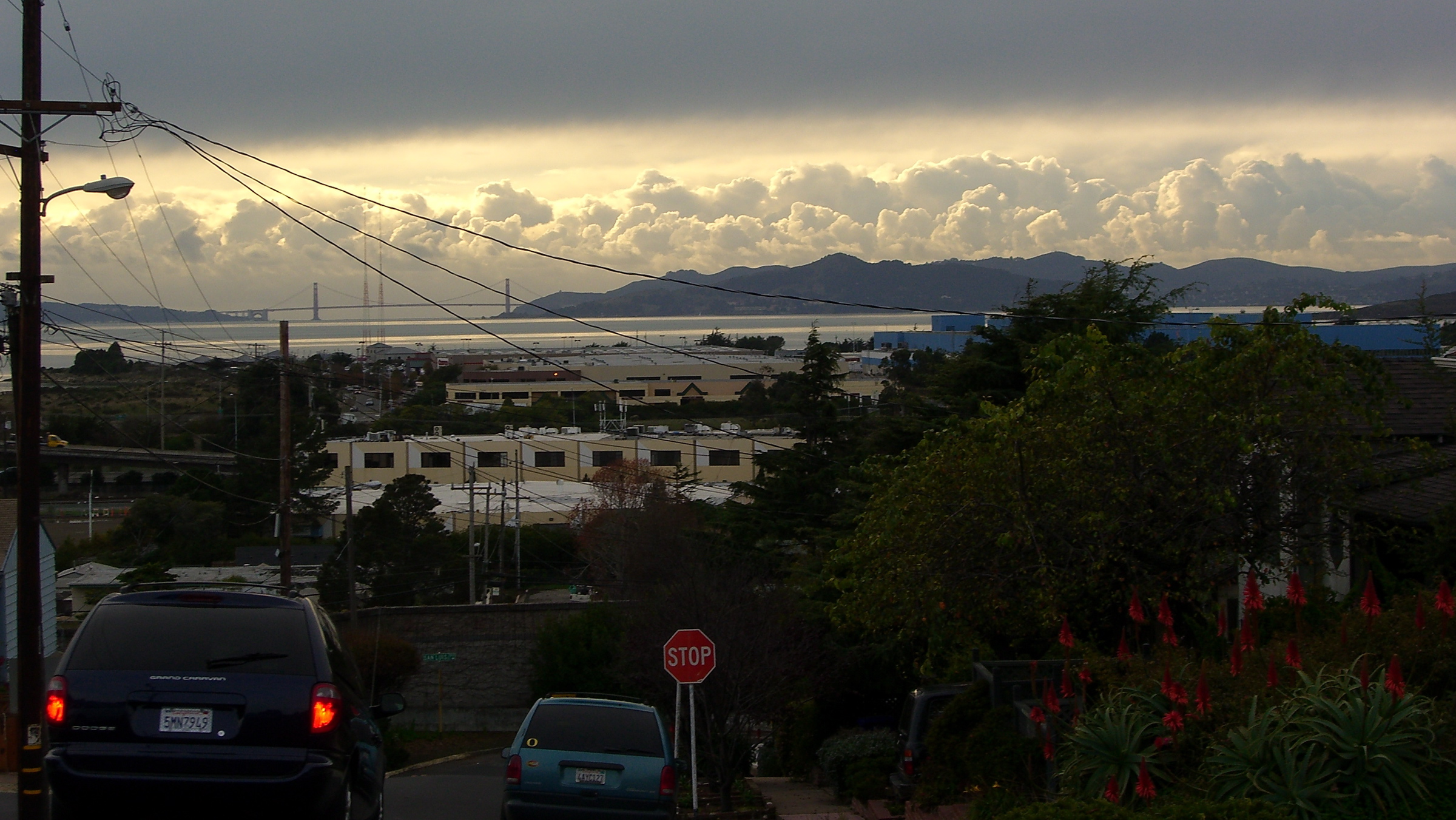
Yesterday, from a hill on Van Fleet Avenue in the Richmond Annex portion of Richmond. All afternoon, towering clouds were visible out over the Pacific, beyond Marin County and San Francisco. A storm was moving south and just brushed the coast below us. From where we were, the lighting was striking all day.
Holiday Audio

(Set in motion by the Beancounter):
The problem with declaring an all-time music list, let alone a Christmas-themed one, is that I just don’t know that much music. Not compared to anyone else I know, certainly. But not knowing a lot about something doesn’t stop me from proceeding on my self-appointed rounds. Here goes (and if you’ve got suggestions, add ’em). In no particular order, and without explanation except where I’ve been overcome by the usual urge.
“Merry Christmas Baby,” Otis Redding (on “The Original Soul Christmas”).
“What Are You Doing New Year’s Eve?” King Curtis (on “The Original Soul Christmas”).
“The Wexford Carol,” Nanci Griffith (on the Chieftains’ “The Bells of Dublin”).
“Christmas Must Be Tonight,” The Band (on “Islands”).
“Christmas in Prison,” John Prine (on “A John Prine Christmas”).
“Oh, What a Beautiful City,” Pete Seeger (on “Traditional Christmas Carols”).
“Cherry Tree Carol,” Joan Baez (on “Joan Baez, Vol. 2”).
“Children Go Where I Send Thee,” Loose Ties (a cut, ,and band, I came across on the Tom Rush website).
“Calling All Angels,” The Wailin’ Jennies (good luck finding this one; they played it on “Prairie Home Companion” earlier this year; worth looking up the show and listening just for that song).
“(What’s So Funny ‘Bout) Peace, Love & Understanding,” Nick Lowe.
I’m sure I’ll think of more. …
[Yes, and here they are:
“Snow,” Jesse Winchester (on “Jesse Winchester”).
“The Rebel Jesus,” Jackson Browne (on “The Bells of Dublin”).
“Three Angels,” Bob Dylan (on “New Morning).
[List in progress. … And the image: Thanks, Lydell! It sets just the right tinny, nasal, annoying tone.]
Today’s Weather
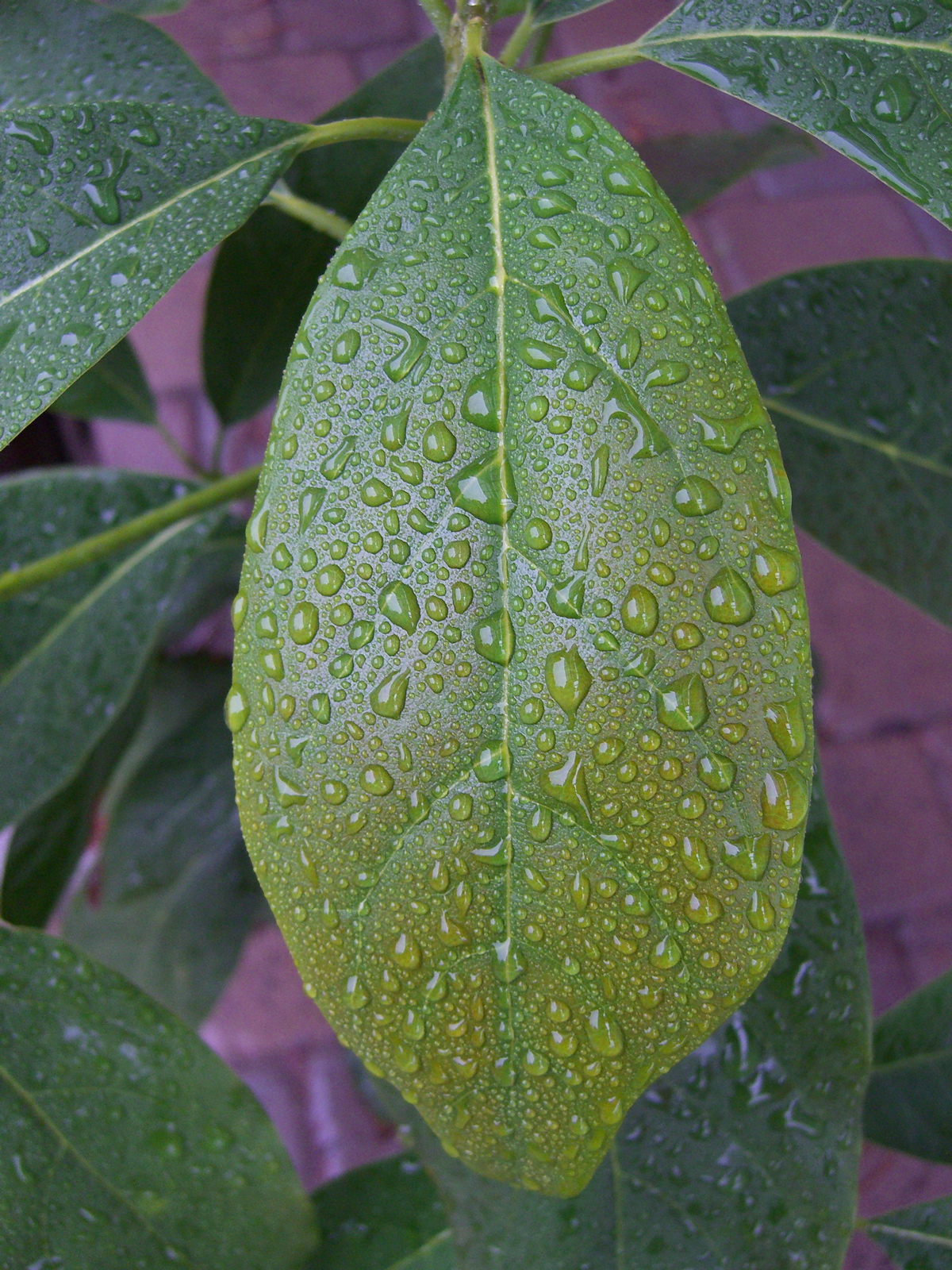
Rainy. Then just drippy.
Technorati Tags: berkeley
Unphotographed Wildlife Moment
On Durant Avenue, a couple blocks west of Telegraph, about an hour before dark. I happened to look up and see a large-ish gray bird sitting on a telephone wire, facing the other way. Pigeon. Pigeon? Maybe too big for that. Looking a little harder, it looked like a little hawk. I crossed the street and looked up. Its chest was reddish, and it had a little slate-colored cap: either a sharp-shinned or a Cooper’s hawk. Cooper’s hawks we’ve had in our neighborhood before: One caught a morning dove in our backyard once; and another time, we were walking up to a nearby restaurant when we noticed feathers floating down from the top of a telephone pole: a Cooper’s hawk taking apart its own evening repast (mourning dove again). After nearly 30 years here, I’m still surprised by the wild things that set up housekeeping right here in the middle of the city.
Technorati Tags: berkeley
Nature vs. Nitwit
Over the last few weeks, Scout (a.k.a. The Dog) seems to have become obsessed with ground squirrels that apparently infest Chavez Park, the place we take him to run. He’ll stop near a fresh burrow and give it the once over; every once in a while, he’ll dive nose first into one and start digging furiously. So far as we can tell, he’s never come close to catching anything; most of the time I figure the squirrels are looking out from some other entrance to their burrows and having a good laugh.
But maybe not.
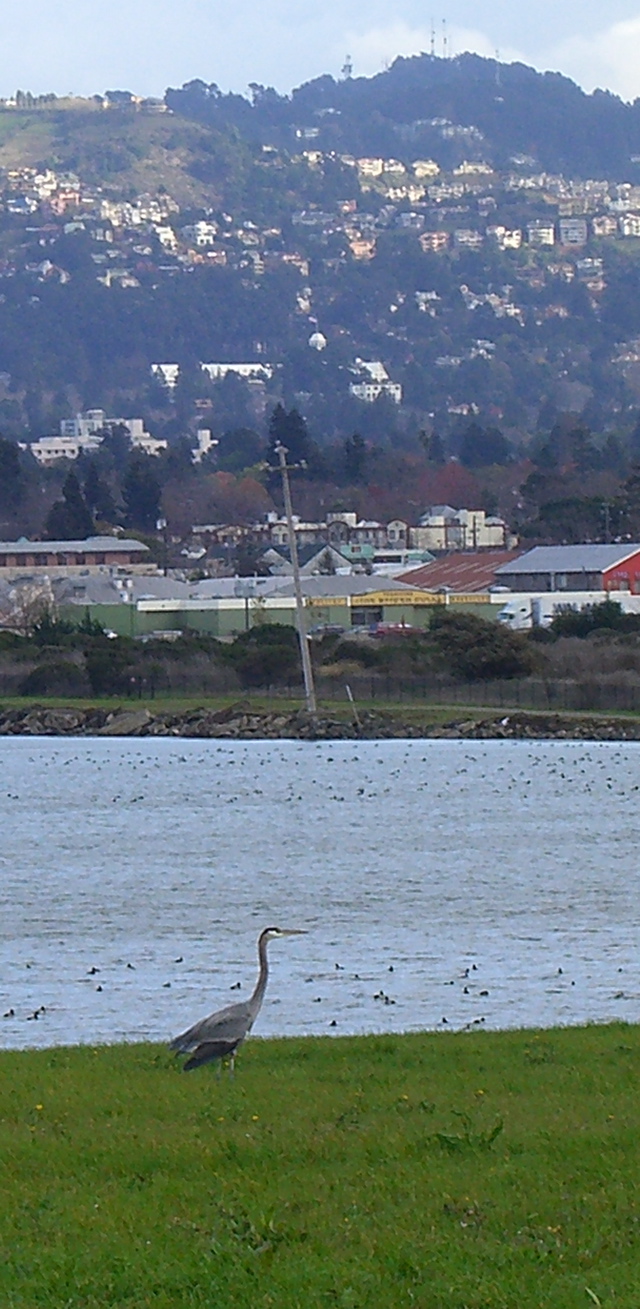
The other day, we saw a great blue heron in the meadow we cross on our way to the off-leash area. Scout was so fixated on squirrel world that even when we were within 100 feet of the bird, which stood about 30 or 36 inches tall, he was oblivious to it. We gave it a wide berth, in any case. When we came back about 40 minutes later, it was still there, though it had moved about 100 yards or so across the grass. It wasn’t until I stopped and watched that I realized it, too, was hunting whatever is in those burrows (Scout still was paying no attention, though I put him on the leash so he wouldn’t go charging after the heron once he spotted it). It struck twice while I watched, plunging its beak into the burrow holes, but it came up with nothing.
After a while, a couple stopped and watched what was going on. The guy said he’d seen herons catch squirrels in the field–impale them on their beaks, then sort of toss them up and swallow them. “A couple of times I’ve seen herons out their with their beaks completely red with blood.” I think the herons have a couple advantages over Scout and his like: they’re stealthier, they strike suddenly, and if they hit their target, there’s no fight.
Not sure if the bird above is the same one we saw the other day or not (didn’t have my camera with me then). It was in the same place, anyway (for a local reference in the picture: that big white building that appears above the telephone pole in the middle distance is the Claremont Hotel, which is probably three miles in a straight line from where we were; the high point in the hills beyond is Vollmer Peak Round Top, about 1,900 1,760 feet above sea level and about six eight miles away).
Technorati Tags: berkeley, california