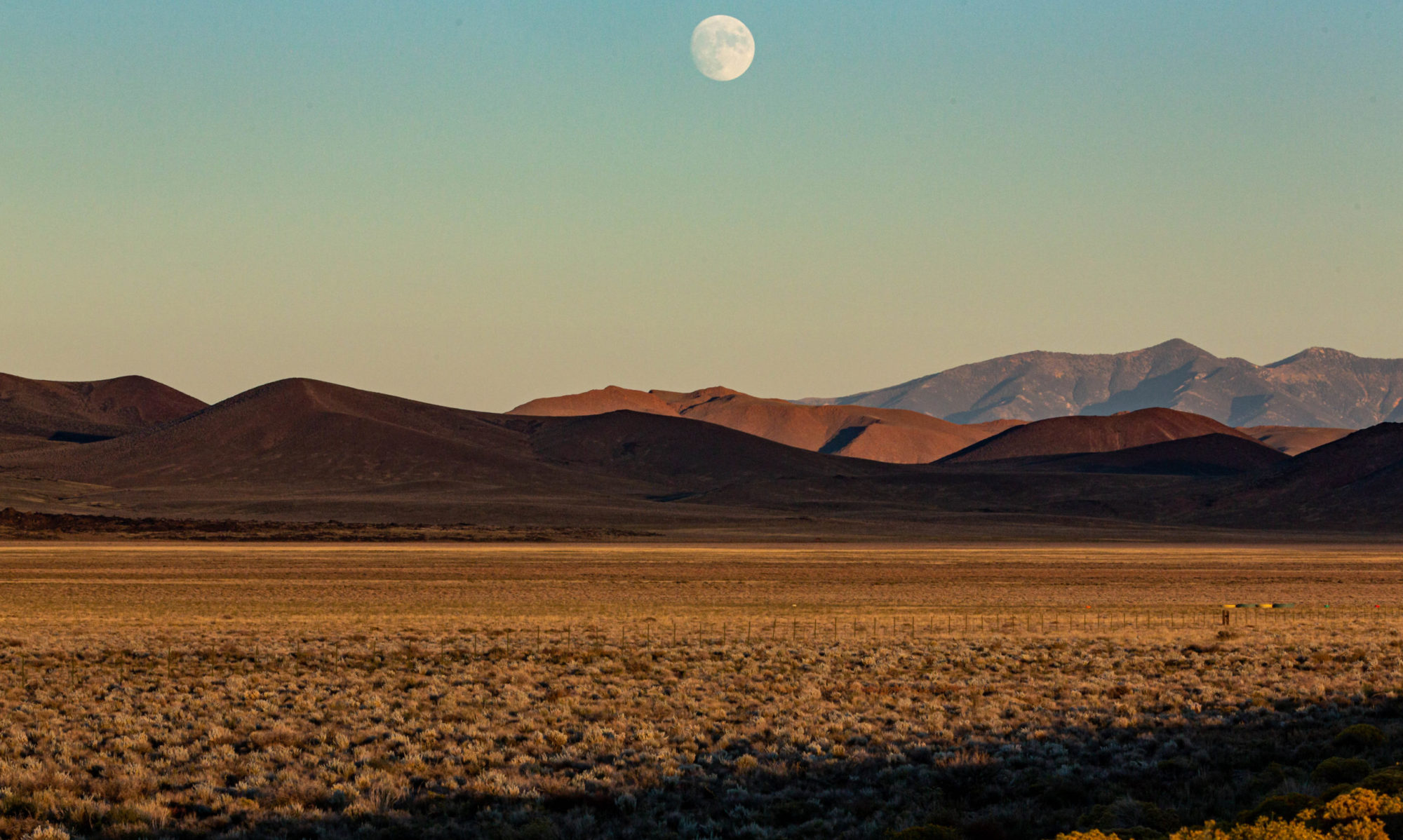
Friday, April Fool’s Day: Day 1 of Birthday weekend, on Big Springs Trail in Tilden Regional Park, high above Berkeley’s urban jungle. The advertised weather for the day had been for a bit of a cool-off after several days of increasingly warm and beautiful days that led to record temperatures in many locations on Thursday. But when The Dog and I hit the trail, the day was warm-plus; not oppressive, but hot in the full sun. The hills are at their best right now: green, grasses profuse, lots of wildflowers, water seeping from hillside springs due to recent heavy rains (as a media type, I know it’ll be a matter of days or a week or two until someone says that this summer/fall fire season could be particularly intense because of the thick spring foliage).
Runner Waved Home
A while back, I wrote about a friend who was sick. Terminally ill, as it turned out.
Peter was a baseball fan, and more particularly a whole-hearted, unabashed, and season-ticket-holding fan of the San Francisco Giants, whether or not they happened to be any good in a given season.
Things were touch and go for Peter last fall, but he reached a “plateau” in his illness. He got to see the Giants win that Sunday game they needed to make the playoffs, then mow down the Braves and Phillies and get into the World Series. Then he got to see the Giants beat the Rangers to become world champions. He wasn’t well during that great run, but I know that he made one or two of the late-season and playoff games.
I talked to Peter the morning after the Giants won to congratulate him. He was clearly thrilled and said, “Well, now I’ll have to live until next season.”
Two or three weeks ago, Kate got a message from one of Peter’s daughters that if friends wanted to see her dad, they’d better come soon. Kate and I spent a couple afternoons sitting with him in his sickroom — his bedroom at his home in North Berkeley. He was getting drugs to ease pain and was mostly knocked out. On one or two occasions he knew we were there.
Last night, the Giants opened the new season against the Dodgers. A little while after the game, Kate got an email from one of Peter’s daughter’s:
“My father died at 6:34pm this evening in the bottom of the sixth inning with a big smile on his face.”
Then It Stopped
This was around the corner, on California Street, late last Wednesday morning. The pre-work routine wraps up with The Dog and I perambulating the neighborhood before I head off across the Bay. Last week was wet, maybe the wettest week of the wet season. Jan Null, a local meteorologist who I like to say wrote the book on San Francisco rain (it was his doctoral dissertation), has developed his own scale for storm intensity–it takes into account factors like the amount of rain and duration of high winds–and he rated the one that came through on Thursday as the strongest of the season.
Then Sunday, all that seemed to stop. It had been dry from midday Saturday, dry enough to go out and mow the lawn before it became unmowable and try to drain the water that had pooled in the crawl space. It drizzled a little tonight, but the weather forecast for the week is dry and warm, up to the 70s by Thursday. I think all the vegetation here is going to explode.
Japan Nukes: Academics, Consultants, Talking Points
Over at my Public Radio news job, the last 10 days or so have been dominated by what’s going on in Japan: an earthquake of incredible power, an unimaginably destructive tsunami, and then a much slower-moving and harder-to-comprehend series of incidents involving the collapse of a major nuclear power plant where safety systems were knocked out by the initial disasters.
What everyone wants to know about that last series of events, of course, is how big a danger the nuclear plant situation poses. Is it, in fact, a disaster? And the answer, despite the parachuted-in American news anchors’ default hyper-urgency, will be a long time coming. Part of the problem is the lack of clarity from the plant’s owners and the Japanese authorities; and part of the problem is a lack of clear reference points. What history is relevant here? Hiroshima and Nagasaki? The atomic powers’ legacy of open-air Cold War nuclear testing? Three-Mile Island? Chernobyl? Or all or none of the above? I don’t have the answers, but as the latest story on the situation from The New York Times makes clear, problems continue at the crippled nuclear plant and radiation concerns in the surrounding area are on the increase:
The government said it was barring all shipments of milk from Fukushima Prefecture and shipments of spinach from Ibaraki Prefecture, after finding new cases of above-normal levels of radioactive elements in milk and several vegetables. Relatively high levels were also found in spinach from Tochigi and Gunma Prefectures to the west, canola from Gunma Prefecture and chrysanthemum greens from Chiba Prefecture, south of Ibaraki.
Why should anyone on this side of the Pacific care about chrysanthemum greens from Chiba Prefecture? There’s no reason, on the thoughtless face of it. Japan’s nukes, Japan’s problem.
But even if that’s your take, the issue becomes more local when we talk about the safety of nuclear plants here and the recent surge in enthusiasm to build more of them. Let me just say I’m agnostic on the question of building more. One big argument for them is that they offer an alternative to carbon-based fuel sources and could be part of the solution to combatting global warming and climate change. And plenty of people feel nuclear power got a bad rap from the 1979 Three Mile Island accident and that as a matter of having abundant sources of secure energy, we need to develop more plants now.
As part of responding to the news this past week or so, we’ve been trying to track down experts who could tell our audience whether the Japanese crisis raises safety concerns about the two working nuclear plants in California–at Diablo Canyon on the south-central coast and San Onofre, between Los Angeles and San Diego. In looking for people who might be knowledgeable but have no axe to grind–avoiding industry sources and people from anti-nuke groups–we arrived at nuclear engineering experts from an important local public university.
In one case, we interviewed someone I’ll call Professor A at some length. The professor’s message was enthusiastically reassuring: No, there are no concerns about safety at California’s power plants. All issues have been addressed–even the recent discovery of a fourth seismic fault near Diablo Canyon. In fact, the endorsement of nuclear power was so hearty that the engineer recording the interview commented that Professor A sounded like “an apologist for the industry.” That was a legitimate concern, and I went back and took a look at the interviewee’s background. It turned out that the professor has consulted for General Electric, a major nuclear plant contractor, and with at least one other industry firm. Not to say that that necessarily colored the professor’s statements. But it’s something that we should have known going in and brought out in the interview, which we wound up killing.
Last thing at work Friday, a colleague had me listen to an interview with another professor from the same distinguished university. She had described this faculty member, Professor B, as sounding very pro-nuclear. And indeed the professor did. When asked a question about the safety of nuclear plants, the professor essentially dismissed it with a counter-question: “How about coal? Have you looked at the numbers on black lung?” (That line sounds good until you think about it a minute. Black lung, of course, afflicts people who extract the fuel from the earth, so a proper comparison would be to the safety of people who mine uranium. Let’s just say uranium mining is no picnic, unless lung cancer is your idea of a picnic. Also, the counter-question simply ignores the real issue, and fear, that radiation presents. It’s clear there will be some long-term effects simply because contamination hangs around so long; but the long-term effects are not at all clear). A quick check showed that Professor B, too, has done consulting work in the energy field–though it’s not at all clear whether that work involved nuclear energy.
The take-away lesson–a basic one, you might think, in a world where corporate money plays such a big role everywhere–is that even when we’re dealing with someone in academia, someone receiving a salary from the public treasury, you need to follow the money and ask about it as a matter of course.
Annals of a March Night
Years ago on a night like this, close and moist, we ran an urgent errand. A boy was arriving on his own fast schedule. I remember that night as I follow the dog, non-urgently, up the block.
Frogs start up a chorus from the nursery, and seconds later a shower sweeps over the neighborhood.
Somewhere nearby the recycling poachers are rummaging through cans and bottles. Someone whistles.
I restrain the dog from snacking on something unmentionable. We walk uphill and down, double back on our route.
A man and a woman cycle past, silent, working slowly up the street, red light trailing them.
An extension cord. Someone has trailed it out a second-floor window, down the front of an apartment building. It angles across a street, vanishes beneath the hood of a car. Running tomorrow’s juice out there, I guess. Something delightful–the way the electric line is taped down on the sidewalk and pavement against careless strollers and passing cars. I
And back home, arriving on my own slow schedule. Thinking about that night long ago, that urgent errand.
Berkeley: Late Winter Weather and Bud News
This morning and tomorrow morning: probably the two coldest mornings of the winter here. It was 34 at our house early today, and looks like we’re headed there again tomorrow. (Here’s the National Weather Service’s summary of record lows set this morning. Berkeley’s all-time low for Feb. 26, recorded at a station on campus, is 34, according to the Western Regional Climate Center’s statistics.
By early afternoon, we were up in the high 40s. Beautiful cumulus-filled sky. I noticed the buds on the maple tree next store just as we got in the car to drive to the South Bay.
Tough Love for Panhandlers, 14th Century Style
We have alluded before in this space to the conundrum of living in a community where — well, where you get hit up for spare change or are otherwise wheedled and baited as part of some impromptu street-based money-raising scheme. We have quoted Walt Whitman’s injunction “give alms to all who ask.” And we have watched as our town and nearby cities have adopted laws–for instance, San Francisco’s “Sit-Lie Ordinance” — that are supposed to address public concerns about getting panhandled.
In researching another topic just now, I found that England’s King Edward III dealt with panhandlers, too. Here’s a section of the Ordinance of Laborers, handed down in 1349 as to deal with the impact of the Black Death that had recently swept the kingdom:
“… Because that many valiant beggars, as long as they may live of begging, do refuse to labor, giving themselves to idleness and vice, and sometimes to theft and other abominations; none upon the said pain of imprisonment, shall, under the color of pity or alms, give anything to such, who are able to labor, or presume to favor them in their idleness, so that thereby they may be compelled to labor for their necessary living.”
To be clear, the law didn’t outlaw begging. It outlawed giving anything to beggars. (I like the phrase “under the color of pity or alms.” Mustn’t give sway to those kinds of feelings or predilections.)
And what could this possibly have to do with the Black Death? you ask. Well, England was facing a severe labor shortage after the plague, and the king was answering demands to find workers. The same proclamation essentially required all able-bodied people under 60 to work; in fact, if someone who was otherwise unemployed was asked to work and refused, they could be thrown in jail; and anyone who was employed was forbidden to leave their position “without reasonable cause or license.” The statute also prohibited laborers, who found themselves in a sellers’ market, from demanding higher wages for their work. That prohibition is said to have become the Common Law precedent for blocking formation of labor unions in the United States up through 1840.
Busman’s Holiday
So on a widely celebrated holiday a couple months ago, I got a special gift from my family: a very cool little audio recorder. This was in recognition, I think, that: 1) I’m a swell guy, 2) my journalistic endeavors now involve working with sound, and 3) that I put this item on my Amazon wish list.
This morning, my little recorder had an on-air debut of sorts. I went up to the Cal baseball double-header yesterday to try to talk to people about the university’s decision to eliminate the team next year. (Digression: The university has deepening budget problems as its state resources dwindle. Tuition has gone up 44 percent over the last three years to make up part of the gap, and the administration wants to reduce the deficit in the intercollegiate athletics program as part of a workable long-term budget. All that makes sense to people. What has made less sense, or at least is much less understood among the Old Blue community, is the process by which UC-Berkeley decided last fall to end baseball, rugby, men’s and women’s gymnastics, and women’s lacrosse, then reinstate all but baseball and men’s gymnastics (for a taste of the frustration with these decisions, check out this post from my KQED colleague Jon Brooks). The politics is complex, and involves both the university’s handling of potential sports donor and its obligations under Title IX, the federal law that prescribes gender equity in education programs. But even if one buys the official rationale, one might feel a certain disconnect from reality when watching the baseball team take the field. It’s ranked 17th in the country and provided an opening-day gift for fans by sweeping its two games against Utah yesterday–taking the nightcap with a four-run rally in fading daylight in the bottom of the ninth. End of digression.)
Where were we? I went up and did some interviews and recorded some game sound at Evans Diamond. Then I came home, fired up the never-used-before sound editor I bought earlier in the day, Hindenburg (this one, not this one). I transferred my audio to the computer, eventually figured out how to edit it, wrote a script that incorporated the sound I’d chose (this was a “cut and script,” a piece in which an anchor reads tracks around soundbites), did a quick edit with one of the other news folks, then uploaded everything to an FTP server to be downloaded for use this morning.
The final product is here (second item in the newscast).
Ephemeral Geyser
Slideshow (34 shots)
Our principal diversion on a cold, drippy Saturday: A water main broke up on McGee Avenue at Buena Avenue, a couple blocks from our house. We were on our way back from a walk with The Dog and saw an unusual amount of water washing down the gutters on Buena and around the corner down California Street and decided to investigate. Just uphill from McGee and Buena, water was pouring through a heaved-up section of pavement. It seemed to be worsening slowly, and after 10 minutes or was fountaining about four feet into the air. We took some pictures, talked to some friends in the neighborhood who were taking in the scene, then walked back home.
As I sat down to look at the pictures, my friend Bruce, who lives a couple doors up from the break, called. He said I needed to get back up there–the water was shooting 80 feet into the air. Kate and I ran back up the street. This was the scene looking up McGee. The water was jetting into the air onto and over a house owned by well-known Berkeley artist David Lance Goines. The volume of water was enough that it caused a flood in his backyard, and he was overheard to say that at least a little water was getting into his home. A couple dozen neighbors gathered to watch the show.
Firefighters on the scene monitored the break while they waited for the East Bay Municipal Utility District, our water provider, to dispatch a crew. One of the firefighters told me they could shut down the flow of water, but wouldn’t as long as it didn’t seem to be a threat; it might help EBMUD diagnose the break if they saw the water flowing, he said. But when the flow broke loose, the firefighters got busy trying to close valves up and down the street. They eventually managed to limit the flow to about a 10-foot column that slopped onto the sidewalk. As soon as they did that, a single EBMUD employee showed up (an hour and 12 minutes after I began taking pictures, by which time the utility had already been alerted). The water guy knew what he was doing. It took him nine minutes to shut down the geyser).
***
Update: After the geyser was shut down, I heard one of the firefighters ask the EBMUD guy, “Do you know how old the main is?” “Yeah, I know–it’s older than you. It’s older than you, and you’d have to be born before 1910 to be older than it.” My friend Bruce, who says his house was built in 1905, said the main must be at least that old. He’s lived there since the late ’70s, and said that when he’d moved in, an older man rooming next door talked about growing up on the block back when the first houses were built there. Buena Avenue was a cow path, Bruce recalled the man saying, and “Farmer McGee,” for whom McGee Avenue is named, used to drive cattle to pasture down to the west.
***
After dark, I went out an took a look at what the EBMUD crew was doing. Bruce and a friend were watching the proceedings. They said there had been an oval-shaped hole in the main not much bigger than two hands held together. That was a pretty impressive show of what water under pressure can do when forced out of a small opening (hydraulic mining, anyone?).
***
I heard one other story about the day: Kate was standing in the gaggle of neighbors that came to watch the geyser. A woman who lives a couple doors down Buena related how she had been out walking her dog when she noticed water bubbling through the pavement in front of David Goines house at Buena and McGee. His car was parked right where the water was percolating up. She knocked on his door and told him he might want to move his car. He did.
Day at the Beach
Below: a slideshow of an afternoon up at Point Reyes (on the Pierce Point Road and at Kehoe Beach, to be more specific). It was utterly gorgeous on the strand, which looked like you could walk it all day and never reach the end. (And by way of explanation, we went out there with our neighbors and friends, Jill and Piero Martinucci, who you see in some of the pictures.)