Lake Night

beach080809.jpg

In the Bay Area this summer, everyone has bemoaned the prolonged presence of the thick marine overcast that keeps the coastal locales cool. And it does seem to have been a little cooler than normal if you’re anywhere along the bayside (inland’s another story). Chicago, too, has had a relatively cool summer; it’s been six weeks or so since the last official 90-degree reading. That will change today — it’s before noon and the temperature is already pushing 90. The weather service has issued heat advisories from Chicago south and severe thunderstorm warnings from Chicago north.

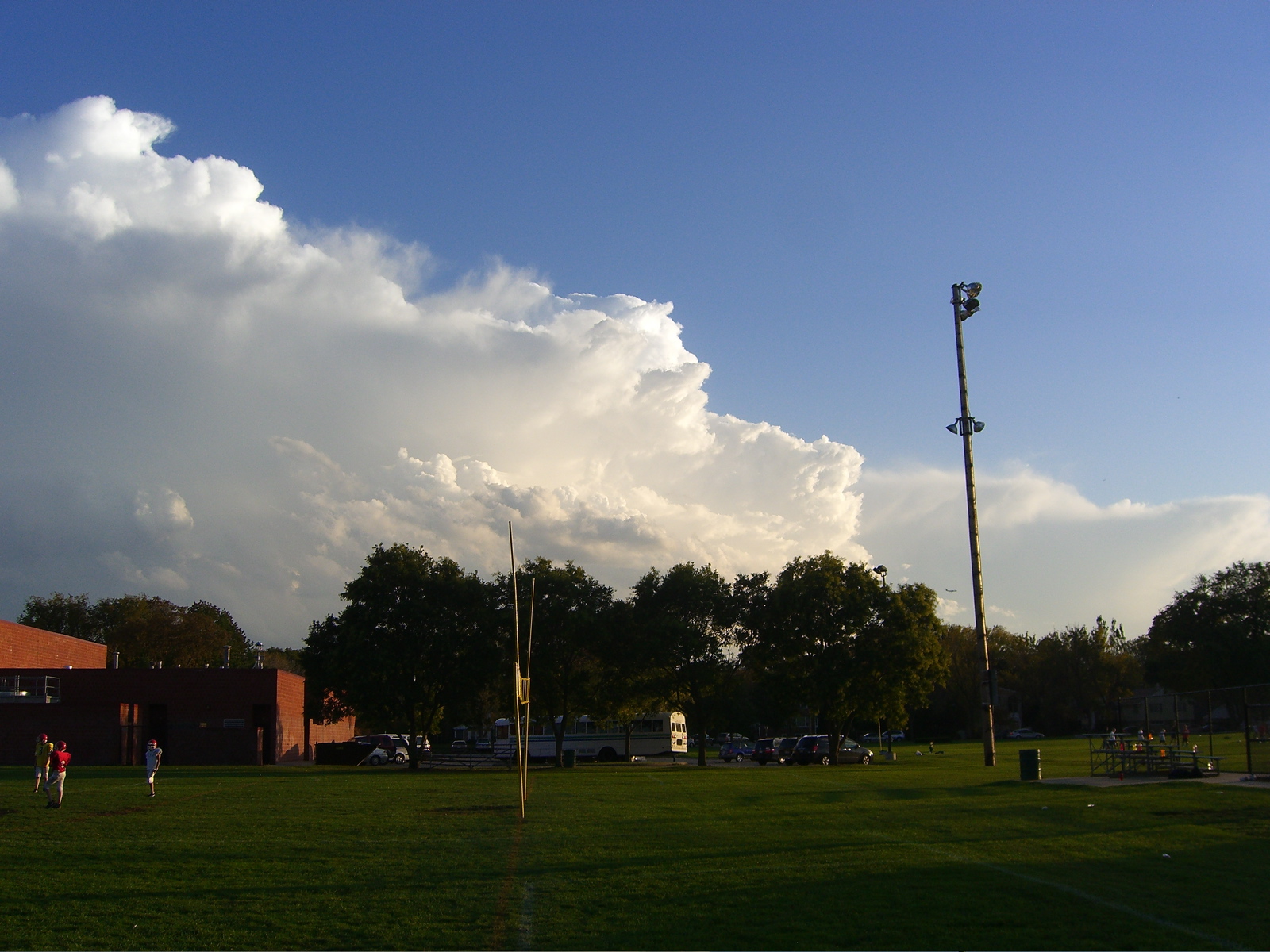
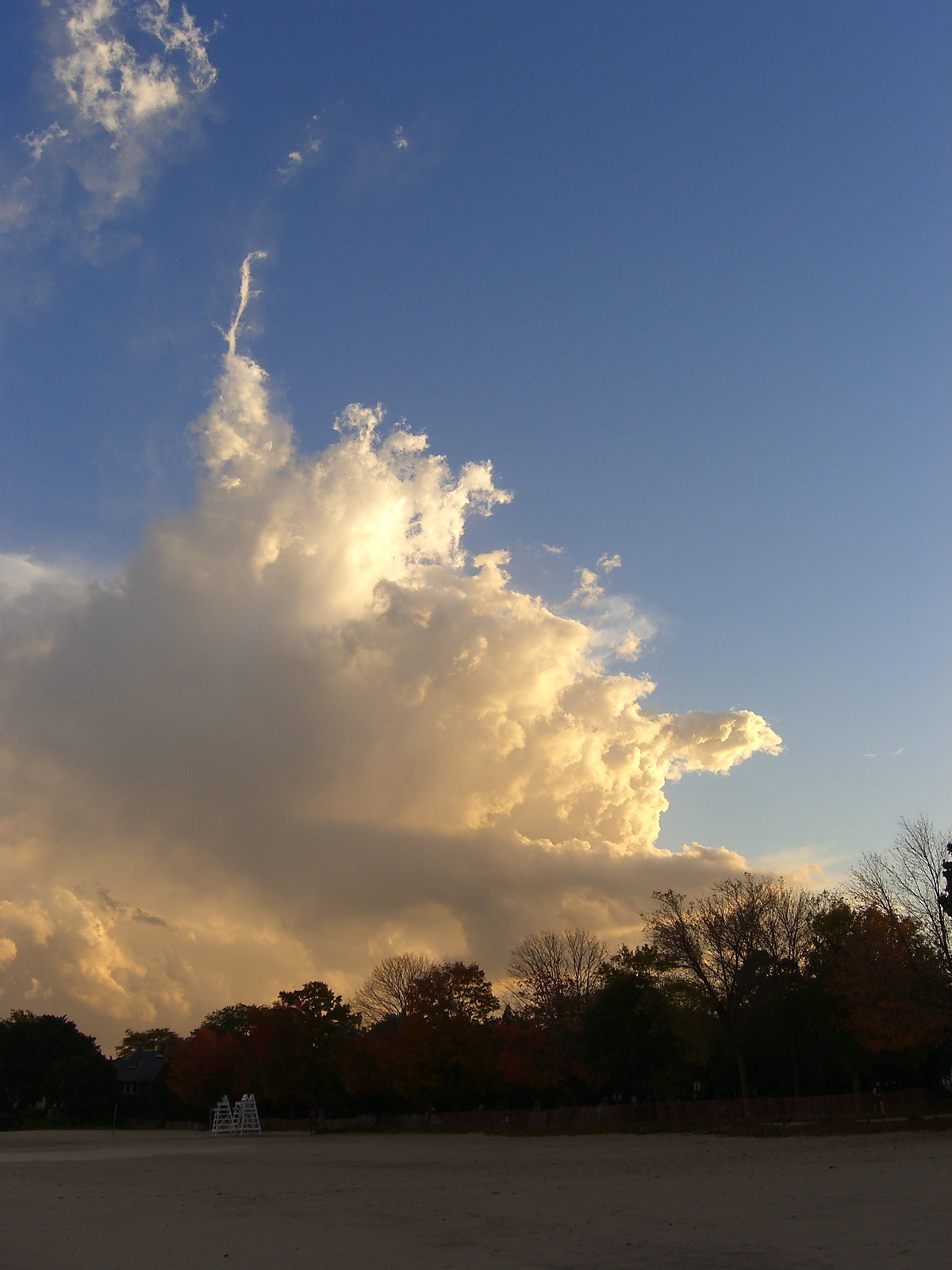
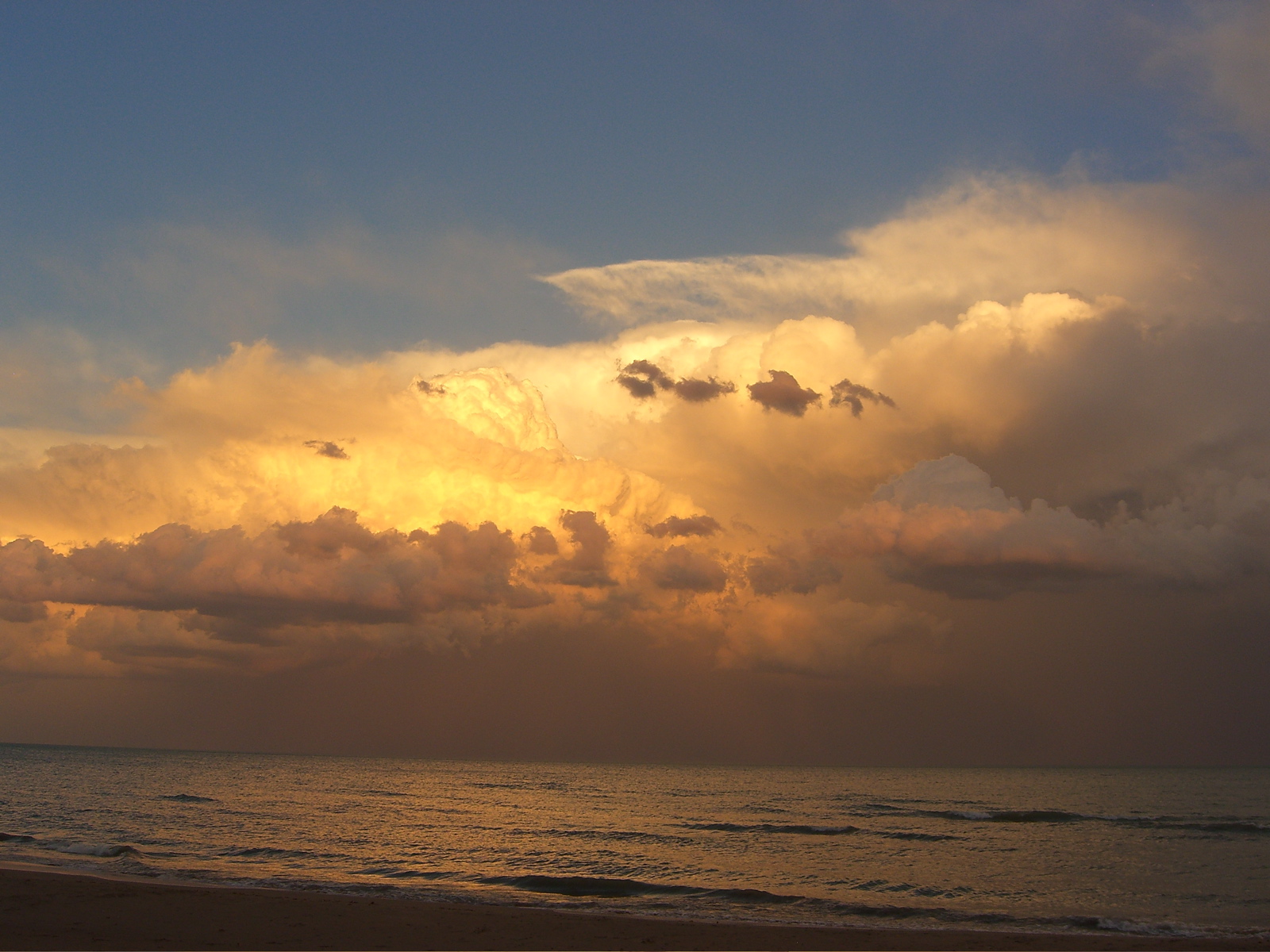
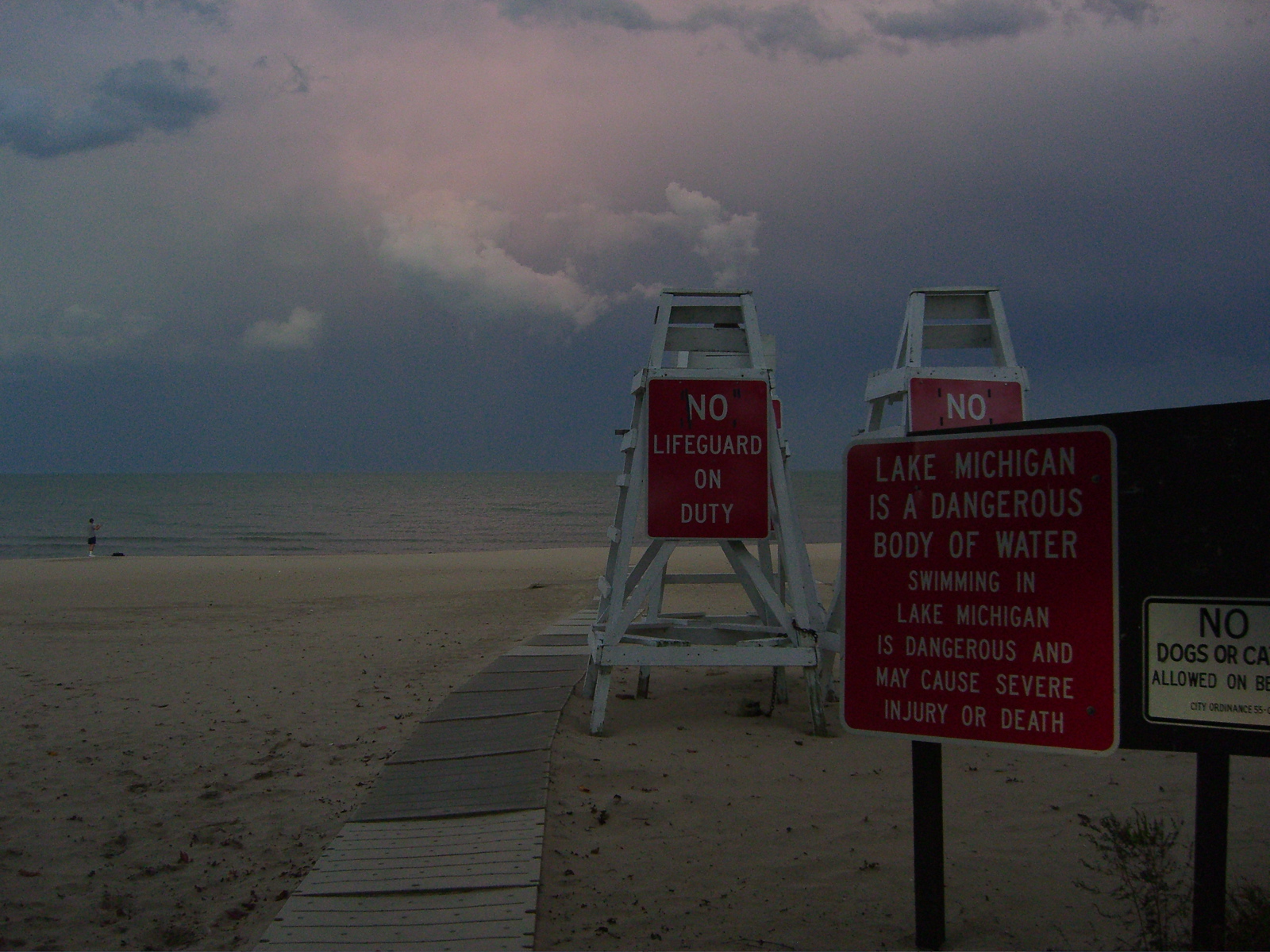
Though it didn’t officially hit 90 yesterday, the day did feature the high humidity that makes Chicago great. It creates a heat that seems to envelop you, then go through you. I spent most of the day in the North Side Brekke place, comfortably air-conditioned. I did take a short midday walk up Western Avenue, though, and then after dinner walked the mile and a half over to the lake. I got there about 10 o’clock, and there were lots of people hanging out on the beach, the one cool spot in the city. Fireworks were going off to the south somewhere; to the northeast, lighting flashed through the clouds. (The shot above was on the shore where Columbia Avenue ends. )

Sailor’s Tango

Growing up in Chicagoland, there were a few musical staples in our house. I mean in my pre-teen years, before I discovered WLS and what was playing there. The station we listened to–the only one, except on snow days when we tuned into a local AM station to see if our school was closed — was WFMT. I think it’s tag line was “Chicago’s Fine Arts Station.” It carried, and still carries, classical programming, soberly read news headlines, and, on Saturday nights, “The Midnight Special.” That show was a weekly fixture for me. It started with a recording of Leadbelly singing the song from which the show took its name and ended with Richard Dyer-Bennett singing “You’ve Got to Walk that Lonesome Valley.”

My parents didn’t have a big record collection, and I don’t remember their LPs including anything at all that would have been considered popular music. Well, maybe there was a Mitch Miller record in there. But mostly the discs included a few of my dad’s classical favorites, including an early ’50s recording of Arturo Toscanini conducting the NBC Symphony Orchestra in Respighi’s “The Pines of Rome” and “The Fountains of Rome” (the only side I ever played was “The Pines,” which ends with a stirring, bombastic passage meant to evoke the march of returning Roman legions; I’ll bet Mussolini just loved it). Others I remember hearing often, and still listen to, featured the Chicago Symphony Orchestra: Fritz Reiner conducting Wagner overtures and Prokofiev’s “Alexander Nevsky.” My mom’s tastes, as I remember them, were more in the vein of classic musicals. I remember hearing “My Fair Lady” a lot when I was little. Hours of “Camelot.” “West Side Story.” “Man of La Mancha.” “Jacques Brel Is Alive and Living in Paris.” And my parents seemed to share an enjoyment of recorded comedy and folk music and the way I recall it went out of their way to introduce us to performers like Pete Seeger, The Weavers, Joan Baez, and Burl Ives.

One record they had that got played over and over and over and that my siblings and I adopted as our own was by Will Holt, an interpreter of the Brecht-Weill canon. I can’t say I understood the songs (or that I do now, for that matter), but the music and lyrics were peculiar and fascinating. On a driving trip once, my brother John, about 10, surprised my parents by coming out with the lyrics of “Kanonen Song” from “The Threepenny Opera” (the refrain goes: “Let’s all go balmy, live off the army,/See the world we never saw,/And if we’re feeling down,/We’ll wander into town,/And if the population/Should greet us with indignation/We’ll chop them to bits/Because we like our hamburger raw“). I think the surprise was occasioned by the sudden realization that we actually were listening to and absorbing this music to some degree.

Online, you can still find used copies of the album, “The Exciting Artistry of Will Holt.” I’ve got a copy that I found in a record store out here, though I don’t have the equipment set up to play it. One side consists of original interpretations of standards like Cole Porter’s “I Love Paris.” The other side, with the Brecht-Weill numbers, made a deeper impression. In addition to “Kanonen Song,” they include “Mack the Knife,” “Alabama Song,” “Bilbao Song,” and “Sailor’s Tango.” They all contain a blend of irony, cynicism and world-weariness. Holt translated lyrics for two of the tracks–“Bilbao Song” and “Sailor’s Tango”–and those contain an element of frank sentimentality that seems to be absent in the hard-edged German originals. The Brecht-Weill “Matrosen-Tango,” from the show “Happy End,” is a woman’s observations about the selfishness, arrogance, and machismo of seafaring men; and of course, they’re bound for a fall. The Holt “Sailor’s Tango,” is in the voice of the selfish, arrogant sailor. Both versions include an interlude that talks about the sea: in the Brecht-Weill version, the ocean is calm on the surface but ultimately ominous and annihilating. In Holt’s version, the ocean and night are depicted as peaceful and welcoming — but still annihilating.

I started thinking about “Sailor’s Tango” a couple weeks ago and tried to reconstruct all the Holt lyrics. I feel like I missed something, but here’s most of them, anyway.

Hey, there, we’re setting sail for Bremen,
The seamen are loading up with booze because it’s a long way home.
Just bought a box of cigars–Henry Clay–
and I’ve got a dollar saved for one last woman.
So excuse me please but don’t get in my way,
Excuse me please but don’t get in my way.
It’s your last night on shore and you can’t get enough
Of the sight and the sound of the city.
Every bar is crowded with all your friends,
Every moment you hope it never ends.
Then it’s OK, goodbye,
All you feel for those poor slobs is pity.
Because nothing can make you feel more like a man
Than when you’ve got that ocean in the palm of your hand.
Then it’s OK, goodbye.
Don’t get caught praying down on your knees,
Don’t spoil your life being anxious to please,
Because who’s got the need
To beg and to plead
Because if they don’t like it, so what?

Oh, the sea is deep and blue,
And everything is going to be all right,
And when the day is over, then welcome to the night.
Oh, that sea is deep and blue
And when the moon is shining bright,
Oh, the sea is deep and blue,
So deep and blue.

As luck would have it, we hit a bad storm,
The engines stopped, we hit the rocks, and so it ended.
Hey, there, who ever thought we’d end up by drowning
Just a few miles from Bremen but a long way from home?
Yeah, keep on shouting, there’s nobody near–
There’s no one can hear you.
Oh, we only had a few miles to go,
Oh, we only had a few miles to go.
Now the sea’s coming up,
And the ship’s going down,
Gee don’t those harbor lights look pretty?
I’ll bet every bar is crowded with all our friends,
I wonder what they’ll say when they hear how it ends.
They’ll say OK, goodbye.
And you never can tell when that moment will come
When he says up above, here’s your pity.
Where’s my box of cigars–Henry Clay?
Well, I’ve just got to say …
Yeah, we were bragging, our feet on dry land
But standing in water, then you’ll hold out your hand,
And know that you need
To beg and to plead,
Oh, Christ, I’m scared of the dark.

Oh, the sea is deep and blue,
And everything will be all right,
And when the day is over, what happened to the night?
Oh, that sea is deep and blue,
And when the moon is shining bright,
Oh, the sea is deep and blue
So deep and blue.
Chicago Cemetery Trip

burris041109.jpg

Saturday, Dad and I made a quick run down to Holy Sepulchre Cemetery, on 111th Street outside the city, to visit some family graves (my mom, my brother, an uncle, my grandparents; there’s a bunch more of them out there we didn’t have time to see this time).  

Then we went over to Oak Woods Cemetery, at 67th Street (Marquette Road) and Cottage Grove Avenue. Among reasons I might want to visit this place is the fact–I think it’s a fact–that Confederate prisoners from the Civil War prison at Camp Douglas are buried there. But what drew us yesterday was the presence of a future grave: that of “Senator” Roland Burris. Among the many quirks that distinguish him is that he has already had an elaborate memorial set up at Oak Woods. Maybe that’s not so quirky, but the listing of items from his curriculum vitae–for instance, that he was the first African American exchange student from Southern Illinois University to the University of Hamburg, Germany–has struck many observers as a little odd.

One wants to see for one’s self, so we went down to Oak Woods to take in the sight. We pulled up to the gate at 4:10 p.m. to find the entrance gate closed and a sign saying the grounds closed at 4:15. The exit gate was open, though, so I drove in only to be stopped by a caretaker who said, “Closed 4:15!” “We’ll be out in five minutes, I promise. By the way, which way to Senator Burris’s memorial?” We got the simple directions (take a hard right once inside the gate, then the first left, and it’s about 100 yards away, straight in front of you). We didn’t have time to savor the scene. Just a few quick shots of the Burris gravesite and one of the resting place of Olympic great Jesse Owens, whose stone is across the drive on the bank of the cemetery’s pond. Then back to the gate, as promised. “Did you see Harold Washington’s grave?” the caretaker asked. “No — we have to come back,” I said.

Next trip to Chicago, maybe.

burris041109a.jpg owens041109.jpg

Here It Is: Your Norwegian Cemetery Picture of the Day

Jansen040709b

Today’s outing: The Dairy Queen at Irving Park and Central, then over to Narragansett to swing by my dad’s childhood home on Nashville Avenue. Headed down the crowded, brutally potholed avenue, Dad said, “Here’s Mount Olive Cemetery.” Where most of his family is interred. We turned in. I have a general idea where the relatives are buried–mostly his mother’s family, the Sieversens–but he has a precise sense of where to go. So there they were: his parents, his grandparents, many aunts, uncles, and cousins.

Until five or so years ago, I remember going to Mount Olive just once, the day my grandmother was buried in September 1975. But since my mom passed away in 2003 and we started visiting her family’s cemetery–Holy Sepulchre, so far on the South Side that it’s actually beyond the city limits–I’ve come to Mount Olive several times, too.
Many stories to tell there, I’m sure. Here are a couple of surface things I’ve noticed. It’s clear from the great majority of older graves that the cemetery was a resting place for Norwegians (maybe some other Scandinavians, too), mostly Protestants. There’s a drinking fountain near the entrance in the form of a Viking warrior, complete with helmet and flowing beard. But like the rest of the city, the ethnic makeup of this neighborhood is changing, too. Most new graves appear to belong to Latino families, many Catholic. It’s the kind of mixing that I expect would have been unlikely in life. Now here the communities are together.
Cemetery walking always produces something striking or poignant. Maybe because we had a brother who died at the age of 2, I’m always been brought up short by children’s markers. At one of the family graves I saw that three children, ages 4 or younger, were buried with their parents.
Nearby, I came across the grave of Junior Jansen, 1925-1930, a grave remarkable for the legend “Our Boy” and the vivid, clear photo of the boy who had been buried there. It’s hard for me to imagine that picture has lasted out in the weather all these decades. Next to Junior Jansen’s stone was another Jansen marker–a broken monument bearing a sculpted figure of a young girl. Strange thing: someone has evidently gone to the trouble of setting the figure upright–but unattached to its damaged lower portion or the original base.
Another thing about the Norwegian part of the cemetery: slowly, surely, nature is taking its course. Trees and shrubs have overwhelmed some graves. But what you notice more are stones left askew as the ground heaves and shifts through the seasons and maybe through the sinking or collapse of the underground vaults that are supposed to keep everything tidy. You come across headstones that are falling onto their faces and monuments that have toppled backward or sideways. You find groups of markers that seem jumbled together, clumped at odd angles, with a collection of apparently unrelated names. Looking at the years on the markers I passed, it seems that most date to between 1900 and 1950. I saw only a handful dated after 1960. The most recent was from 1997. One has the impression, looking down the rows of tilted, angled, sometimes broken markers that for the descendants of most who lie here, this is a place out of mind.
Jansen040709
Jansen040709a
Jansen040709d

Surfing Lake Michigan

Lake Michigan Surfers
Kate drove up to Ripon, Wisconsin–everyone in unison: "the birthplace of the Republican Party"–to visit our old Berkeley friends Robin and Jim. I hung around the house with Dad for most of the afternoon and just at the moment I was about to succumb to the urge for an afternoon nap went out for a walk. From the Brekke North Side headquarters it's about a mile and a half out to the lake, and that's where I went. Then strolled up the beach in Loyola Park for half a mile taking in the wintry shore scene. Suddenly I realized a surfer was in the water.

The sight was remarkable first because this was the first time I'd seen anyone surfing out on the lake (that probably says more about my long-time absence from these parts than the willingness of the locals to turn Lake Michigan into a wave-riding scene). But the real surprise was that someone was out today. In Northern California, cold conditions go along with surfing: the water temperature off San Francisco dips into the high 40s during the winter and never seems to get above 56 (and of course in some places along our coast, the real challenge is the ferocity of the ocean conditions: big waves and strong currents). 

But in Chicago today, the highs were in the upper 30s, and the water temperature was 40. I would say that qualifies as frigid. Apparently, you can conquer anything with a modern wetsuits and a refusal to consider any pastime ludicrous.

I approached the surfer and asked whether I could take his picture. Yeah, he said. And how about sending him a copy? (I did.) The storm that came through last night featured a strong northeasterly wind that was forecast to raise 12-foot waves in Chicago and along the southern end of the lake. Those conditions brought Dave, the surfer, and his buddy Kevin, out to the beach at Loyola Park. 

Dave said the conditions in the water weren't great. Instead of swinging to the northwest, which would have created good waves, he said, the wind remained northeasterly and the waves were choppy and confused. He said he had only heard about surfing in Chicago last fall and had first gone into the water here in October. 

Dave's friend Kevin I saw bobbing off a little jetty at the north end of the Loyola Park beach. Swell after swell passed; my inexpert eye didn't see any epic rides pass him by. He paddled into the beach and joined Dave. I waylaid him, too. He said he's been surfing in Lake Michigan for 15 years. Question in the form of a statement: "The best waves must be in winter." Yeah, that's generally true, Kevin said. But until 15 years ago, wetsuits weren't good enough to protect you from the lake cold. "Ever been in the water when there was ice?" "Yeah," Kevin said. "I've had ice on me," Dave said–the air being so cold it would freeze the water on the outside of the wetsuit. 

"I don't goof around here too much," Kevin said. "This is sort of my beach of last resort. It's a lot better down at the end of the lake"–around the Indiana Dunes–"some really big water down there." 

It was sunset. I started to leave the park. The two of them walked up to the north end of the beach, and they were heading back into the water. 

Delightful, Dismal

"MONDAY SHOULD BE A DELIGHTFULLY DISMAL EARLY APRIL DAY."

That's out of the area forecast discussion from the Chicago office of the National Weather Service, a line of clear "look what's happening outside" prose in the midst of talk about steep lapse rates, negatively tilted troughs, cyclonic flows, and tightening gradients. 

After a sufficient time away–decades, not years–you forget what April here can bring. The weather service provides a reminder of some snow records for this month, including a single snowfall of nearly 14 inches back in the 1930s. 

But outside the record books, I remember an Easter on which we got about a foot of snow (the preceding Christmas featured what I remember as a tropically warm heavy rain; well, rain anyway). The year I turned 16, the first baseball game of our high school season was postponed because we got nearly a foot of snow (when we played the game, a week or two later, the snow was gone and but sunny weather was accompanied by a brutal cold snap. We scored a single run on a sacrifice fly, our pitcher threw a no-hitter — it was too cold to want to make much contact — and we had the first win in a season whose other highlight was the desertion of about half the team to go watch Jefferson Airplane play for free in Grant Park). And then there was the day I turned 21, going to school down at Illinois State and working at the college paper, The Vidette. We had a blizzard of Spackle-like snow. I was lonely and typically disconsolate. Turning 21 wasn't a drinking holiday, since the drinking age was 19 at the time. The real source of my pain was another night spent at the dorms with no prospect of a date or even a friendly conversation with one of the thousands of females nearby. 

Oh, yeah, I got over it. But I haven't forgotten, now that I'm reminded.  "Delightfully dismal early April." 

[And Monday: More from the Tom Skilling and the Chicago Tribune's weather page on late season snow in Chicago: Snowless Aprils vs. Snowy Mays.] 

Guest Obervation: Louise Erdrich

Kate and I flew to Chicago this morning. "Morning." It was actually sometime toward the end of the night. The van shuttle that drove us over to San Francisco got to our house at 4 a.m., which meant we were up a little after 3.

Back in California, Saturday was the model of a spring day, meaning warm, clear and green. It was a pretty spring day in Chicago, too: clear and warm enough, low 50s, that you wouldn't mistake it for winter. I went out for a walk wearing jeans and a flannel shirt and noticed within a few blocks I was the only one not wearing a jacket. The wind was cutting, and it was cold in the shade.
Tomorrow and Monday are supposed to be a different matter. Snow's on the way, though much more is falling west and north than the forecasters say will come down here. Still, the next couple of days won't be mistaken for spring.
A favorite scene describing a spring snowstorm, from Louise Erdrich's "Love Medicine":

"… The snow was bright, giving back starlight. She concentrated on her feet, on steering them strictly down the packed wheel ruts.

"She had walked far enough to see the dull orange glow, the canopy of low, lit clouds over Williston, when she decided to walk home instead of going back there. The wind was mild and wet. A Chinook wind, she told herself. She made a right turn off the road, walked up a drift frozen over a snow fence, and began to pick her way through the swirls of dead grass and icy crust of open ranchland. Her boots were thin. So she stepped on dry ground where she could and avoided the slush and rotten, gray banks. It was exactly as if she were walking back from a fiddle dance or a friend's house to Uncle Eli's warm, man-smelling kitchen. She crossed the wide fields swinging her purse, stepping carefully to keep her feet dry.

"Even when it started to snow, she did not lose her sense of direction. Her feet grew numb, but she did not worry about the distance. The heavy winds couldn't blow her off course. She continued. Even when her heart clenched and her skin turned crackling cold, it didn't matter, because the pure and naked part of her went on.

"The snow fell deeper that Easter than it had in forty years, but June walked over it like water and came home."

Traveling with Status

Sitting in Terminal 3, Concourse L, waiting for my American Airlines flight back to San Francisco. Mission accomplished, mostly. My dad’s out of his rehab hospital, safely ensconced back in his North Side apartment (thanks to the heroic efforts of my sister Ann and brother-in-law Dan). Wish I was staying longer or lived much closer so that my visits didn’t require absenting myself from the rest of my life. And I wish I could have gotten out of town without starting a family fight, taking my dad’s keys with me, and forgetting my camera.

So, just about to board the plane. Flying in the economy cabin, which is really the “you’ll take whatever we dish out” Greyhound section of the plane. Fine. I did manage a moment of first-class treatment coming and going.

Flying out of San Francisco, I was very late getting to the airport. The person who checked in my baggage directed me to get in the nearest line through the security checkpoint. She actually said “hurry!” Densely, all I noted when I first got in line was that it was a lot shorter than the other one I could see. “Why don’t some of those people come over here?” I wondered. Then I saw a big sign that I had missed: VIP/First Class Security Check, or something like that. I thought for a millisecond, just out of a sense of heeding the ordained order of things, about getting out of the line and going to the one for serfs, helots and general unfortunates. But I stayed put. I figured I’d tell the TSA officer checking boarding passes and IDs that I’d been told to hustle my way to the gate and that I needed to be in this line.

And, after rehearsal, that’s the short speech I gave. I girded for a scowl or raised eyebrow. Instead, I got a smile. “I don’t care,” the officer said. “Just have a good trip.”

Wow.

So fast-forward to this afternoon. I was in a long security line in the American terminal, and for some reason one of the carrier’s line minders asked to see my boarding pass. I showed it to her, and she said, “Sir, please go down there and go through that line.” “Why?” I asked, with more than a trace of suspicion, bordering on resistance. “It’s closer to your gate,” she said.

So I went down the terminal a ways and stood in the next line, which was much, much shorter. “Thanks, line minder,” I thought to myself.

Then a woman behind me began complaining about O’Hare and all the long lines and about what a nightmare it would be if she had been traveling “without status.” It was then I noticed the sign that said I was standing in the line reserved for elite passengers. No wonder it was short.

But glancing around, I realized the TSA people inspecting documents weren’t looking to see whether any non-million-mile flyers were trying to sneak through. So I stayed in the line and avoided a good 30- or 45-minute wait with the serfs, helots, etc.

Which all goes to show — what, exactly? Don’t put too much stock in those VIP signs. And if you want to enjoy VIP perks without the headaches of actually being a VIP — paparazzi, congressional inquiries, rehab and the like — I highly recommend the special security check-in line. (Meantime, back in serfworld, American has just announced our flight is delayed indefinitely.)

Technorati Tags: ,

Chicago Sky

Storm101807H

I’ll say it pre-emptively, so you don’t have to: Enough with the cloud pictures already.

OK, sure. But first, you have to figure out a way to stop days like today in Chicago from happening. A long-advertised severe weather front moved through in the late afternoon after hours of building southwest winds. I was up in Evanston, a couple miles west of the lake, when I saw what appeared to be a huge thunderstorm in the south and southwest; it looked like it wouldn’t make it as far north as I was, so I shot a few pictures at the park where I was stopped, then got in the car to drive back to my dad’s place. But when I got in the car, I turned on the radio and heard that the storm I was seeing was a severe thunderstorm moving across the middle of Chicago (with wind gusts as high as 74 mph; an example, I think, of a type of severe thunderstorm front called a derecho). Since the storm seemed to be passing safely by, I decided to drive out to the lake shore and watch it move out across the water.

Storm101807GStorm101807-1

To dispel any suspense: I didn’t wind up in the middle of the tempest. But the people out there on the beach got a good view of the storm at a distance, along with what I’d call, if I were given to such outbursts, a truly wondrous display of light and color in the huge cloud mass that sprawled across the shoreline.

Storm101807E-1Storm101807F

Technorati Tags: , ,

Tuesday Notebook

Today’s best journal titles: Thorax and Chest, both encountered in the midst of a writing project.

Today’s top concern: Getting everything packed as I get ready to take my slow-motion, long-distance cycling thing on the road (translation: I’m leaving Berkeley for a cross-country road trip today; we’ll wind up in New York, where I’ll get on a plane for Paris-Brest-Paris).

Today’s related concern: Gas mileage. We’re renting a car to drive across the country. I’m bringing too much bike-related crap to do the smart thing and get a small, relatively fuel-efficient car. So I opted for a Subaru Outback, which is actually OK mileage- and emissions-wise. I booked it last week and showed up at the Hertz counter at the Oakland airport today to pick it up. My reserved car wasn’t ready because it turned out they had no Subaru Outbacks; when I complained — mildly, for me, mentioning that it was “weird” that there was no car since I made the reservation last week — I was told that the outlet was expecting an Outback but the current renter hadn’t returned it. Uh huh. It just so happened that they had a not-so-spanking new Toyota Highlander, non-hybrid version, ready to roll. So that’s what we’ve got. Crude oil just hit an all-time high today. Gas prices in the Bay Area are at about $3.10-$3.20 per gallon of regular, ethanol-doctored fuel. Big surprise — we’re going to get murdered on our gasoline bill.