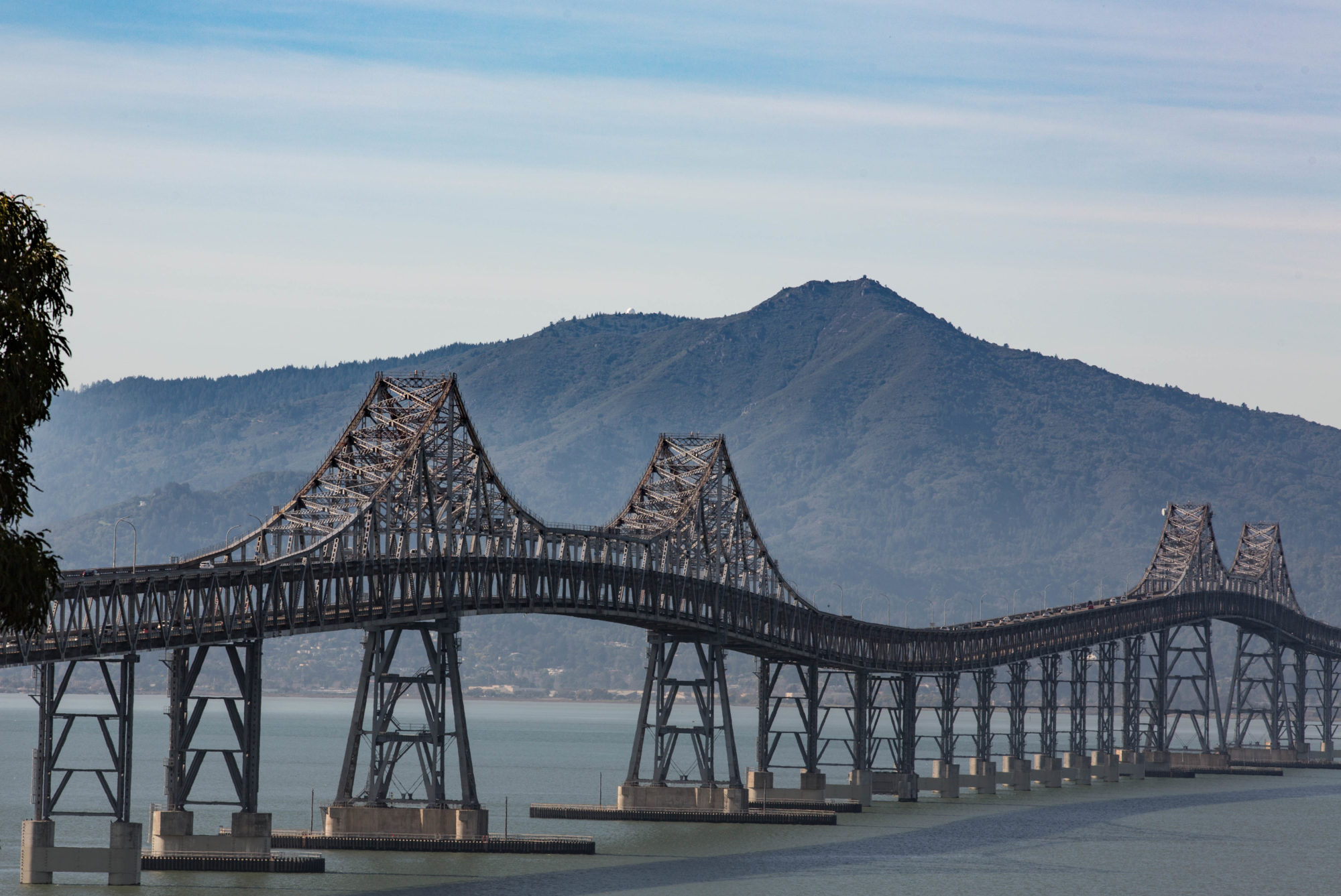
Blood Sport, and a Second Coming

A friend writes: “… The public personalities who get the most attention now are the raging, fulminating blowhards who seem to be non-differentially angry at everything. It’s become a blood sport. But it’s nonetheless disturbing when you think that the population is so much in the grip of its shadow that it needs to find a victim to feed to the lions. At times I really do wonder if Obama will end up a single term president because he could not answer that savage impetus in the country. …”

Which put me in mind of this poem from William Butler Yeats:

The Second Coming

Turning and turning in the widening gyre
The falcon cannot hear the falconer;
Things fall apart; the centre cannot hold;
Mere anarchy is loosed upon the world,
The blood-dimmed tide is loosed, and everywhere
The ceremony of innocence is drowned;
The best lack all conviction, while the worst
Are full of passionate intensity.

Surely some revelation is at hand;
Surely the Second Coming is at hand.
The Second Coming! Hardly are those words out
When a vast image out of Spiritus Mundi
Troubles my sight: a waste of desert sand;
A shape with lion body and the head of a man,
A gaze blank and pitiless as the sun,
Is moving its slow thighs, while all about it
Wind shadows of the indignant desert birds.
The darkness drops again but now I know
That twenty centuries of stony sleep
Were vexed to nightmare by a rocking cradle,
And what rough beast, its hour come round at last,
Slouches towards Bethlehem to be born?

Safire’s Rules for Writers

From Robert D. McFadden’s obituary on William Safire, the Nixon-Agnew speechwriter, conservative columnist, and usage maven:

“… And there were Safire ‘rules for writers’: Remember to never split an infinitive. Take the bull by the hand and avoid mixing metaphors. Proofread carefully to see if you words out. Avoid cliches like the plague. And don’t overuse exclamation marks!!”

Did I like the guy’s politics? No–not that it matters. But you have to love a guy so precisely but unfussily focused on the language and how we use it.

[Update: In his “On Language” column for October 7, 1979, Safire included a query to his readers:

“I am compiling “Ten Perverse Rules of English Grammar.” Thanks to Philip Henderson of Lawrence, Kan., I have three. They are: (1) Remember to never split an infinitive. (2) A preposition is something never to end a sentence with. (3) The passive voice should never be used.

“Any others along these lines?”

Four weeks later, Safire published, “The Fumblerules of Grammar,” which contained the first three dicta and 33 more (ending with “last but not least, avoid clichés like the plague; seek viable alternatives.”) Here’s the complete set of 36 rules (along with some research disclosing that another writer published a similar list earlier in 1979). In 1990, Safire reprinted the list (and added 18 more “rules”) in “Fumblerules: A Lighthearted Guide to Grammar and Good Usage.”]

Friday Night Ferry, Sibling Birthday Edition

ferry092509.jpg

I took the day off, so tonight Kate and I rode the boat from Oakland to San Francisco together, stopped and ate at the Ferry Building (Taylor’s Automatic Refresher), then took the last run back to the East Bay. The sun was just setting as the boat left the dock at Jack London Square. Sky and water shone with a gorgeous light all the way across. (And hey: It was by brother John’s birthday today, and I didn’t call him. Happy birthday, JB. You would have loved the ride today, but I’m sure you had a good time in Brooklyn.)

Temperature Inversion

You know the old rule: Temperature declines as you gain elevation. Here’s an adjunct to that: Except when it doesn’t. It’s fairly common in the San Francisco Bay Area to have cool marine air trapped under a layer of much warmer air. It can be a startling experience to start a walk in the cool damp air in our flatlands neighborhood and cross suddenly–in the matter of just a few feet–into very warm, much drier air.

There’s a beautiful case in point this morning. The lower elevations around the Bay are cocooned in a blanket of cool, moist air. Here in Berkeley, one station has the temperature as 58 degrees Fahrenheit and 91 percent relative humidity. That’s at an elevation of 361 feet–probably up on campus. At the 1,300-foot level in the hills, less than five miles away as the crow flies, it’s 78 F. with 29 percent humidity. Further afield, atop Mount Diablo (about 20 miles to the east; elevation 3,849), it’s 82 F. and 8 percent while at the base of the mountain (in Clayton, 518 feet) it’s 67 F. and 44 percent.

Canine Excrement: Ethical and Psychosocial Considerations

We have a dog. No, wait: The Dog. We live in a town that has decreed that if your dog does what it’s going to do while you’re out on a walk–take a dump on the sidewalk, in the park, or on someone’s lawn–you’ve got to pick it up and dispose of it. I’ve got no problems with the law. Really, it’s only civilized to make sure you don’t leave a pile of crap where someone else is going to step in it or play in it and curse you and your kind for it. The only thing I wonder about on a practical level is whether we’ve figured out the right long-term regime for disposal. The method I see employed almost universally–picking up the crap using a plastic bag for a glove, then dumping the bagged crap in the garbage somewhere–means that there’s lots and lots of well-preserved canine excrement headed to landfills. Lest you think I’m overthinking the issue, here’s evidence from Ithaca, New York, and Toronto, Ontario, about ways people are trying to deal with it.

But that’s just one dimension of dog waste handling and disposal. There are dimensions that cross from the pragmatic to the social to the psychic that I wrestle with almost every time I’m out with The Dog. For instance?

A simple one: Say The Dog decides a certain lawn has the perfect balance of situation, smell, and texture that he decides to grace it with a deposit. Of course it’s no harder to pick up a dump from a private lawn that from a public lawn in the park But I always find myself thinking, “Is someone watching from inside? Are they upset at the sight of a dog profaning their personal greensward? Gee, I hope not. And here I am to pick it up!

Other sample poop-scooping thoughts:

Someone else approaches as I bend over to pick up a dump: “Oh, boy–I bet I look like a doofus. Picking up a dog shit. I’m subservient to a dog! I’m picking up its crap!”

I’m carrying a plastic bag with a dog crap in it and someone else walks by: “Oh, boy–I bet this looks cool. Carrying a dog crap.” (In point of fact, I met a neighbor once who saw me carrying such a bag. She asked how long I’d carry it before throwing it out. I think she was concerned about the sanitary aspects of the operation, which is something I don’t worry about much.)

I’m carrying a plastic bag with a dog crap in it and I pass a residential garbage can: Big dilemma. I really want to get rid of this. Should I dump it in here? Would the people mind? If they see me do it, will they come out and yell at me? If that sounds ridiculous, let me say I have seen one or two household garbage cans with signs on them saying something like, “Please, no dog poop.” I know why. It stinks after a day or two. In practice, what I do depends on where I happen to be. Since I’ve gotten to know where all the public garbage receptacles are, I’ll use one of those if I’m close by. If not, I might use a residential one or bring the thing home to throw it away. I’ve imagined having someone in full entitled, proprietary Berkeley dudgeon come out and challenge my use of their can. I’ve further imagined complying with a demand to remove any illicit leavings by emptying the entire contents on the sidewalk, removing my share, and walking away. Let us hope it never comes to that.

Guest Observation: Homer

“…Odysseus, mastermind in action,
once he’d handled the great bow and scanned every inch,
then, like an expert singer skilled at lyre and song—
who strains a string to a new peg with ease,
making the pliant sheep-gut fast at either end—
so with his virtuoso ease Odysseus strung his mighty bow.
Quickly his right hand plucked the string to test its pitch
and under his touch it sang out clear and sharp as a swallow’s cry.
Horror swept through the suitors, faces blanching white,
and Zeus cracked the sky with a bolt, his blazing sign,
and the great man who had borne so much rejoiced at last
that the son of cunning Cronus flung that omen down for him.
He snatched a winged arrow lying bare on the board—
the rest still bristled deep inside the quiver,
soon to be tasted by all the feasters there. …”

—”The Odyssey,” Book 21. Translated by Robert Fagles.”

Guest Observation: Homer

“…Odysseus, mastermind in action,
once he’d handled the great bow and scanned every inch,
then, like an expert singer skilled at lyre and song—
who strains a string to a new peg with ease,
making the pliant sheep-gut fast at either end—
so with his virtuoso ease Odysseus strung his mighty bow.
Quickly his right hand plucked the string to test its pitch
and under his touch it sang out clear and sharp as a swallow’s cry.
Horror swept through the suitors, faces blanching white,
and Zeus cracked the sky with a bolt, his blazing sign,
and the great man who had borne so much rejoiced at last
that the son of cunning Cronus flung that omen down for him.
He snatched a winged arrow lying bare on the board—
the rest still bristled deep inside the quiver,
soon to be tasted by all the feasters there. …”

—”The Odyssey,” Book 21. Translated by Robert Fagles.”

A Brief History of Congressional Decorum, II

1880: The Weaver-Sparks Affray

During deliberations on December 21, the House took up a funding bill–“a measure from the consideration of which no one would suspect a disgraceful riot could possibly arise,” The New York Times noted. But debate over the bill, or rather a debate over how the bill should be debated, quickly deteriorated into accusations of party disloyalty and political skulduggery. Soon, the quarreling centered on two members: James Baird Weaver, a member of the Greenback Party from Iowa, and William Andrew Jackson Sparks, Democrat of Illinois.

sparks.jpg weaver.jpg

While Weaver (left) inveighed against Democratic monetary policy, Sparks (right) and several others tried to shout him down, and someone was heard to call Weaver a liar. Sparks apologized for getting exercised but said he wasn’t the one who called Weaver a liar. Weaver accepted the apology, then issued a warning. Here’s how The Times described the scene in its December 22 editions:

” ‘I would not harm a hair of your head [Weaver said]; but don’t make any mistake about me. My fighting weight is 185 pounds, and my address is Bloomfield, Iowa.’

“This increased the general merriment and increased Mr. Sparks’s anger. Shaking his fist at Mr. Weaver, he shouted: ‘I have a contempt for that man’s arm. It can’t be used to hurt me. The manner in which he received my explanation shows that he is not a gentleman, a fact of which his conduct in the Presidential campaign has given abundant proof.’

“At this point, for the first time during the long controversy, Mr. Weaver lost his temper, and replied to Mr. Sparks by saying: ‘In the presence of the House of Representatives I denounce you as a liar.’

” ‘… And I denounce you as an unmitigated scoundrel,’ rejoined the irate Sparks.”

Weaver and Sparks rushed at each other but were restrained from fisticuffs as dozens of members rushed toward the Speaker’s desk. The Times again:

“At this time, the commotion on the floor of the House had the appearance of a mob fight, and from the galleries it looked as though such a termination was inevitable. At least three members were struggling to encounter each other in combat, and at least 60 others were wrestling and shouting to prevent the threatened conflict. … In the midst of the uproar some wag from the rear of the hall shouted: ‘Trot out the American eagle,’ referring to the silver mace surmounted by that bird, which is the emblem of the authority of the House when borne by the Sergeant-at-Arms. Finally, Sergeant-at-Arms Thompson made his appearance, bearing the silver mace, and parading with it among the members forced them to be seated, thus quelling the disorder.”

The House adjourned. When it met again the next day, Reps. Sparks and Weaver were taken to task for what other members termed a “pot-house brawl” and “gambling-house quarrel.” Members debated whether the would-be combatants should be censured or simply required to apologize. Rep. Selwyn Zadock Bowman, Republican of Massachusetts, thought a mere apology wasn’t sufficient for the “gross outrage” committed against the House. “The two gentlemen … had bandied between themselves the vilest and the most opprobrious epithets that could pass from one man to another. They had boasted of their fighting weight [here the House reportedly erupted in laughter]; they had treated it as a joke; they had … endeavored to strip off their coats, and had only been separated by force.”

“The vilest and most opprobrious epithets”? How times have changed. Notwithstanding Bowman’s plea to preserve the dignity of the House–“a sacred tribunal,” he called it–Sparks and Weaver were allowed to end the affair with apologies to the chamber.

A Brief History of Congressional Decorum

sumner_caning.jpg

1856: Sumner and Brooks

The House of Representatives has rebuked South Carolinian Joe Wilson for his “You lie!” outburst during President Obama’s speech last week. Wilson’s behavior is an outgrowth of something ugly that’s stirring among us. I don’t know how to summarize what that something is, but its hallmark is an intolerance that skips over debate and argument and rushes straight into hate-mongering and an insistence that those who dare disagree be denounced and silenced. I’m mindful I’m writing in a town, Berkeley, that has its own history of trying to shout down voices it doesn’t want to hear. There’s always a good reason to muzzle your foes and to caricature them as the spawn of the devil or worse.

I look across this bleak landscape and I find some ironic solace in the fact we’ve been here before. When I was a kid, I liked to read about the Civil War. A pictorial history we had included a chapter or two on the prelude to the war. One of the episodes that made an impression was the brutal beating of Massachusetts Sen. Charles Sumner by Rep. Preston Brooks of South Carolina. The attack took place May 22, 1856, on the Senate floor after Sumner, an abolitonist, denounced pro-slavery forces in Kansas and their allies in Congress. Here’s a description of the incident by James M. McPherson in “Battle Cry of Freedom“:

“All spring, Charles Sumner had been storing up wrath toward what he considered ‘The Crime Against Kansas’–the title of a two-day address he delivered to the crowded Senate galleries May 19-20. ‘I shall make the most thorough and complete speech of my life,’ Sumner informed Salmon P. Chase a few days before the address. ‘My soul is wrung by the outrage and I shall pour it forth.’ So he did, with more passion than good taste. ‘Murderous robbers from Missouri,’ Sumner declared ‘hirelings picked from the drunken spew and vomit of an uneasy civilization’ had committed a ‘rape of a virgin territory, compelling it to the hateful embrace of slavery.’ Sumner singled out members of the F Street Mess [a group of southern senators instrumental in writing the Kansas-Nebraska Act] for specific attack, including South Carolina’s Andrew P. Butler, who had ‘discharged the loose expectoration of his speech’ in demanding the disarming of free-state men in Kansas. Butler’s home state with ‘its shameful imbecility from Slavery’ had sent to the Senate in his person a ‘Don Quixote who had chosen a mistress to who me has made his vows, and who … though polluted in the sight of the world, is chaste in his sight–I mean the harlot, Slavery.’

“Sumner’s speech produced an uproar–in the Senate, where several Democrats rebuked him, and in the press, where even Republican praise was tempered by reservations about the rhetoric. The only thing that prevented some southerner from challenging Sumner to a duel was the knowledge that he would refuse. Besides, dueling was for social equals; someone as low as this Yankee blackguard deserved a horsewhipping–or a caning. So felt Congressman Preston Brooks, a cousin of Andrew Butler. Two days after the speech Brooks walked into the nearly empty Senate chamber after adjournment and approached the desk where Sumner was writing letters. Your speech, he told the senator, ‘is a libel on South Carolina and Mr. Butler, who is a relative of mine.’ As Sumner started to rise, the frenzied Brooks beat him over the head thirty times or more with a gold-headed cane as Sumner, his legs trapped under the bolted-down desk, finally wrenched it loose from the floor and collapsed with his head covered with blood.”

The House voted 112-95 to throw Brooks out–but the motion failed because southern members voted against it and deprived it of the two-thirds majority it needed to pass. The reaction at home? As McPherson notes, “From all over the South, Brooks received dozens of new canes, some inscribed with such mottoes as ‘Hit Him Again’ and ‘Use Knock-Down Arguments.’ “

I note that in looking up “Joe Wilson” on The New York Times site today, at the top of the page was an automatically generated ad: Support Joe Wilson Today: Stand for Joe. Stand for truth. Make a contribution today.” By some accounts, he’s raised millions since he screamed at the president.

Picture Surprise

We have a surprise picture tonight. It’s of either:

a) The sublime scene near Suisun Bay late this afternoon as our odd September storm rolled in. To the east, a window of clear sky over the Valley, with patches of white cumulus. To the south, Mount Diablo in shadow, the peak vanishing and reappearing as dark bands of clouds blew by; it eventually vanished in the rain. To the west and north, veils of rain trailing out of the clouds as they swept toward us. Clear patches among the clouds, about every shade of blue I’ve ever seen in the sky. The landscape: buckskin hills to the north and east, dry as they get. To the north, tidal meadows and forests of tule reeds in the marshes. (Why were we up near Suisun Bay? To find some tules for a class project the Garden Stater is doing.)

So: that’s Picture Possibility No. 1, and you know my penchant for landscape/sky shots. No 2 is:

b) An urban graffito made humorous not so much for its content as its juxtaposition of one pop culture era with another. (You take the trouble to read this, we’re going to give you high-brow analysis.)

That’s Picture Possibility No. 2, and you know my love of quirky urban signs. No. 3 is:

A picture I took while driving this afternoon that shows a woman driving a car on the San Rafael Bridge while reading a storybook to a child, who is sitting on her lap. You know my penchant for strange and occasionally outrageous highway scenes.

If you want to draw out the suspense and create a real genuine community discussion, you could leave a comment about which one of the above is Picture Surprise. If you just want to get this over with, click the link below and go to “the jump.”

Continue reading “Picture Surprise”