Well, I might not have caught my first salmon yesterday, but I did get some pictures of the trip out of Moss Landing. Here’s a slideshow I just posted to Flickr:
Shakers

Thanks to a couple of people I met through some of my salmon reporting on KQED, I got to go out fishing today on a boat that put out from Moss Landing, on Monterey Bay about 100 miles south of Berkeley. I’ve considered it a little odd that I’ve developed a passionate interest in California salmon without once having fished for one. But on balance, only a little odd.
Today, I only kind of fished. I went out with Marc Gorelnik, a board member of the Coastside Fishing Club, whose boat is currently berthed at Moss Landing. His crew were a couple of guys named Chris from Marin County. All three knew their way around the boat and all the gear. They rigged the gear and set the lines while I mostly spectated (though I guess I worked in my own fashion: I had my recorder and camera with me, so I came back with sound and pictures).
Since I was a salmon rookie, the first time a fish hit one of the lines, the rod was handed to me and I reeled in whatever was on the end of the line. It turned out to be a salmon, though not a huge one. The minimum size anglers are allowed to keep this year is 24 inches; under that length, and you have to release them. The fish on I was pulling in was borderline. One of the Chrises landed the fish and then measured it against a guide on the stern. Twenty-two inches. Using a device that looked a little like a screwdriver with a blunt end–the idea is to minimize handling of fish that will be released, because the whole point is that they’ll survive to grow into mature adults–Marc “shook” the fish off the line, and back into the water it went. (The term for undersize fish, which I never heard before last week: “shakers”).
And that was the big fishing excitement of the day. Marc had his radio on, and we heard lots of boats saying they had zero luck and a handful reporting they were catching fish, some up to 22 pounds. To an inquiry from a friend’s boat, one voice on the radio said he was about to make his limit but added something to the effect that “the last fish is always the hardest to catch.” Marc responded, “I hate that guy.” (He was also out last Saturday, the season opener, and had just four shakers and several hours of weathering rough water to show for it.)
Two other fish would up on our lines, though–both shakers. The last one hit one of the rigs on our way in, immediately after one of the Chrises said, “One fish. One fish can easily be divided four ways. The fish in question is pictured (click on the images for larger versions). It was a little thing, maybe a foot long. It would have been hatched out the fall before last (2009), and then either made its way to the ocean (if it was naturally spawned) or was released on the upper reaches of San Francisco Bay (the recent practice for most hatchery-generated fish) about a year ago. Given its size, it’s got nearly a year and a half more to survive at the mininum before it will begin its run back to fresh water somewhere in the Sacramento River system.
So there it is–a shaker. I caught only a brief, brief glimpse of it. It was small, but it was a beauty.
Monday Walkabout

Above: The big oak in the schoolyard garden at Martin Luther King Jr. MIddle School, just around the corner and up the street from us. School was out today, and of course the occasion I connect the date with is April 4, 1968, the day King was murdered. I don’t remember anything about that day until hearing the announcement, at the tail end of the NBC national news, and I think Chet Huntley read the report, that King had been shot in Memphis. The rest of the evening and much of the next several days is vivid. My recollection is that the show essentially signed off with that report at 6:30 p.m. There was no cable TV to speak of, let alone CNN, so I think our immediate recourse would have been to the radio (not sure if WBBM had adopted an all-news format by then or not).
In any case, I remember that it was already dark, and it was raining. My mom had been out shopping for groceries, and she pulled up within a few minutes of when we heard the news. She had been involved in various civil rights activities and had actually driven by herself up to the South Side one night–in 1965, maybe?–to see King speak at a neighborhood church. I think we–my brothers and I–probably imparted the news in a panicked way and probably passed on the first report that King might have been shot in the head. I think that because of the shocked and despairing reaction I remember from my mother: “Oh, they always shoot them in the head!” I’m sure she was thinking back to President Kennedy. Maybe even to Lincoln. Bobby Kennedy wouldn’t be shot for another couple of months.
The connection, if any, to today. None. The schoolyard was beautiful, the day warm, and that night might never have happened except for what we remember and have brought with us into our future.
Birthday Weekend: (April) Fool on the Trail
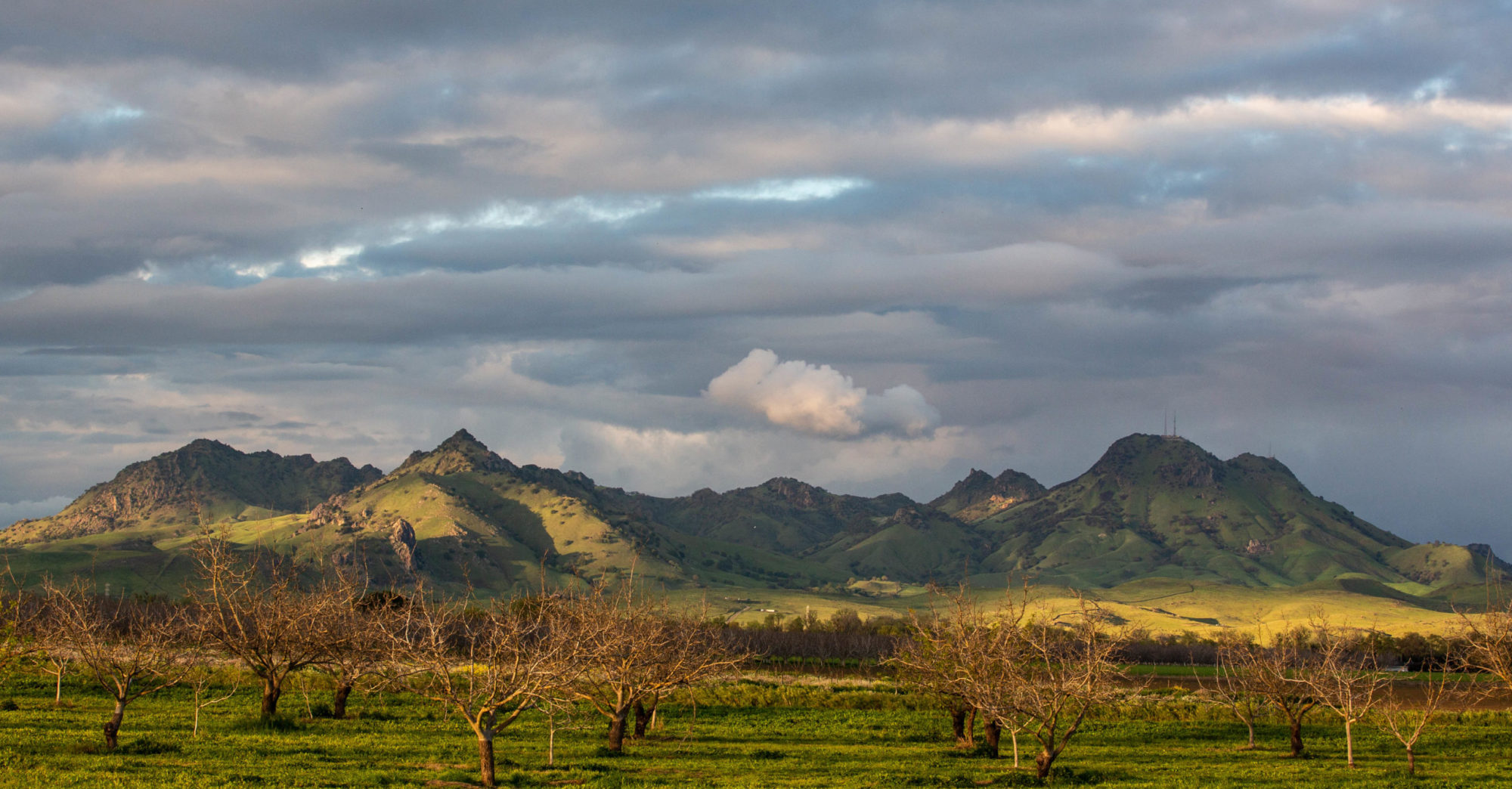
Friday, April Fool’s Day: Day 1 of Birthday weekend, on Big Springs Trail in Tilden Regional Park, high above Berkeley’s urban jungle. The advertised weather for the day had been for a bit of a cool-off after several days of increasingly warm and beautiful days that led to record temperatures in many locations on Thursday. But when The Dog and I hit the trail, the day was warm-plus; not oppressive, but hot in the full sun. The hills are at their best right now: green, grasses profuse, lots of wildflowers, water seeping from hillside springs due to recent heavy rains (as a media type, I know it’ll be a matter of days or a week or two until someone says that this summer/fall fire season could be particularly intense because of the thick spring foliage).

Quarry Trail, Tilden Regional Park
Runner Waved Home
A while back, I wrote about a friend who was sick. Terminally ill, as it turned out.
Peter was a baseball fan, and more particularly a whole-hearted, unabashed, and season-ticket-holding fan of the San Francisco Giants, whether or not they happened to be any good in a given season.
Things were touch and go for Peter last fall, but he reached a “plateau” in his illness. He got to see the Giants win that Sunday game they needed to make the playoffs, then mow down the Braves and Phillies and get into the World Series. Then he got to see the Giants beat the Rangers to become world champions. He wasn’t well during that great run, but I know that he made one or two of the late-season and playoff games.
I talked to Peter the morning after the Giants won to congratulate him. He was clearly thrilled and said, “Well, now I’ll have to live until next season.”
Two or three weeks ago, Kate got a message from one of Peter’s daughters that if friends wanted to see her dad, they’d better come soon. Kate and I spent a couple afternoons sitting with him in his sickroom — his bedroom at his home in North Berkeley. He was getting drugs to ease pain and was mostly knocked out. On one or two occasions he knew we were there.
Last night, the Giants opened the new season against the Dodgers. A little while after the game, Kate got an email from one of Peter’s daughter’s:
“My father died at 6:34pm this evening in the bottom of the sixth inning with a big smile on his face.”
‘Stay with the River’

From “Bang the Drum Slowly,” by Mark Harris.
One thing he knew was north from south and east from west, which I myself barely ever know outside a ball park. We drove without a map, nights as well as days when we felt like driving nights, probably not going by the fastest roads but anyhow going mostly south and east. “Stay with the river,” he said.
“What river?” I said. “I cannot even see the river.”
“You are with it,” he said, and I guess we must of been. He traveled according to rivers. He never knew their name, but he knew which way they went by the way they flowed, and he knew how they flowed even if they weren’t flowing, if you know what I mean, even if they were froze, which they were for a ways, knowing by the way the bank was cut or the ice piled or the clutter tossed up along the sides when we ever got close enough to see the sides, which we sometimes did because he liked to stop by the river and urinate in it. He would rather urinate in the river than in a gas station. Once a couple years ago I caught him urinating in the washbowl in the hotel in Cleveland. I bawled the daylight out of him. “I wash it out,” he said. Maybe he did and maybe he didn’t. For a long time I kept an eye on him.
Moving south he noticed cows out of doors. “We are moving south all right,” he said, “because they keep their cows out of doors down here.” He knew what kind they were, milk or meat, and what was probably planted in the fields, corn or wheat or what, and if birds were winter birds or the first birds of spring coming home. He knew we were south by the way they done chicken. “We ain’t real south,” he said, “but we are getting there. I can taste it.”
Then It Stopped

This was around the corner, on California Street, late last Wednesday morning. The pre-work routine wraps up with The Dog and I perambulating the neighborhood before I head off across the Bay. Last week was wet, maybe the wettest week of the wet season. Jan Null, a local meteorologist who I like to say wrote the book on San Francisco rain (it was his doctoral dissertation), has developed his own scale for storm intensity–it takes into account factors like the amount of rain and duration of high winds–and he rated the one that came through on Thursday as the strongest of the season.
Then Sunday, all that seemed to stop. It had been dry from midday Saturday, dry enough to go out and mow the lawn before it became unmowable and try to drain the water that had pooled in the crawl space. It drizzled a little tonight, but the weather forecast for the week is dry and warm, up to the 70s by Thursday. I think all the vegetation here is going to explode.
Storm Week, Potrero Hill
At the foot of the pedestrian overpass that cross U.S. 101 from 18th and Utah (west side of U.S. 101) to 18th and San Bruno (east side of the freeway). I was on my way into work. Can’t remember if this was the day I locked my keys in the car (Triple A came and got them for me), or the day I jump-started a coworker’s car (she had left her lights on), or the day I had delivered another coworker’s purse after she forgot it at work. The only thing I know for sure is that we had rain this day, like every other day of the week. Below: U.S. 101, looking south from the pedestrian overpass toward Bernal Heights (Utah Street turning west into 18th Street below and to the right).

Salmon for Their Own Sake
Like everyone else, I’m given to enthusiasms. Like everyone else, my enthusiams are too many to list. Thinking about them, most seem to involve a narrative of some kind: the progress of favorite remembered plays in baseball or basketball–any sport, really–to movies and books to roads I’ve traveled and places I’ve visited and on good days to whatever I happen to encounter in the world.
(Maybe something else is at work here; our tendency or need to turn everything into a story. I just came across a poem, “In Praise of a Teacher,” by Nikki Giovanni. She says:
“I always loved English because
whatever human beings are, we are storytellers. It is our stories
that give a light to the future. When I went to college I became a
history major because history is such a wonderful story of who we
think we are; English is much more a story of who we really are.”)
One of my enthusiasms, strange to tell for one who has hardly ever hooked a fish, is for salmon. Specifically, the salmon of the Pacific coast. And going with the notion of story, I think the biggest part of my attraction is to the salmon’s life narrative: birth in cold inland waters, migration to the sea, a sojourn that can last several years in the hostile wilds of the ocean, and then a long homeward journey to find that birthplace stream, whatever the obstacles, spawn just once, and die.
 It’s a great story, and my often half-informed fervor to share salmon history and lore for anyone who will sit still for a minute has led my colleagues at our Local Major Public Radio Station (LMPRS) to adopt a “safe word” when they think things are getting out of control. It’s “coho.” At the same time, I’ve probably gotten as much interest (or forebearance) as anyone could reasonably expect when suggesting salmon stories to develop for broadcast. Earlier this month, I got to attend a West Coast fisheries conference and do a few stories on prospects for the coming salmon season.
But that interest from my fellow journalists always comes with a question that I’ll summarize this way: “Salmon? Why should we care about salmon?” It’s a reasonable enough question: Every news story in every news venue contains some sort of explicit or implicit rationale or assumption about audience interest. Falling housing prices? Well, a lot of the audience is in that boat. E. coli in the food supply? We all eat that food. Rising taxes or reduced pensions? You see how it works.
In narrating the plight of California’s once-great native salmon populations, those who seek to save some semblance of the historic fisheries are learning to play that “why should anyone care?” game. In the past couple of years, they’ve brought consultants into play who can quantify what salmon mean economically. Cancelling two straight commercial salmon seasons, they reported, cost boat operators and fishing communities upward of $2 billion and 23,000 jobs.
I suppose the numbers are powerful, and it’s useful to have them when trying to persuade someone else that the decline of salmon is a story that matters. But the power of the statistics only goes so far: Someone else whose ox is being gored in the debate–for instance, the Central Valley farm interests who might not get all the water they want because some is being set aside for salmon–can come up with bigger, scarier numbers. And the numbers are unfortunate in another way: The pure economic impact is important, of course; whole societies have lived their lives around the salmon. But the cost a lost salmon season doesn’t begin to touch on the wonder of the animal and its place in the world or on what’s really lost when wild salmon runs go dead.
As it happens, my schoolteacher wife is teaching her fifth-graders about watersheds this year. Part of the lesson is about fish, and she’s been particularly interested in learning about efforts to restore one of Northern California’s last surviving wild coho runs, up in Marin County. One book in her watershed library is the one pictured above, “Salmon Stream.” The entire contents: a simple narration of the salmon’s life history. What’s wonderful about it is it presents the fish–the “resource”–as something of value for its own sake, without economic justification or cost-benefit analyses.
For me, the answer to why anyone ought to care about the salmon isn’t instantly accessible. The rational piece of the answer is what they represent about the world as it has been, as it is, as it might be, and the toll we’ve exacted from our surroundings to have our lives just so. The non-rational piece is the beauty of the thing itself, from conception to death. And maybe, when the question comes up next, I need to have copies of that picture book handy.
‘Pent Up in Lath and Plaster’
I had occasion over the weekend to open the front cover of “Moby Dick.” (One of many secret shames: I’ve never read it through.) But Kate had suggested that there was a section there we might share with some friends with whom we were going to have a poetry-reading evening. The very beginning of the book carried me away with its description of city dwellers tending toward the sea:
Call me Ishmael. Some years ago — never mind how long precisely — having little or no money in my purse, and nothing particular to interest me on shore, I thought I would sail about a little and see the watery part of the world. It is a way I have of driving off the spleen, and regulating the circulation. Whenever I find myself growing grim about the mouth; whenever it is a damp, drizzly November in my soul; whenever I find myself involuntarily pausing before coffin warehouses, and bringing up the rear of every funeral I meet; and especially whenever my hypos get such an upper hand of me, that it requires a strong moral principle to prevent me from deliberately stepping into the street, and methodically knocking people’s hats off — then, I account it high time to get to sea as soon as I can. This is my substitute for pistol and ball. With a philosophical flourish Cato throws himself upon his sword; I quietly take to the ship. There is nothing surprising in this. If they but knew it, almost all men in their degree, some time or other, cherish very nearly the same feelings towards the ocean with me.
There now is your insular city of the Manhattoes, belted round by wharves as Indian isles by coral reefs — commerce surrounds it with her surf. Right and left, the streets take you waterward. Its extreme down-town is the battery, where that noble mole is washed by waves, and cooled by breezes, which a few hours previous were out of sight of land. Look at the crowds of water-gazers there.
Circumambulate the city of a dreamy Sabbath afternoon. Go from Corlears Hook to Coenties Slip, and from thence, by Whitehall northward. What do you see? — Posted like silent sentinels all around the town, stand thousands upon thousands of mortal men fixed in ocean reveries. Some leaning against the spiles; some seated upon the pier-heads; some looking over the bulwarks of ships from China; some high aloft in the rigging, as if striving to get a still better seaward peep. But these are all landsmen; of week days pent up in lath and plaster — tied to counters, nailed to benches, clinched to desks. How then is this? Are the green fields gone? What do they here?
(Here’s a decent online annotation of the text for some of the references above, including “hypos,” short for “hypochondria,” which back in Melville’s time meant depression or melancholy.)