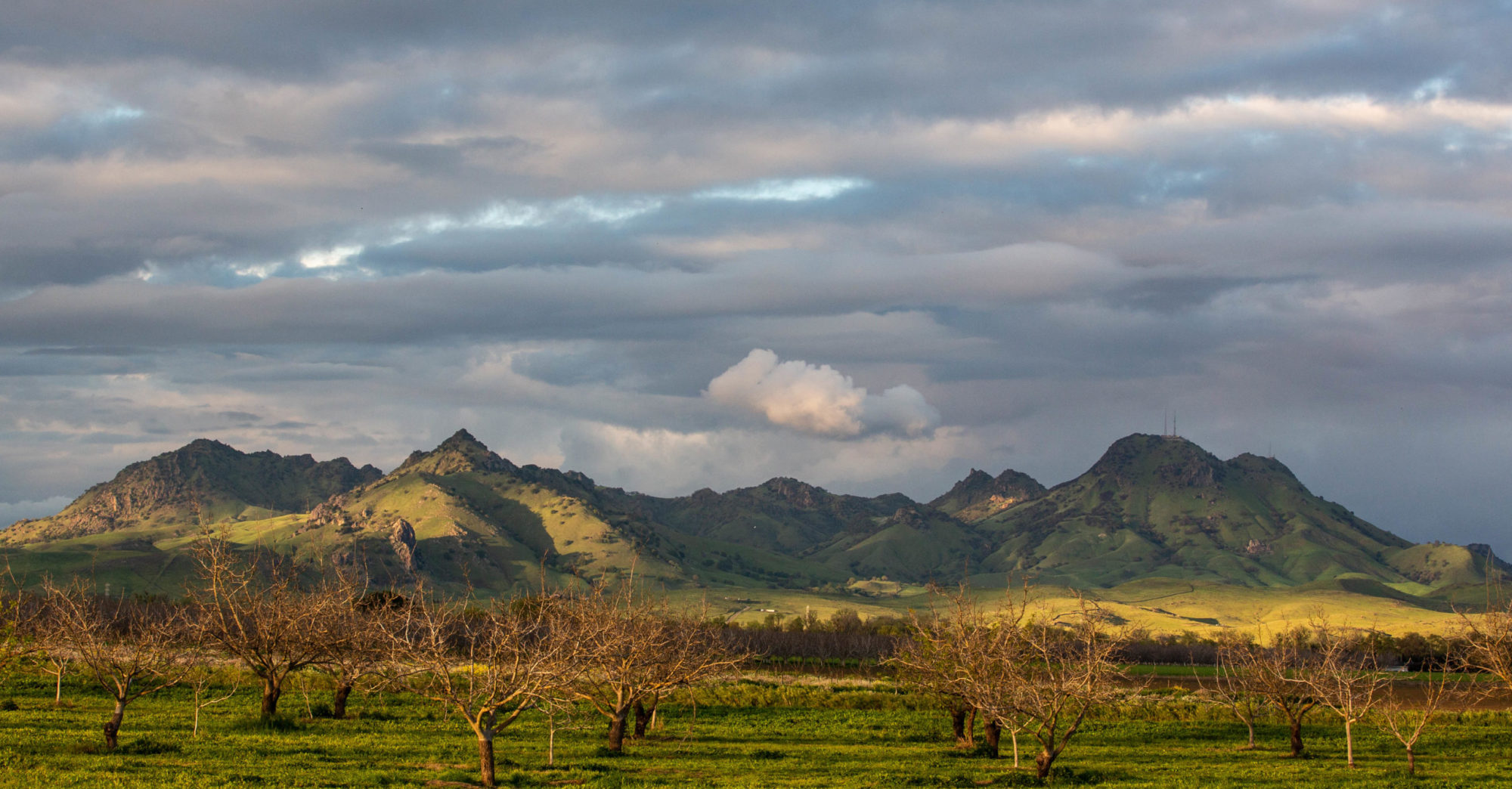
 It’s a heartwarming scene that would inspire Currier & Ives or Norman Rockwell: Three generations of a Chicago clan, gathered ’round the laptop for some wholesome family entertainment. This unstaged scene, Friday night on the North Side, shows a multigenerational Brekke gathering watching JibJab’s “This Land Is Your Land” parody online. Seriously.
Disappointed Office-Seeker, redux
 As I mentioned in today’s post on the James A. Garfield assassination, the stock phrase used to describe his killer is “disappointed office-seeker.” Google turns up a bit that comedian Robert Klein once did based on that cliche. But Garfield wasn’t the only elected official of his era done in by someone who expected an appointment that didn’t come through.
Chicago Mayor Carter Harrison was shot to death in October 1893, the day before the scheduled closing of the World’s Columbian Exposition in the city. The killer was an apparently mentally ill man named Prendergast who believed he merited an appointment to a senior city position for services rendered to Harrison. He didn’t get the job he fancied, general counsel for the city, so he went to Harrison’s home with a gun.
Harrison was a five-term mayor (though terms were just two years in his day). His death prompted an orgy of mourning. By one account, the day of his funeral, more than half a million people lined the route to the cemetery. Later, his son, Carter Harrison II, also won five mayoral elections (so the Richards Daley were not the first to pull off that feat).
The other day, when Dad and I went down to Randolph and Desplaines streets to take a look at the new Haymarket statue, he mentioned he thought the original Haymarket sculpture, which depicts a cop trying to calm the waters of unrest, might be over in a park a few blocks to the west. We drove by, and found Union Park. On one edge is Spaulding Elementary School, where my mom’s mom, Anne O’Malley Hogan, taught back in the 1920s. We could see driving by that there was a statue in the park, but it was obscured by trees and I couldn’t see whether it was the Haymarket cop.
Dad went back down there today and called from the statue to report his findings. It’s a statue of Carter Harrison, who it turns out lived nearby when he was assassinated. (And, to connect back to Haymarket, was on the scene of the bombing before the blast took place. The Chicago Historical Society has a great writeup of the event, and Harrison’s part in it, here.)
Infospigot: The Misinformation
Reading Minnesota Public Radio’s “Writer’s Almanac” today, I see a mention that today is the anniversary of the death, in 1881, of President James A. Garfield. Reading the item brings me face to face with the unpleasant truth that for years I’ve been spreading a spurious story about his death and in fact have confused certain details of Garfield’s assassination with the story of William McKinley‘s assassination 20 years later.
The story as I’ve told it: Garfield was visiting Buffalo. He was shot in the abdomen by a “disappointed office-seeker” (the stock phrase) as he passed through a train station. Emergency surgery was performed by the only available doctor, who turned out to be a veterinarian. Garfield appeared to be recovering from his wounds, which included a damaged intestine; but the vet’s botched work led to infection, gangrene, and a horribly protracted death nearly three months after he was shot.
The “Writer’s Almanac” version of events was at odds with my tale, so I was compelled to check my “facts.” I discovered my story is an amalgam of the Garfield-McKinley events, with one wholesale fabrication thrown in. So from checking a couple of reliable-looking Web resources (here and here), here are the key points in the long and painful demises of the two presidents.
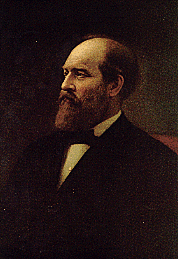 First, Garfield:
—On July 2, 1881, Garfield was leaving Washington, D.C., on a trip. While preparing to board a train, the “disappointed office-seeker” — actually a nut job with a .44-caliber revolver, Charles Guiteau — shot him twice. One bullet grazed Garfield, the other struck him in the back.
—Garfield was taken back to the White House and doctors summoned. Not a veterinarian in the pack. The physicians believed it was crucial to determine where the bullet was lodged and whether it had struck any vital organs. To do this, and a veterinarian would have done just as well, they began sticking their unwashed fingers and other probes into Garfield’s deep back wound to see if they could feel the slug or damaged organs. They kept at that effort for days or weeks without finding the bullet. Their patient was conscious for most of the poking and gouging and subsequent pus drainings.
—Despite initial optimism that Garfield would recover, the wound became infected, and the president died on Sept. 19, 1881, an astonishing and no doubt excruciating 80 days after he was shot.
—The most interesting detail of the efforts to treat Garfield is technological: At one point, Alexander Graham Bell was called in to use a metal detector he and aides had developed to try to find the bullet. The device was foiled, apparently, by a parallel innovation in sleep technology: The test was conducted while Garfield was lying on a mattress equipped with newfangled metal springs.
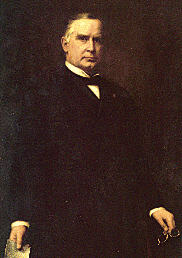 Now for McKinley:
—In September 1901, the president went to Buffalo to visit the city’s PanAmerican Exposition. After visiting Niagara Falls on the morning of Sept. 6, he returned to the fair to shake hands with the public.
–One of the people in the reception line was Leon Czolgosz. His abbreviated descriptor: anarchist. Call him a nut job with a .32-caliber pistol.
—Czolgosz, who would have changed his name to Lee Charles if he had had an agent, shot McKinley twice: one shot deflected off the president’s breast bone, the other struck him in the abdomen and tore through his stomach.
—McKinley was rushed to the rather poorly equipped hospital on the exposition grounds. Doctors were summoned, and they agreed immediate surgery was necessary to save McKinley’s life. Again, no veterinarians within scalpel’s reach of the presidential wounds. The doctor on the scene deemed most qualified to operate was a gynecologist, Dr. Matthew Mann. Contending with poor lighting in an improvised operating theater, he couldn’t find the bullet that had wounded McKinley,and settled for patching up the obvious damage and closing the president up again without draining the wounded area.
—Despite initial optimism that McKinley would recover, his wounds became infected, he developed gangrene, and he died early on Sept. 14.
So it’s clear my Garfield story is mostly McKinley, with a dash of Garfield and a dollop of outrage: Can you believe they let a veterinarian operate on the president?! One question I have for myself: Where did the fiction come from? I do make up stories occasionally — friends and coworkers will testify to that — but usually for the sophomoric pleasure of tricking someone or to make a point. I usually don’t knowingly pass off fanciful historical tales like this as truth; my guess is that, never really having read anything in detail about the Garfield and McKinley killings, I did something fairly common among us humans: jumble some vaguely remembered details together into a plausible narrative (and a narrative all the more entertaining for its improbability).
This all makes me wonder whether I’ve told my version of the Garfield story to someone who knew the actual details and thought, “What a load of crap!”
‘Jeb and George’
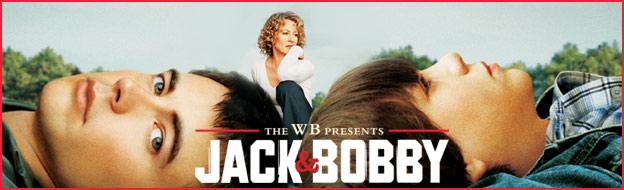
So, the “Jack and Bobby” billboards must be counted as effective advertising for the WB, because they’ve caught my attention. They make me think to myself, “What the hell’s that show going to be about?” Of course, the names, and the tease that one of them will be president, prod Kennedy memories (even if we have to wait till 2041 for the chosen one to become chief executive; will the war on terror still be raging?). When I look at the billboard, I have questions the designers probably didn’t intend: Are Jack and Bobby conjoined twins? And who in heaven’s name is the pensive woman in the background? And the WB probably answers this way: Who cares, as long as people tune in?
My puzzlement isn’t a compelling enough reason to break my record of never having knowingly viewed a WB production. Meantime, we’ve got the real-life drama of George and Jeb, who between them might leave nothing but a smoking crater for Jack and Bobby to preside over in 37 years.
Blog West
Back in California. Yeah, it’s a commonplace observation, but it really is amazing how far and how fast we can and do travel here, and how much we take it for granted. We think nothing of traveling across the continent, and are apt to be cross about it if anything delays us (same with this as in everything else about our lives; impatience and entitlement rule the day). Beyond the implicit sermonizing, I’ll just say it was great to see Kate and Tom when I got back on the ground in Oakland; and it was wonderful to have spent the last 10 days with Dad, Ann, Dan, Chris, Patty, Liam, Soren, Max, Ingrid, and Madeleine — in no particular order!
No pictures from the air this time — I couldn’t get a window. But more later on my trip.
WiFi: A Romance
Well, not a romance, really. But I’m sitting in my dad’s car in Evanston. I decided to check to see if there was an open node on the street before I went into S_______’s to pay to get online. Oh, yes, Evanston likes WiFi. I can see five nodes from where I’m sitting. The very first one let me on/in. The ethical and security issues involved in curbside surfing — we’ll talk about those later.
As far as the date goes, I can never see “September 17” without thinking “Antietam.” It’s an amazing place to visit. One news item: An annual vigil at the battlefield has been canceled, apparently due to Ivan-related weather.
Haymarket

Saw in the Tribune on Wednesday morning that a new statue commemorating the Haymarket Riot (more politically correct designations, such as “Haymarket Affair,” have been adopted over the years) was unveiled the day before. It’s good to see that people in Chicago will still turn out to argue the disputes of 118 years ago:
At the dedication, angry calls of “Anarchists!” were heard as Chicago Federation of Labor President Dennis Gannon read a list of men executed or sent to prison after the riot. And hecklers, some who waved anarchist flags, booed and uttered obscenities at (Fraternal Order of Police) President Mark Donahue.
Dad and I went down to Randolph and Desplaines streets — the first time I ever visited the spot. The statue’s interesting, I guess: It’s an attempt to interpret the history of the moment rather than represent it literally. (An earlier statue on the spot, of a police officer holding up his hand and saying, “In the name of the people of Illinois, I command peace,” was attacked so frequently that it has been relocated to the city’s police academy). But I’m not an art critic. More interesting to me: An older couple showed up while we were out there. After a few minutes, I asked them what had brought them out. It turned out they have retired to the city and live on Randolph, over by the lake. They had seen the story in the paper, too, and decided to investigate. 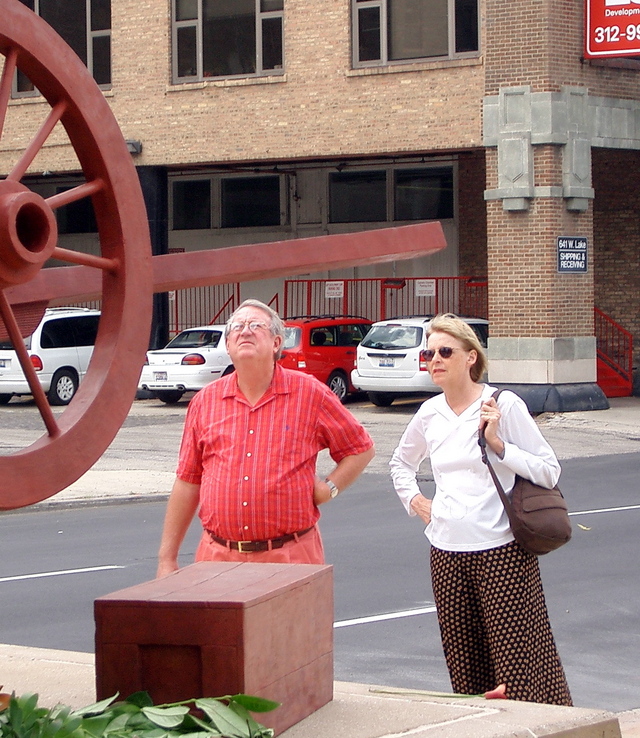 “When I read about this, I asked my kids, ‘What world-famous historical incident took place nine blocks west of where we live,” the man said. “One said, ‘It’s got somethng to do with labor.’ That was pretty good. Another one said, ‘Stop torturing your children.’ ”
Dad and I visited just in time. Chicago’s late-summer warm-wave was about to break, and thunderstorms had started to move across the city; five minutes after we were back in the car, it started to rain.
Cage Match: Ivan vs. Martha
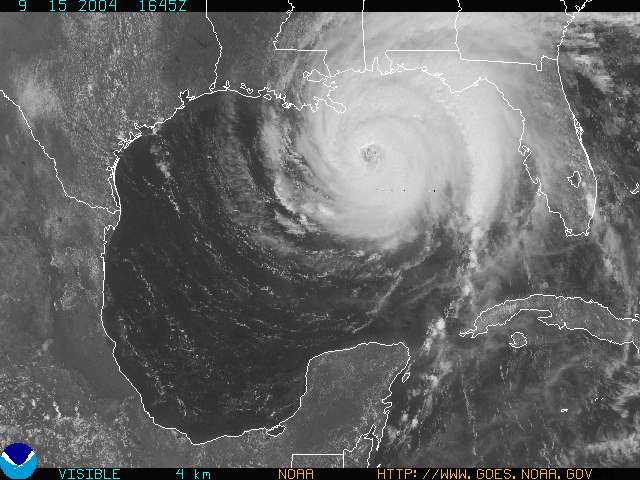 And the special Emmy for best free-form news comedy goes to … CNN, for its continuing coverage of Hurricane Ivan. The network’s guy in Mobile was on this morning, jabbering and/or gibbering about the monster storm headed straight for him. Rough transcript: “Florida Governor Jeb Bush was wearing a button saying., ‘I’ve survived damn near everything.’ And after Ivan, after Frances, and after Charley, this region has taken a full frontal.”
Huh? Full frontal? As in lobotomy?
Thankfully, the pre-Ivan terror report was pre-empted by breaking-news of live coverage of Martha Stewart announcing she’s going to begin her jail sentence as soon as possible, even though she’ll miss her pets (she actually said that) and even though this means she’ll this means she’ll be in stir for Halloween. Martha, we hardly knew ye!
Sidewalk Sloganeering
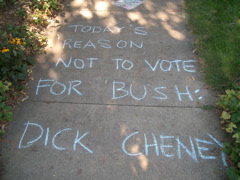 Walking east on Lunt Avenue from Dad’s place over to Sheridan Road, up here on Chicago’s far North Side, I see someone’s taken over a little stretch of sidewalk for their very own anti-Bush campaign. They’ve scrawled “Today’s Reason Not to Vote for Bush” in blue chalk, and every day (apparently; I’ve walked past the spot two days, and the reason looks like it’s changed daily) they offer a new presidential provocation. Last Friday, it was Dick Cheney. Today, Bush “ignored Geneva Convention” (the former is pithy and visceral, the latter requires a little too much thought, especially on an unseasonably warm, humid day like today.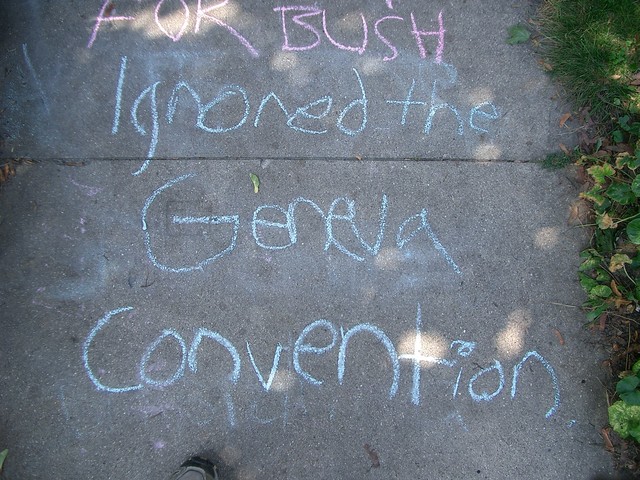
Land of Boats, Miners, and Lincoln
Back in Chicago tonight. I’ll catch up with the details of the past couple of days downstate later, but the short take is this: We began the day in St. Peters, Missouri, had coffee at our motel and headed straight up state Highway 79 to a place called Winfield. Drove several miles through farmland to the Mississippi, then crossed over to another ferry slip in the middle of nowhere. Then crossed a ridge and drove north along the west side of the Illinois River valley in Calhoun County, and crossed the Illinois at an actual town, Kampsville. Drove south down the east side of the valley to Grafton, the site of the only Mississippi ferry in the area we hadn’t taken; we rode across to St. Charles County, Missouri, then turned around and came straight back. So that made eight ferry crossings Sunday and Monday.
Why all the ferries, you might ask? Well, the ferry idea had intrigued me ever since my son Eamon and I happened upon one of them, more or less by accident, in June. But the bigger reason is that it’s just a way to be closer to the river, to the water, and get a chance to really see it in a way you just don’t if you’re just crossing a bridge or driving by (I haven’t gotten so fascinated that I’ve actually gotten a boat and gone out on the water by myself, though).
From Grafton we made a quick drive north and east to Mount Olive. Mother Jones, the labor heroine, is buried in a union miner’s cemetery just outside of town (another chance find on my trip with Eamon in June). It’s a beautiful spot, a sort of modestly impressive memorial, and appears to get a steady trickle of visitors (judging by keepsakes left at the grave; have to wait to get my pictures developed, as my digital camera ran out of battery before we got to the cemetery). Dad and I both had the same thought when we were out there: The one person we would have loved to have with us was my Uncle Bill, who would have been in heaven out there at a place dedicated to a cause he loved. One local note: The town of Mount Olive has put up banners along the main street celebrating Mother Jones and the memorial. I wondered how her legacy played in a place that an outsider (me, the Californian/ex-Chicago-area-type) might assume to be strongly conservative; if nothing else, maybe someone in Mount Olive has enough of a Chamber of Commerce sense to see an attraction out in the cemetery. Another possibility: The banners might be connected to the annual Mother Jones observance, held each October, which includes a dinner event in Springfield on a Saturday night and a caravan out to the grave on Sunday.
After Mount Olive, we headed up Interstate 55 toward Chicago. Stopped and ate just south of Springfield, then on a whim, drove into the capital, which I’d never visited before. Two things I wanted to see: the state Capitol and Lincoln’s tomb. We pulled up to park on a street just south of the Capitol about 5:15 p.m., and the employee parking lots were already deserted. We were getting out of a car at the meter when a woman wearing an employee badge from the Illinois State Library told us we’d get ticketed — the area was a no-parking zone after 4. She told us it would be just fine to park in the employee lot despite the tow-away warning there. Score one for Springfield people; Nice to strangers. We strolled around the Capitol — gorgeous late afternoon, with a stiff breeze from the south and piles of cumulus moving to the north. Then we found our way across town to Lincoln’s burial place. I won’t — can’t really, have to think on it more — sum up right now what I felt about the site. I’m not sure I understand Lincoln or his importance at all, but I will say I think his presidency and the tragedy of his death have been woven into the lives of liberal ’60s kids like myself, and his presence is real down there in that cemetery even 139 years after his death.
Then we got back to I-55 and headed north, passing Bloomington-Normal and other places that raised lots of memories of past adventures. More about them later, perhaps.