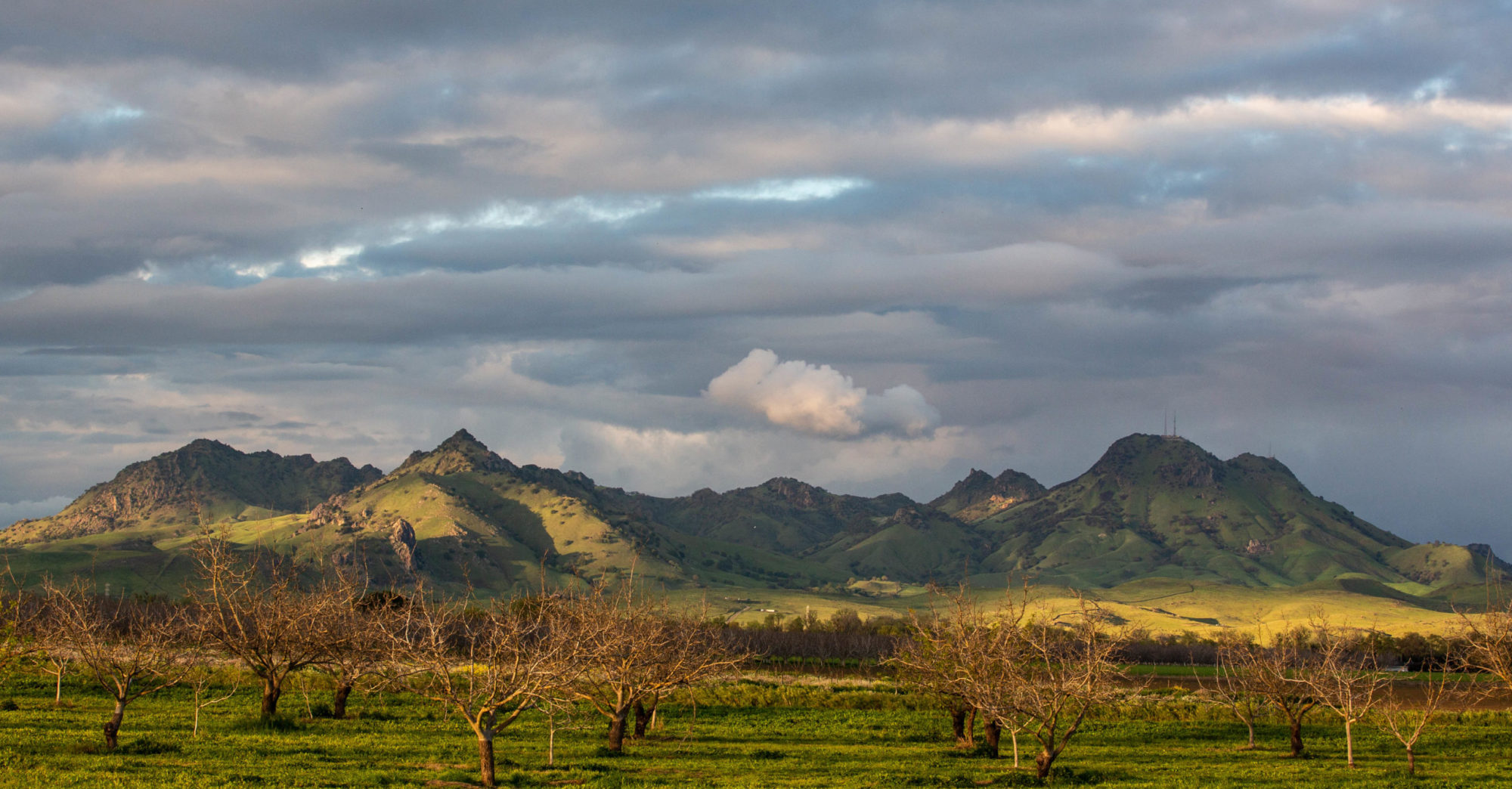
In Which We Gather by the River

A story in four parts.

I. Non-Confluence

Taking up where we left off last August, my dad and I — this time with my brother Chris — drove out to southwestern Will County on Monday to see if we could see the place where the Des Plaines and Kankakee rivers meet to form the Illinois River. Why? Well, the reason to care about the rivers is that in the mid-19th century they, along with the Illinois and Michigan Canal, represented the link between Lake Michigan, the Great Lakes, and the entire eastern United States and the Mississippi, the Gulf, and the country to the west. On top of that academic-sounding justification, there’s the relative obscurity of it. Who else is driving around the Chicago area looking for this spot? (Some good Web background on the I&M Canal, by the way: from the Chicago Historical Society (including pictures of canal sites in present-day Chicago settings); the Chicago Public Library (part of its “Down the Drain” site on the city’s sewer system); the National Park Service, and Illinois Department of Natural Resources.)

When we visited the area last summer, we hit the towpath along the canal a little too far to the west for it to be a reasonable walk, given my dad’s cantankerous knees. This time, we drove into a county park (McKinley Woods; among other things, the brief history posted at the park  says it was a POW camp during World War II) and started walking east on the towpath. The canal runs to the north of the path, and the rivers to the south.  About a mile from the McKinley Woods parking lot, after passing a little marina on the opposite bank, we came to a what appeared (to me) to be a spit of land that marked the separation of the Des Plaines and Kankakee rivers. Pictures were duly snapped and huzzahs sounded, and we walked back to the parking lot.

Dadtowpath
Cimg0530
Cimg0534

It was only in the course of writing this, though, that I discovered to what an extent I had betrayed the legacy of  Louis Joliet, the 17th century French-Canadian explorer who traveled up the Illinois River to the Des Plaines and then on to the Chicago River and Lake Michigan and quickly realized the feasibility of a canal connecting the lake to the Illinois and Mississippi. The “confluence” I located was in fact just an island in the Des Plaines River. The real merger point was west of the lot where we parked, not east.

I guess we have an excuse to go back and look for the spot a third time. (Pictures, from left: Dad on the Illinois and Michigan Canal towpath; a glimpse of the false confluence; the I&M Canal, with the river bluffs in the distance.)

II. Country Cemetery

From the non-confluence of the rivers, we got on Interstate 55 south, headed for Lexington, about 70 miles away. Our destination was the cemetery in Pleasant Hill, a hamlet two or three miles outside town. My old high school English teacher, G.E. Smith, died in April and was buried there alongside his mother and stepfather. I visited Pleasant Hill once, around 1971 or ’72, when G.E. went down to check up on his family’s old home, which by then amounted to a falling-down house and a cellar with a roof on it. He was attached to the place, but it wasn’t until later that he seemed to act on the interest, writing a column in Lexington’s weekly paper about Pleasant Hill history and then becoming a serious genealogist and trying to gather all the strands of the family that had wound up out there on the prairie.

The Pleasant Hill cemetery goes back to the first half of the 19th century. The area’s first white settlers, who arrived in 1820, are buried there. The little town used to have two churches, but those are long gone. The cemetery grounds are unfenced and merge into the bordering corn and soybean fields. G.E.’s grave is on an east-facing slope; his freshly cut brown-red granite stone announces his middle name, Edward, a matter that he liked to keep to himself. It describes him as “teacher, counselor, writer,” and includes a quote from him: “My highest goal was always and still remains simply this: To be able to look back upon my life, from any point along the way, and be able to say that this little corner of the world that my life touched has been made better, not worse, because I touched it.”

When we arrived, in early afternoon, it was clear and very warm and the caretaker, Ron Eckhart, was watering new sod on G.E.’s grave from a tank on his red pickup. He’s been the caretaker for 26 years — “That’s a lot of grass cut,” was how he put it — and long before that, his dad was pastor at both of the Pleasant Hill churches. Eventually Ron moved off to another part of the cemetery, and so did we. Up the hill from G.E.’s spot is the oldest section of the cemetery, filled with  people from the days before the Illinois Central bypassed Pleasant Hill and doomed it to perpetual hamlet-hood. With only the graves to go by, you would guess life was hard. There’s the usual large complement of children who died in their first year or two; but there are also seemed to be a lot of adults who didn’t make it out of their 30s. Maybe life was just hard everywhere when these people were trying to make farms and towns. For one example, take a look at the life of another Prairie Stater, Abraham Lincoln: His sweetheart was carried off by a fever at age 20. Just one of his four children survived to adulthood.

Cimg0542_1Cimg0557
Cimg0562

Looking around the little cemetery, it looked like G.E., who was aged 81 years, three months and a day when he died, is one of its oldest residents.

III. Wrecked

We drove through Lexington to start the drive back toward Chicago. On the way out to Pleasant Hill, Chris had pointed out the placards on every telephone poll downtown bearing the names of local soldiers serving in Iraq, Afghanistan and elsewhere. Chris counted 19 names. The town has about 2,000 residents, so roughly 1 percent of the population is serving. We fueled up at the Freedom gas station — just $2.899 a gallon — then headed north on old U.S. 66 to Chenoa. I wanted to take U.S. 24 east to Interstate 57 both because I knew there was a Dairy Queen along the way (in Fairbury) — my dad’s favorite road-trip stop — and because I remembered a little piece of local history along the way: the Chatsworth Wreck.

Back in the mid-70s, I stopped to read a historical marker just outside Chatsworth, one of the series of farm towns strung along U.S. 24. It reads:

THE CHATSWORTH WRECK

MIDNIGHT, AUGUST 10-11, 1887

One-half mile north on the Toledo, Peoria & Western Railroad occurred one of the worst wrecks in American rail history. An excursion train – two engines and approximately twenty wooden coaches – from Peoria to Niagara Falls, struck a burning culvert . Of the 500 passengers about 85 perished and scores were injured.

We stopped at the DQ in Fairbury, then continued on through Chatsworth to the wreck marker, which is about two and a half miles east of town, nearly on the Livingston-Ford county line. One thing that’s a little unclear when you’re at the roadside, though, is exactly where the disaster occurred. The TP&W tracks — the railroad still goes by that name — are a half mile north of the highway. I wanted to see if we could find the site of the notorious “burning culvert” — actually, a small wooden trestle. I imagined there could be a memorial or marker at the spot where the train left the tracks.

We parked at an electrical substation near the railroad’s marked but unguarded level crossing. My sense, based on the marker’s placement west of the section road that runs up the county line was that the wreck site was west of the road, too. Chris and I walked along the single track until we got to a culvert maybe a quarter-mile west of the road. It’s not deep — in fact, it’s a narrow ditch that crosses under the track through an 8- or 10-foot-diameter steel pipe. The site is unprepossessing, just like every foot of track east or west of it to the horizon, and there was nothing to suggest we were at the scene of a sensational event.

After we walked back to the car and started east again on 24, Chris and I spotted another culvert — this one an actual trestle — just east of the county line. We turned around and hiked out to it, too. It’s a much more satisfying place for a calamity: The tracks cross a bridge that’s about 75 feet long and a good 20 feet above a sluggish little creek. We agreed that between the two possible sites, this seemed the more likely.

Back at home, I poked around online to see if I could find some account that sheds light on the wreck’s precise location. Chatsworth had a newspaper, the Plaindealer, in 1887, and much more recently, a retired teacher and local historian there, Helen Louise Plaster Stoutemyer, published a book on the disaster, “The Train that Never Arrived.” Eventually, I came across a Chatsworth native’s website that includes the Plaindealer’s first account of the tragedy. The story says the train left the tracks at “the first bridge west of the county line” — the first place Chris and I looked. In addition to offering the salient facts, the writer has a lot to say about the impression the wreck left:

“The sight was most terrible. … It was too horrible to admit of description.  The screams and moans of the wounded were heartrending, and the terror of the sight can not be imagined. … To add to the terror of the scene a heavy thunder and lightening storm came up, and , with heavy rain made such a scene as would appall the bravest hearts. … Even the strongest men were forced to tears as they heard and saw the anguish of the unhappy excursionists.  While many displayed strong courage, grit, and heroism, others were almost frantic, and those in attendence upon them were forced to hold them to prevent acts of insanity and self-destruction.”

If you like the newspaper’s rendition, then you’ll love the song: “The Chatsworth Wreck.”

Cimg0578Cimg0574_1
Cimg0584

(Pictures: Left: The marker, east of Chatsworth on U.S. 24. Middle: Wreck candidate site A  (west of the railroad crossing 2.5 miles east of Chatworth; north end of culvert is just visible on far left). Right: Wreck
candidate site B — east of the crossing.)

IV. Wrecked Again

After investigating the site of the 1887 trackside carnage, we turned east again on U.S. 24. The highway crosses Interstate 57 at Gilman, then crosses Highway 1, which follows an old trapper’s trail from the Wabash River up to Chicago, at a town called Watseka. I was curious to see Watseka, which I’ve passed through exactly once: In the autumn of 1966, when Dad took us on a long-weekend trip down to the Smoky Mountains and back. I remember going through there late on a Thursday night that ended at a Holiday Inn just outside Indianapolis.

As we started to get close, I asked Dad and Chris whether they remembered the big disaster that had happened in Watseka around 1970. It didn’t ring a bell with them. I recounted the big blast and fire in town — apparently some kind of gas explosion — and an image I still vividly remembered. A fireball rising far above the old-fashioned town water tower.

A couple minutes later, a town came into view. There was a newish water tower rising up in the middle of town. I thought I was looking at Watseka, and said something like, “See, that must be the replacement for the old water tower.” Chris was driving, and noticed the town limit sign: Crescent City. He spotted a historical marker on the left side of the road. As we passed, he asked whether we should stop. Yes, let’s. We went back, and the marker turned out to be a small pavilion with some displays. In fact, a big blowup of the picture I had described — water tower, fireball — was the centerpiece in one of the displays. Somehow I had transferred the disaster — which occurred June 21, 1970 — to the next town over.

The cataclysm involved the same railroad that ran its train off the tracks in Chatsworth in 1887, the Toledo, Peoria & Western. Several liquified propane tank cars derailed in the center of Crescent City on Father’s Day morning. The town fire department responded and fought for an hour to prevent an explosion before the first car finally went off. At that point, according to a hand-written reminiscence that’s part of the memorial, “the boys retreated and let fate take its course.” Sixty-four people were hurt (mostly firefighters who suffered second- and third-degree burns), none killed; the center of Crescent City was obliterated. The president of the TP&W issued a statement accepting responsibility for the blast and apologizing for “the inconvenience.”

Cimg0594_1
Cimg0592_1

More on G.E. Smith
Happy 80.5, G.E.
A Teacher
A Teacher (2)
Technorati Tags: , ,

Expressway Summer

Danryan

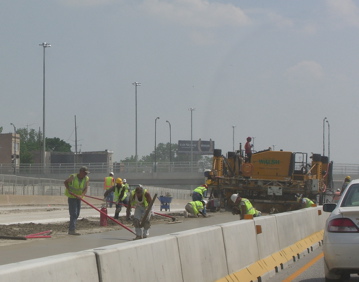
Expressway reconstruction: a rite of Chicago’s non-winter season. Chicago’s not the only place this happens, but from my outsider’s perspective, late spring/summer/fall-until-it-snows seems to be given over to large-scale highway projects. This year, the Dan Ryan Expressway on the South Side is being rebuilt. Not repaved — reconstructed from the roadbed up. The middle eight lanes — the “express” lanes, four northbound, four southbound — are torn up right now; that leaves three lanes in each direction in the main construction zone (from about 13th Street to 71st Street).

Mid-afternoon Saturday, we got a nice view during our slow-but-not-horrible progress down the Ryan (towards my brother Chris’s suburban manse in far-off Tinley Park). We headed back north Saturday night just before midnight. The work was still going on (what sort of overtime and weird-shift bonuses are these highway workers making?).

Technorati Tags: ,

Aus Chicago

A quick Father’s Day trip to Chicago. I managed to arrive just at the moment Chicagoland transitions from moderate temperatures to a mini-heat wave (high today in the low to mid 90s; tomorrow, we’re supposed to have widespread thunderstorminess and temps in the low 80s; mid-70s on Monday).

The main question with which I come forth to the universe today is: Why would someone take a window seat on an airliner then not look out the window?

I flew out of Oakland at 6 a.m. Friday. The United flight I took used a 757, and every seat was taken. I got a middle seat in row 29. No big deal. For four hours of my life, I can accept living in a semi-reclined coffin position.

My preference, though, is always the window seat. I ignore the flight attendants’ suggestion to pull down the shade so that the icabin video monitors will be glare-free during the in-flight movies and sitcoms. My in-flight entertainment is everything I can see through that little window or window and a half I can see from the coach section. Takeoffs and landings are primo, because you’re close enough to the ground to see details of the landscape or cityscape below. But everything in between is riveting, too, from the Sacramento-San Joaqin Delta to the Mississippi and Wisconsin rivers (if you approach Chicago from the northwest).

Yesterday, a bleached-blonde and pink-topped and coral-fingernailed woman sat squeezed into the window seat on my right. Before we pulled away from the terminal, she was deep into a Danielle Steel novel (“Miracle,” I think it was; I read a passage in which someone named Quinn was realizing that “his life without her was a life sentence. Life without parole”). In the sliver of a view I could see beyond the book, patches of the Bay shore and the hills to the east and the Central Valley slid by). She never once glanced out the window. Of course, she could have just been nervous; she may not have wanted to be reminded how high and fast we were moving. But then: Why take the window seat? If Danielle Steel is what you want, you could pretty much ride in the cargo hold and get your money’s worth.

The little bit of a view I had went away when the flight attendant made the “shut-your-shade-to-avoid-video-glare” announcement. My rowmate pulled down the shades on command and didn’t open them again until we were within about 10 minutes of our landing. That was OK — it gave me a chance to take the nap I would have missed while I stared down at the Sierra, the basin and range of Nevada, the Utah canyon country, the Rockies, the plains and sandhills of Nebraska, the Missouri River, the ethanol-producing Iowa corn country, the Mississippi, the Illinois farmlands giving way to the suburbs and expressways and O’Hare.

Technorati Tags:

Local Talent

On the radio (KWVA, the University of Oregon station): Tom Heinl, a Eugene guy. The line "a couple of Certs and then back to work" caught my attention. You can listen to it on Heinl's site (hit the MP3 link on the right).

Halfday Vacation

I've been workin' my fingers down to the bone
Seven nights a week at the old grindstone
And that don't leave a lot of time for recreation.
Yeah my wife left town, she didn't take me
But I don't gotta work till a quarter to three,
That's just enough time for my halfday vacation.

I'm smokin' those cigarette butts from a neighbor's truck
and drinkin' some cooking sherry,
One last beer, I put some ketchup in there,
That's a poor man's bloody mary.
And I'll probably pass out on my big old couch
Round about "Perry Mason"
A couple of Certs and then back to work
From my halfday vacation.

Well the alarm clock rings at 6 a.m.
I'm eatin' coffee right out of the can
I gotta have my fun before the noonday comes
That's when I go back to work for the man
And I'm watchin' my soaps and I'm drinkin' some Scope
And eatin' my wife's medications
A couple of Certs and then back to work
From my halfday vacation.

Yeah there's a party at dawn and baby I'm on my halfday vacation.

Technorati Tags: ,

North on 5

One last trip up to Eugene on Interstate 5. Someone asked me this morning how many times I’ve made the drive, which is about 1,030 miles round trip. Including today: Seven. At Thanksgiving, I did the trip twice in seven days, driving north on Tuesday, south on Wednesday, north and 40 percent of the way south on Sunday, and back home on Monday.

But the trip might not be as long as it sounds. I mentioned Interstate 5. It’s not an all-out raceway as it is from the Bay Area down to Los Angeles, but it moves right along going up the Sacramento Valley and doesn’t force you to slow down (too much) once you get into the mountains in the north. That’s all by way of saying that 500 miles and change might be a seven-and-a-half or eight-hour drive if you keep your stops short.

I’ll let you do the arithmetic. I’m going to bed.

Technorati Tags: , , , ,

Postscript

Back in February, the San Francisco Chronicle ran a series on violent cops on the city’s police force. In the series’ leadoff story, the paper ran an oversize picture of what it said was one of the San Francisco Police Department’s most fearsome offenders, Sergeant John Hackett. The merits of the story aside, a series of miscommunications among editors, reporters and a photographer led the Chron to print a picture of a private citizen and mistakenly identify it as Haggett.

The paper readily acknowledged the mistake — after the police chief gleefully pointed it out at a press conference — and ran a typically opaque correction that included the boilerplate “we regret the error” wording. Mea minima culpa. In due time, the man who was pictured as the rogue and perhaps racist cop sued the paper. On Thursday, the paper settled the suit out of court.

That’s that, except for this note in the story: “The Chronicle has not explained how the error occurred.” Immediately after printing the wrong picture, Phil Bronstein, the paper’s executive editor, said he was (to quote the Chron’s “readers’ representative”) “disposed toward telling whatever he can.” The readers’ rep himself said he agreed with Bronstein but was wary of a rush to judgment.

The point of telling the public how such a goof occurred isn’t merely to rub salt in the wounds or to hand over some hapless editor or photographer to a lynch mob, but to give readers an honest look at how the paper is run, even when things don’t look so good. At a time when online media offer more and more opportunities for audience engagement, it’s only smart for news organizations to be as transparent as they can be.

Now, four months have passed, and the Chron has stonewalled. Disappointing, but not surprising.

Heroes and Hoopleheads

Deadwood” begins its third season tonight, a cause for division in our household. I love the show, with all its profanity and violence; for the same reasons, Kate can’t tolerate it.

It has become commonplace to equate the show’s fine scriptwriting with the work of Shakespeare (just Google shakespeare deadwood and you’ll see what I mean). We create cliches because there’s some truth in them, and that one’s no exception. I’ve been tempted to stop episodes and transcribe characters’ speeches just for the language. There’s more to the show than the writing, though: It’s beautifully acted. It’s beautifully filmed. It’s violent and tense as hell.

It’s also conventional wisdom to think of “Deadwood” and the post-modern westerns dating back to “The Wild Bunch” as a new and better breed of drama: More frank about the blood and injustice and cynicism that older westerns soft-peddled. If you think so — and I incline to that way of thinking myself — check out A.O. Scott’s long, long piece in today’s New York Times on the DVD re-release of some of the John Wayne/John Ford westerns. He touches on how thoroughly Ford’s visual sense, especially in “The Searchers,” affected later filmmakers and films. But the heart of Scott’s essay has to do with Ford’s vision of the West and its settlement:

“The Indian wars of the post-Civil War era form a tragic backdrop in most of Ford’s post-World War II westerns, much as the earlier conflicts between settlers and natives did in the novels of James Fenimore Cooper. That the Indians are defending their land, and enacting their own vengeance for earlier attacks, is widely acknowledged, even insisted upon. The real subject, though, is not how the West was conquered, but how — according to what codes, values and customs — it will be governed. The real battles are internal, and they turn on the character of the society being forged, in violence, by the settlers. Where, in this new society, will the frontier be drawn between vengeance and justice? Between loyalty to one’s kind and the more abstract obligations of human decency? Between the rule of law and the law of the jungle? Between virtue and power? Between — to paraphrase one of Ford’s best-known and most controversial formulations — truth and legend?

“Ford’s way of posing these questions seems more urgent — and more subtle — now than it may have at the time, precisely because his films are so overtly concerned with the kind of moral argument that is, or should be, at the center of American political discourse at a time of war and terrorism. He is concerned not as much with the conflict between good and evil as with contradictory notions of right, with the contradictory tensions that bedevil people who are, in the larger scheme, on the same side. When should we fight? How should we conduct ourselves when we must? In ‘Fort Apache,’ for example, the elaborate codes of military duty, without which the intricate and closely observed society of the isolated fort would fall apart, are exactly what lead it toward catastrophe. Wayne, as a savvy and moderate-tempered officer, has no choice but to obey his headstrong and vainglorious commander, played by Henry Fonda, who provokes an unnecessary and disastrous confrontation with the Apaches. In the end, Wayne, smiling mysteriously, tells a group of eager journalists that Fonda’s character was a brave and brilliant military tactician. It’s a lie, but apparently the public does not require — or can’t handle — the truth.

“In telling it, Wayne is writing himself out of history, which is also his fate in ‘The Man Who Shot Liberty Valance’ (not, unfortunately, one of the discs in the Warner box). That film — which contains the famous line ‘When legend becomes fact, print the legend!’ —throws Wayne’s man of action and James Stewart’s man of principle into a wary, rivalrous alliance. Their common enemy is an almost cartoonish thug played by Lee Marvin, but the real conflict is between Stewart’s lawyer and Wayne’s mysterious gunman, one of whom will be remembered as the man who shot Liberty Valance.

“What we learn, in the course of the film’s long flashbacks, is that the triumph of civilization over barbarism is founded on a necessary lie, and that underneath its polished procedures and high-minded institutions is a buried legacy of bloodshed. The idea that virtue can exist without violence is as untenable, as unrealistic, as the belief — central to the revisionist tradition, and advanced with particular fervor in HBO’s ‘Deadwood’ — that human society is defined by gradations of brutality, raw power, cynicism and greed.

“If only things were that simple. But everywhere you look in Ford’s world — certainly in ‘Fort Apache,’ in ‘The Searchers,’ in ‘The Man Who Shot Liberty Valance’ — you see truth shading into lie, righteousness into brutality, high honor into blind obedience. You also see, in the boisterous emoting of the secondary characters, the society that these confused ideals and complicated heroes exist to preserve: a place where people can dance (frequently), drink (constantly), flirt (occasionally) and act silly.

Technorati Tags: ,

Coffee

Overheard by Kate at the Solano Avenue Peet’s:

Clerk: Would you like a complimentary cup of coffee with that purchase?

Customer: Nah, I’ve had enough coffee today. If I have any more I’m going to pull my lower lip up over my head.

Kate: It’s a good thing to know your limits.

Technorati Tags:

Post-Election Voter’s Guide

Ivoted-1California held its primary four days ago. Twenty-eight percent of eligible voters, an all-time low for a statewide election, appeared at the polls. Despite the ghost-town turnout, the votes are still being tallied in my county, Alameda. That’s because its Diebold voting machines were decertified — among other real and perceived shortcomings, they don’t produce a receipt or any kind of “paper trail” documenting votes cast — and elections officials decided to give the people what they said they wanted: supposedly unhackable paper ballots. In turning back the clock on election technology, the registrar of voters leapfrogged over the system the Diebold machines replaced: punch-cards. To avoid awakening bad chad memories, the county adopted a ballot that required voters to bubble in their choices in black ink. The ballots are machine readable, but the automation only goes so far: All week on the news, we got to see pictures of bored election workers feeding ballots one at a time into the readers. The registrar’s latest press release says 8,000 absentee ballots still need to be counted. And after that, 11,000 “provisional” ballots cast by people who had some sort of problem at the polls. And after that, a smaller but unknown number of damaged or machine-unreadable ballots.

I kind of wonder whether I’m one of the people whose ballot wound up in the provisional or damaged piles. What happened was this: When Kate and I went to the polls Tuesday night, all she had to do was turn in her filled-out absentee ballot. I still like to go through the exercise of going to the polls, so I went through the routine: Giving my name and address to the poll workers, signing the register, and getting my Democratic Party ballot. This time, it came in a legal-size manila folder. The voting booth — it’s really more of a spindly, collapsible lectern — was equipped with a pen on a string. I pulled out the ballot and started to bubble it in.

Several of the races had candidates running unopposed; and several of those involved officeholders who are trying to move into new posts because term limits are forcing them to move on; for instance: Cruz Bustamante, the lieutenant governor, who was the only Democratic candidate on offer for state insurance commissioner (the old insurance commissioner, John Garamendi, was running for lieutenant governor against two term-limited state legislators). There’s something tired and dispiriting about seeing these guys — mostly guys — swap seats with little more to recommend them than the fact hardly anyone can remember a time they weren’t haunting some committee room in Sacramento.

It’s not the first time the thought has occurred to me. Usually, I’d just pass on the uncontested races. But I don’t usually vote with a pen in my hand. With the punch-card and touchscreen voting systems, it was possible, but painful, to cast a write-in vote. With the paper ballot and the nice black felt-tip pen in the booth, confronted with the bland nothingness of an unopposed Cruz Bustamante, a write-in suddenly seemed appealing. So for every uncontested, or feebly contested, office, I cast a write-in vote. I was stumped at first about who I might vote for, but then I thought about some of my smarter and more conscientious friends. So Piero and Jill, across the street, got votes for the state Legislature; I voted for Bill for U.S. Senate (time for Feinstein to go); Larry was my choice for state insurance commissioner, and Kate got the nod for state schools superintendent. I was aware when I turned in my ballot that some poor elections worker would be forced to try to make sense of my impaired-looking block printing.

Throw-away votes? Maybe, though I feel I’d trust my choices in office at least as much as I’d trust the party retreads.I admit if I had felt anything was on the line, my friends would have lost out. Still, I walked away from the polling place feeling better about my vote than I have in a long time.

Technorati Tags: , , ,

Today’s Best Names

Nominated from the pharmaceutical category: Cephalexin and Cefoxatin, members of the cephalosporin antibotic family. The former is oral, the latter injected. I’m taking the former for 10 days after having a rear-end shot of the latter following some complications from the late unpleasantness between me and a local road. Complications? Well, I got four pretty good-sized abrasions when I fell off my bike last week. Three of them are healing just about as well as you could expect. The fourth, a big patch on my left shoulder, has been trouble; I may have suffered an allergic reaction to some antibiotic ointment I tried, from the adhesive on some high-tech dressings I tried, or maybe the thing was just infected from the start. In any case, it blew up into an angry, ugly mess that took on a life of its own (“I am not an animal! I am a human being!”). My whole left arm swoll up, as we used to say in the south suburbs. I went back to Kaiser twice. The first time, on Sunday, the doctor was unalarmed. The second time, today, the doctor blanched and said, “That’s cellulitis.” In a rare show of good taste and non-exhibitionist restraint, I’m suppressing the pictures. A day into the treatment, the thing seems to be responding, though.

Again with the baseball: Dan Uggla, rookie second baseman for the Florida Marlins. The South Florida Sun-Sentinel described his Wednesday exploits thus:

“Uggla became the first second baseman in franchise history with a multihomer game and knocked in a career-high five runs. … With the Marlins up 2-1 in the fifth, Uggla hit the first of his homers as part of four-run inning. His three-run blast to left knocked out starter Jamey Wright (5-5). In the ninth, Uggla sent another pitch into the left-field bleachers, this one from Tim Worrell with two outs and a man on.

” ‘I got lucky twice,” Uggla said. ‘I don’t even think my other at-bats were very good. A couple of balls, I guess I saw them pretty good and put good swings on them.’ ”

Uggla. Apparently it’s a Norwegian and Swedish name.