An Election Day Tale: Dewey Defeats Truman

deweydefeatstruman110612.jpg

Election Day, 1948, Chicago.

This was a few years before my dad met my mom–by his account, she asked him out to dinner at Schrafft’s when they were both working at a Chicago urban renewal agency. He was at home on Nashville Avenue, a business student at Northwestern, a year and a half or so after his short hitch with the Army was over. By his account, he was lying on the living-room couch in the dark, listening to election returns on the radio. It seemed the vote might be going for Truman over his Republican challenger, Thomas Dewey of New York. But an announcer mentioned the Chicago Tribune was already calling the race and that an early edition declaring Dewey the winner was on the street. Dad said he went out to a newsstand and bought a copy just as as a Tribune delivery driver was trying to retrieve the early edition. (That’s the copy pictured above.)

One of the things I noticed when I was a kid looking at that front page was how little evidence the Tribune had to declare a winner. Much of the South looked like a lock for States’ Rights candidate Strom Thurmond. The Trib’s front-page copy mentioned polls were still open in most of the country, and where voting was over, the count was so preliminary–well, you just have to admire the power of wishful thinking. Of course the Tribune had to be first with the news: its owner, Colonel Robert R. McCormick, was an arch-anti-Democrat and sworn foe of FDR and everything he stood for. A 1936 story on the Democratic National Convention was headlined, “The Soviets Gather at Philadelphia.” A subhead in this 1948 edition’s lead election story reads, “New Deal Repudiated.”

deweytruman110612.jpg

What also got my attention, and still does, are signs the front page had been prepared in great haste. Several lines of type in the lead story’s second paragraph were inserted upside down. Also, the first three pages seem to be cast in a “typewriter” Courier typeface that appears slapdash and irregular, with some lines askew and poorly spaced; the type is different from the interior pages, which are set in what I assume was the paper’s regular type. (After some accidental research, the explanation for the appearance of those pages appears to be that the paper’s typesetters were on strike and that the copy in question was indeed typed, then cut and pasted somehow, then photographed for reproduction on the press. (See “Dewey Defeats Truman: The Rarely Told Story of Chicago Tribune’s Most Famous Issue” and “The Eleven Editions of the November 3, 1948, Chicago Tribune” — the latter a fascinating breakdown of what the paper published and when that day.)

Perhaps what I admire most about this journalistic exercise is the reporting on display in the lead story. In perhaps the only story he’s remembered for, the Trib’s Washington bureau chief, Arthur Sears Henning, declared the outcome of the vote:

“Dewey and Warren won a sweeping victory in the Presidential election yesterday.

“The early returns showed the Republican ticket leading Truman and Barkley pretty consistently in northern and western states. The indications were that the complete returns would disclose that Dewey won the Presidency by an overwhelming majority of electoral votes.”

Since the numbers didn’t bear out the tale, what was the source of that intelligence? Herbert Brownell, Dewey’s campaign manager.

Brownell, wrote Henning, “claimed that on the basis of the complete returns ‘we will wind up sweeping two-thirds of the states for the Republican ticket.’ ”

“As states definitely in the Republican column in the light of the fragmentary returns Brownell named Illinois, Ohio, Indiana, Connecticut, Delaware, Maine, Maryland, New Hampshire, Vermont, and South Dakota. Four years ago the Republicans carried only five of these states.

” ‘At this moment,’ said Brownell, ‘the polls have closed in 12 of the 48 states outside the solid south. These states have a total of 120 votes in the electoral college.

” ‘On the basis of reports which I have been receiving from organization leaders thruout the country, I am confident that the Dewey-Warren ticket has already carried 10 of these 12 states with a total of 101 of the 120 electoral votes.

” ‘In the other two states–Kentucky and West Virginia–returns are not yet conclusive but the trend to the Dewey-Warren ticket is heartening.’ “

Brownell wasn’t completely off-base, though Illinois, Ohio, West Virginia and Kentucky all went for Truman. Still, the paper went out on that limb on the basis of 12 states and hearsay about “reports from organizers.”

Henning’s eventual successor as head of the Tribune Washington bureau, Walter Trohan, was in Chicago that night covering congressional elections for the paper. He recorded an account of parts of his bureau tenure for the Harry S Truman Library in 1970. He said an election evening phone call with Ohio Senator Robert Taft, who had lost the Republican nomination to Dewey, led him to believe the Trib’s story and banner headline were wrong. About the 72-year-old Henning’s insistence that Dewey was winning, Trohan said, “Why he became so stubborn I don’t know; I guess age.” Trohan was eventually called on to write a new version of the story for later editions, with Truman the victor. But before that happened, he was asked to appear on a local TV show to discuss the returns:

“… And that night it was terrible, about 10 o’clock, before — we were still carrying the headline, I was called to go on TV to discuss the congressional election. And I went up and there was Henning, and there was the wife of the publisher, and some very important people, a dozen people or so. The announcer was a fellow with a charming voice, but no sense, in a very nice pearl-shaped tone, said, ‘Well, Walter,’ and I had never met him before in my life, ‘how is Mr. Dewey going to get along with majority Congress?’

“I said, ‘He isn’t going to have a majority Congress, the Democrats have won the Congress.’

“He said, ‘You mean that Dewey will have to work with a hostile Congress?’

“And I said, ‘No, I don’t mean anything of the kind. Mr. Dewey ain’t going to be there either.’ “

But Henning and the Trib were already committed to a different version not only of the story, but of history. Henning’s rather brief piece ended with this bit of context under the previously mentioned subhead, “New Deal Repudiated”:

“The Republican victory brought to a close the 16 year reign of the New Deal which began in the country’s most devastating depression, introduced a collectivist economy, produced a four-term President, embraced a disastrous war and left the nation a 250 billion dollar debt and heritage of foreign policy containing the seeds of another war.”

‘Seek Help If Having Trouble Coping’

Looking for news about power restoration in New Jersey, I’m drawn to these tweets from a customer of Jersey Central Power and Light:

@brianaericson 1h Brian Anders Ericson @jcp_l 30 degrees in house. Can’t stay warm. Still no power. Town comfort center closed. No one to stay with. I’m disappointed in jcp&l

@jcp_l also my fish are dead and there is a thin layer of ice at the top of their tank. I am officially angry.

Elsewhere, I note a picture of a cabin cruiser rather oddly (or humorously) named the Graf Spee–anyone recall how that ended up?–being hauled off a commuter rail line north of New York City, near our friends Jan and Christian’s place in Hastings on Hudson.

And then there’s the nor’easter that’s on the way.

I’m an inveterate reader of National Weather Service arcana: forecast discussions, quantitative precipitation forecasts, river stage summaries, and special weather statements. I went looking for news of the approaching storm and found the following instead. It was issued earlier today (Monday, November 5, 2012) by the NWS office in New York City. It says so much without a single specific mention of meteorological phenomena.

SPECIAL WEATHER STATEMENT

NATIONAL WEATHER SERVICE NEW YORK NY

1101 AM EST MON NOV 5 2012

THE FOLLOWING MESSAGE IS TRANSMITTED AT THE REQUEST OF THE CENTERS FOR DISEASE CONTROL AND PREVENTION (CDC):

IN THE WAKE OF SANDY…IT IS IMPORTANT FOR CITIZENS TO REMEMBER THE FOLLOWING INFORMATION TO PROTECT YOUR LIFE AND HEALTH AND THAT OF YOUR FAMILY:

* DRINK CLEAN…SAFE WATER AND EAT SAFE…UNCONTAMINATED FOOD

* KEEP GENERATORS OUTSIDE AT LEAST 25 FT FROM DOORS…WINDOWS AND VENTS

* DO NOT GRILL INSIDE YOUR HOME…THE FUMES CAN KILL

* NEVER TOUCH A DOWNED POWER LINE OR ANYTHING TOUCHING ONE

* USE 1 CUP OF BLEACH FOR EACH GALLON OF WATER TO REMOVE MOLD

* NEVER MIX BLEACH AND AMMONIA…THE FUMES CAN KILL

* WASHING YOUR HANDS PREVENTS ILLNESS

* SEEK HELP IF HAVING TROUBLE COPING

FOR MORE LIFE SAVING HEALTH RELATED INFORMATION CALL THE CDC AT

800-232-4636…TTY 888-232-6348. HTTP://EMERGENCY.CDC.GOV/DISASTERS/

Night of the Night Heron

heron102612.jpg

A black-crowned night heron, one of several we see hanging around the ferry dock at Jack London Square in Oakland. We usually spot two hanging out on the rocks right at the water line south/east of the dock. They are in the midst of some pretty heavy human traffic, but they are still skittish when they detect you getting close. Over the past half-year or so, a great blue heron has been frequenting the same area. Last night it was roosting on the dock next to the USS Potomac, FDR’s presidential yacht.

Let’s Go Oakland

hat101212.jpg

It’s been years since I paid more than passing attention to baseball, but it happened again this summer. It was a purely selfish thing: the teams that I had followed most avidly, the Cubs and the Athletics, had become perennial disappointments. In the case of the Cubs, they’re deserving objects of ridicule and a model of how weirdly wrong a franchise can go: since they play in a “destination” ballpark, the home nine’s wretched performance on the field has no bearing on the organization’s ability to pack the stands game in and game out.

The A’s case is different. Heck, there’s a book and movie out there that explains the general manager’s technique of finding undervalued talent, and he is well known for putting together a roster of kids and cast-offs who win more games than anyone would expect. A less celebrated side of the A’s way of doing baseball is that very few players get to stick around long enough for the fans to get attached to them. Do the A’s have a standout first baseman or shortstop or pitcher? You know that when they’re eligible for free agency, they’ll be gone. So the cast of characters change and change and change, and while the teams the A’s have fielded the past few seasons may have made some sort of economic sense–at least from the standpoint of an owner who wants to take the team to a new city and seems utterly uninterested in investing a dime, or more than a dime–the results have been a little dispiriting for the casual fan and unlikely to win any new converts.

The A’s ballpark, the Oakland Coliseum, has become the opposite of a baseball shrine. The limitations of a multi-purpose stadium were built into the place, but it had its graceful points if you were willing to see them. The park featured a beautiful view to the Oakland Hills to the east (though yes, right in the center of the vista was a working rock quarry). Back in the ’90s, the city and county made a deal to get the Raiders to come back, and part of the deal was to remodel the stadium. The result was a grossly ill-proportioned concrete monstrosity that bans the view of anything that might soothe the eye. So, regular outings to the Coliseum is a hard sell to anyone who’s not already a convinced follower of the local teams.

This season? Well, this season was certainly different. The A’s, with the usual collection of odd parts, played their first 61 games in the expected fashion. On June 10, the team was 26-35. From that point on, they won more games than any team in the major leagues, going 68-33. Wow, was that fun to see. And so by August–did I hear someone say, “Fair-weather fan”?–I started going out to see what was happening out at the Coliseum.

That’s all by way of saying that an NPR sports show, “Only A Game,” was looking for a story on Bay Area postseason baseball (the Giants are in the playoffs, too, if anyone is wondering). The story will air tomorrow (I’ll put up a link when I see one audio is embedded below). And just for the exercise of showing what a radio script looks like, I’m including that below (including the speculative host intro). Here it is:

**

Major League Baseball’s post-season continues this weekend … with the San Francisco Giants returning home to play the St. Louis Cardinals tomorrow in their National League Championship Series. The Giants go into Game Six against the defending champions … hoping to get back to the World Series … and reclaim the crown they won two years ago.

Across the Bay from the Giants’ sparkling ballpark … another team made the playoffs this year. Dan Brekke of NPR member station KQED reports on the surprising Oakland Athletics … a franchise that battles the best in the American League … and sometimes its own fans.

Track …

Back in early June … this is the last thing an A’s fan would have expected to hear … as the year wound down.

Ambi 1/Glen Kuiper game call:

Swing and a miss! He struck him out! And the Oakland Athletics are going to the postseason! Un-be-lievable!:10

The A’s turned a mediocre spring into a summer of conquest. Their roster of unknowns, re-treads, and rookies ended the regular season by sweeping past the Texas Rangers to steal the American League West Division title.

And then … on to the playoffs.

Ambi: Let’s go Oakland chanting.

(Play two or three reps, then end abruptly)

But … before we continue with that feel-good story, a word about Oakland, the A’s … and Bay Area baseball.

The A’s owner … developer Lew Wolff … is determined to take the team to San Jose … build a new stadium … and sell luxury boxes to the Silicon Valley super-rich.

So … a lot of A’s fans aren’t crazy about Lew Wolff. There’s little love lost for the Giants, either, who seem to have everything the Athletics don’t: a beautiful waterfront stadium, a sell-out every game, and money to go out and buy top-level talent.

Something else the Giants have: the territorial rights to Wolff’s coveted new home in San Jose. So far, they’ve blocked the move.

So for now … Oakland fans and Wolff are stuck with each other … in a historic but hideously remodeled ballpark … that ranks near the bottom of the major leagues in attendance.

Ambi 2 or 3:

Let’s go Oakland ambi(in clear for two or three reps, then under)

But all that seemed to change … as the A’s made the playoffs … and came home to play the Detroit Tigers on October 9th.

The Oakland Coliseum was packed … and loud

Ambi 4: Crowd roar

But even then … lots of customers were unhappy with management. With fans begging for tickets … the team left 10-thousand upper-deck seats covered with tarps … and off-limits.The A’s explained they wanted to maintain an “intimate” feeling at the game. For fans … it was just another sign that the organization doesn’t care about them.

Cut 1: “Brad from Santa Cruz”

They probably wouldn’t sell it out and it would look weird. But I agree, that’s a pretty lame reason [… internal edit …]Let’s let the people watch some baseball, know what I mean? :08

Butt to:

Cut 2: “Essence Harden”

EH: It’s completely insane.[…internal edit …]. I understand that during the normal season there might not be enough to fill up those seats. But this game sold out almost immediately, and the idea of having those tarps on there still is completely horrible to the tons and tons of A’s fans that would love to have seats right now.

DB: And why do you think they didn’t open it?

EH: I think Lew Wolff hates us so much. I don’t know why. :20

A’s management did relent … announcing it would open the upper-deck seats … for the league championship and World Series.

That was before the A’s ran into Justin Verlander in the deciding game of their divisional series match-up with the Tigers. He pitched a shutout … and it turned out the tarps could stay on all winter. Some fans complained Wolff had jinxed the team … by finally agreeing to open the upper deck.

But the fans … and the surprising team they had come out to cheer … had a final moment together.

As the Tigers celebrated on the infield … the Coliseum crowd gave the Athletics one last ovation.

Ambi 5: Out on “Take Me Out to the Ballgame” ambi? (Not sure the song pops enough).

For Only A Game, I’m Dan Brekke in San Francisco.

***

Where We’ve Been

rooftopclouds101511.jpgberkeleydawn.jpeg

October 16. Out of curiosity I checked what, if anything, I posted last year on this date. The image at above left is what I found, under the title “Rooftop Clouds.” I can see from my pictures that I went for a walk in the hills and arrived home as the sun was going down, climbed on the roof, and snapped a few shots of the scene in the west.

OK. Of what did I take note on October 16, 2010, then? See the picture at above right, titled “Berkeley Dawn.” That’s in the backyard, looking east. The difference a year makes: a 180 degree shift in perspective, daylight seen from opposite ends of the day. Conclusion: I like clouds, I guess, and that low slanting light. And I’ve got a photo blog here.

So how about this date in 2009? “Please Help Me Find Him: The Resolution.” I wrote about a missing-persons poster I had spotted in the Mission and the story’s happy ending.

2008: “Utah Door,” a picture of a colorful domicile entrance on Potrero Hill.

2007: “Memories of Suction Past,” pictures of an abandoned vacuum cleaner and a brief reflection on the regular appearance of cast-off vacuums on the local streets.

2006: “The News from Iraq.” Here’s the first paragraph: “So, the news from Iraq is bad. But maybe we’re lucky we’re getting any news at all. The Associated Press has a story today on the number of journalists now "embedded" with U.S. troops in Iraq. From a high of 600 at the war’s glorious beginning, participation has dropped recently to 11. Eleven. Fewer than a dozen reporters and news organizations out with the troops to find out what’s happening on the streets and in the countryside. The rest of the news gets reported out of the Green Zone in Baghdad or secondhand through Iraqi stringers.”

2005: “Behold a Pale Hose.” I acquiesce to the reality of another Cubs-free postseason and resolve to enjoy the White Sox trip to the World Series.

2004:”Local Politics.” A political campaign from foreign parts sign magically appears on our lawn.

And there is no 2003 for this date, because I didn’t start in on this project until the following month.

Journal of Arcane Baseball Research

Update: The Giants won, and that means they're the first team to come back from a two-nothing deficit at home to win a five-game series with three straight wins on the road. This was the second five-game series (the history goes back to 1969) in which a home team didn't win a single game (the first was Texas-Tampa Bay in 2010, when the Rangers clinched at the Rays' dome). 

Previously:

"Arcane baseball research." Is there any other kind?

That fine point aside, the San Francisco Giants have a chance for a rare playoff achievement today: They could become the first team in baseball history to lose the first two games of a five-game playoff series at home, then go on to win the final three games on the road. In fact, the Giants are only the fourth team to force a fifth game after losing the first two games of a five-game series on their home field. Here's how that history breaks down:

Teams that forced a fifth game in five-game series after losing first two at home*:

2-3 configuration (two at home followed by three on the road; 1969-1998, 2012):

  • 2012 Giants (vs. Reds; series tied 2-2).
  • 1981 Brewers (vs. Yankees; Yankees won 3-2. at Milwaukee).

2-2-1 configuration (two at home-two on road-one at home; 1999-2011):

  • 2001 Yankees (vs. A's; Yankees won 3-2; fifth game at home).
  • 2010 Rays (vs. Rangers; Rangers won 3-2; fifth game on the road).

Other teams that lost first two at home in five-game series (and result), any configuration:

  • 2010 Twins (vs. Yankees; Yankees won 3-0).
  • 2008 Angels (vs. Red Sox; Red Sox won 3-1).
  • 2008 Cubs (vs. Dodgers; Dodgers won 3-0).
  • 2007 Phillies (vs. Rockiers; Rockies won 3-0).
  • 2006 Twins (vs. A's; A;s won 3-0).
  • 2006 Padres (vs. Cardinals; Cardinals won 3-1).
  • 2004 Angels (vs. Red Sox; Red Sox won 3-0).
  • 2002 Diamondbacks (vs. Cardinals; Cardinals won 3-0).
  • 2001 Astros (vs. Braves; Braves won 3-0).
  • 2000 White Sox (vs. Mariners; Mariners won 3-0).
  • 1997 Mariners (vs. Orioles; Orioles won 3-1).
  • 1996 Dodgers (vs. Braves; Braves won 3-0).
  • 1995 Rockies (vs. Braves; Braves won 3-1).
  • 1984 Royals (vs. Tigers; Tigers won 3-0).
  • 1981 Royals (vs. A's; A's won 3-0).
  • 1979 Reds (vs. Pirates; Pirates won 3-0).
  • 1979 Phillies (vs. Dodgers; Dodgers won 3-1).
  • 1976 Phillies (vs. Reds; Reds won 3-0).
  • 1974 Pirates (vs. Dodgers; Dodgers won 3-0).
  • 1970 Twins (vs. Orioles; Orioles won 3-0).
  • 1970 Pirates (vs. Reds; Reds won 3-0).
  • 1969 Braves (vs. Mets; Mets won 3-0).

*100 5-game series since 1969; approximately 52 with 2-3 configuration. Twenty-five teams have started a five-game series with two games at home and lost both those games. Prior to this year, one won the series 3-2; two lost the series 3-2; five have lost 3-1; 17 have lost 3-0.

The Arctic 2012: A View from Above

seaiceextent091912.png

One of the Tweet-worthy current events items I’ve come across in the last couple of days is news that climate scientists say the Arctic ice pack has reached its lowest extent since the satellite records began in 1979. The National Snow and Ice Data Center at the University of Colorado says the Arctic sea ice appears to have reached a season minimum this past Sunday, September 16, of 3.41 million square kilometers (1.32 million square miles). That’s half the average seen in the years 1979-2000 (and above, that’s a graphic from the NSIDC showing the sea ice extent for September 19).

What does it mean? Here’s a decent summary of the basic thinking from today’s PBS NewsHour:

The ice is younger and thinner than it was in the 1980s. Of the ice surveyed this summer, the majority was one to two years old and three to five feet thick on average. That’s down from 10 to 13 feet thick in 1985.

Losing sea ice also has immediate impacts on Arctic wildlife. Walruses that normally rest on the ice while hunting ocean fish moved ashore by the thousands last year. Arctic seal populations have already declined as a result of disappearing ice. And a 2009 United States Geological Survey estimated that by 2050, the world could lose two-thirds of its polar bears as their ice-dwelling food sources disappear. The ice is also home to delicate microorganisms, which, if lost, could upset the entire Arctic food chain, Meier said.

Ted Scambos, senior research scientist at NSIDC, said that changes in the Arctic’s ice and snow are making the Arctic warmer, which may mean major weather and climate changes for the rest of the planet. Sea ice reflects the sun’s rays, which helps regulate the planet’s temperatures, especially during the summer. Losing the reflective ice surface causes temperatures to rise. If the North Pole is not as cold as it used to be, that has the potential to change wind and weather patterns throughout the Northern Hemisphere.

“But a wider impact may come from the increased heat and moisture that the Arctic is adding to the climate system,” Scambos said in a press release yesterday. “This will gradually affect climate in the areas where we live…We have a less polar pole–and so there will be more variations and extremes.”

Having read some of the accounts of the sea ice retreat yesterday, I went looking for images of what the Arctic looks like. A favorite resource: NASA, which publishes a bunch of cool images of various Earth features every day. One of the services, called MODIS(MODerate Resolution Imaging Spectroradiometer), includes daily mosaics of the Arctic snapped by NASA satellites. Every time I see these images of Earth from space, the thought that seizes me–or maybe it’s more of an emotion–is what an incredibly beautiful place this planet is.

Looking at the Arctic day to day, I wondered whether I could turn the images into a “movie.” Well, I could, sort of. I downloaded 185 days worth–from March 20 through September 20–then turned them into a slideshow, saved that as a movie, and uploaded it to YouTube. Here it is:


I will say up front that while the view is breathtaking, the Arctic weather screens the view of precisely what’s happening with the ice. It’s not as stark as you might expect (and of course, this is just one season we’re looking at; there’s nothing here to give a comparison to how this scene unfolded 30 years ago).
One note of orientation and explanation: The North Pole is near dead center in the images. Greenland is clearly recognizable at the lower left; Iceland is at the lower center, and Scandinavia and the northern coast of Russia are at the lower right. Siberia dominates the right side of the map (these images show weeks of heavy smoke from fires there). At the top margin, the Bering Strait, where Siberia nearly meets Alaska, is just left of center. Alaska appears inverted at the left, with the Gulf of Alaska at the top left corner.

One more video: This year’s Arctic ice melt as presented by NOAA’s Environmental Visualization Laboratory:

Journal of Airliner Seat Photography 2

byronnuclearplant091012.jpg

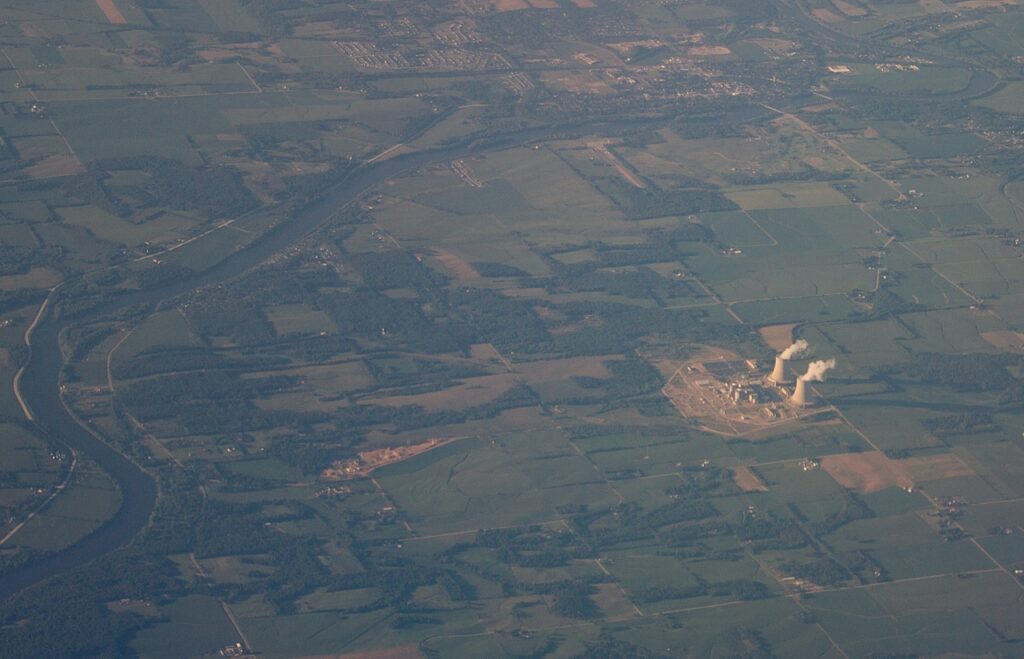
Further notes on my occasional hobby/obsession with snapping pictures while strapped into an airliner seat: The scene above shows the Byron Generating Station (a nuclear power plant) in Ogle County, Illinois, about 70 miles west of Chicago’s O’Hare International Airport. The view here was taken July 26, 2012, from American Airlines Flight 1661, to San Francisco, about 12 and a half minutes after takeoff (we lifted off the runway at 6:43 p.m. CDT, about two hours late). The view here is north/northeast. The Rock River is at the left, and the town of Byron is at the upper right, about three miles from the plant; the town of Oregon, Illinois, is just out of the frame at the lower left.

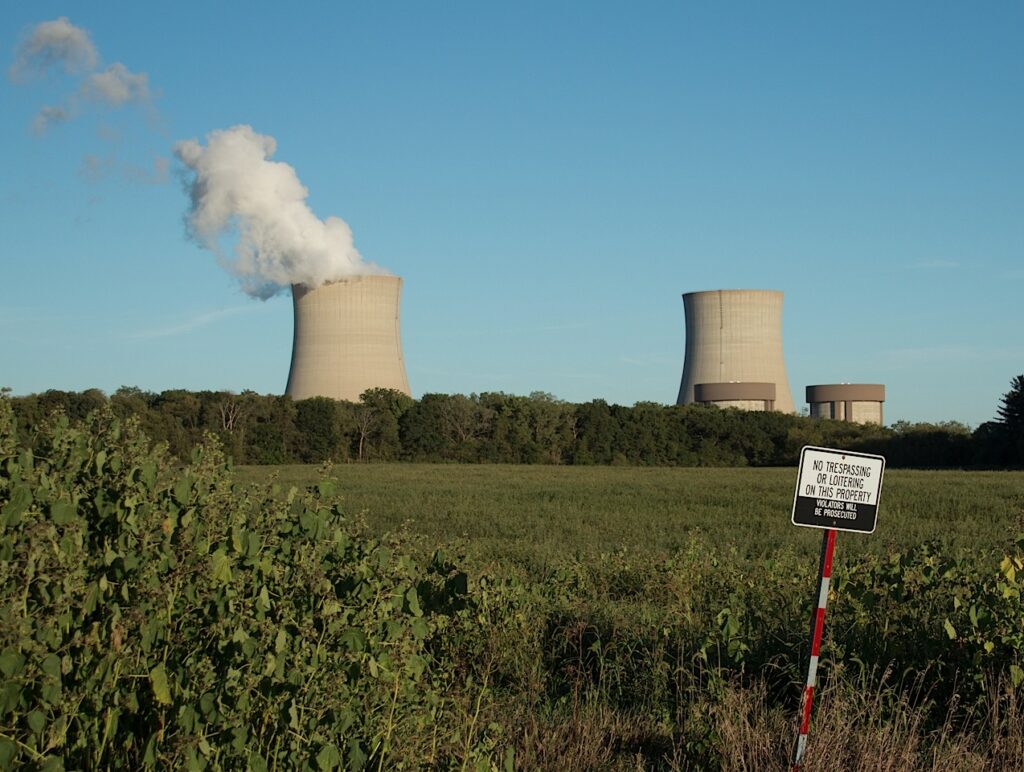
As it happens, Kate and I were driving in this area last week, and when I saw the plant’s cooling towers in the distance I started looking for a place to stop and take a picture. We found Razorville Road, which runs north-south about a mile west of the plant, and pulled off. The roadside was studded with “No Trespassing” signs, and I was careful not to stray beyond them. I half expected armed guards to show up, but none did. I got my pictures, and we drove off to another local attraction, the Black Hawk statue at Lowden State Park.

byronnuclearplant091012a.jpg

‘A Private in Uncle Sam’s Army’

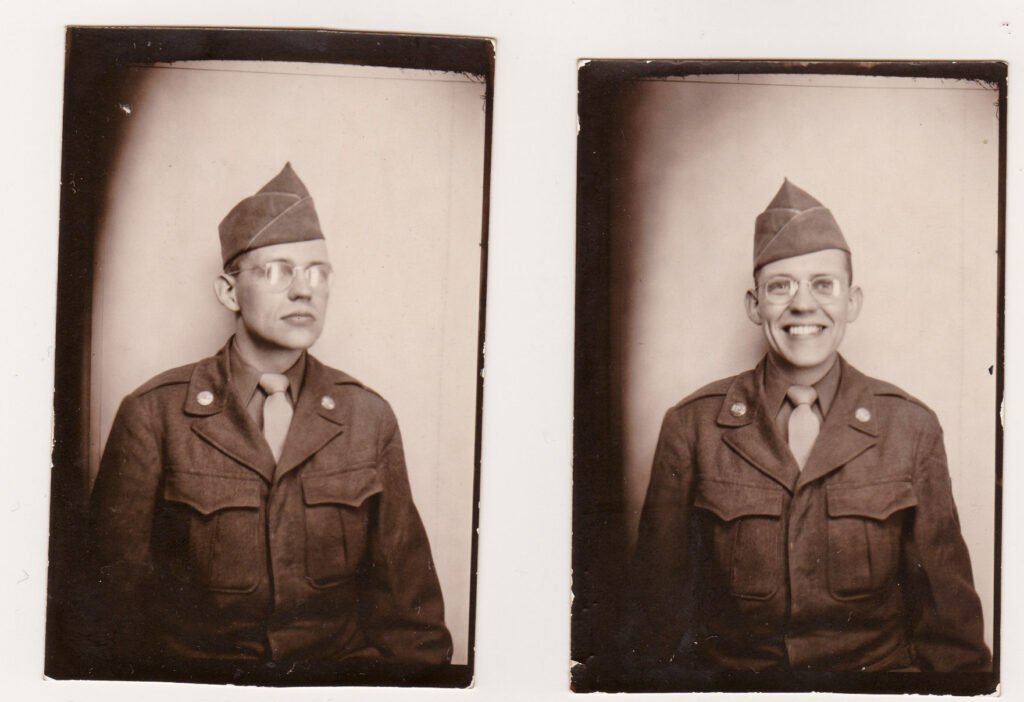
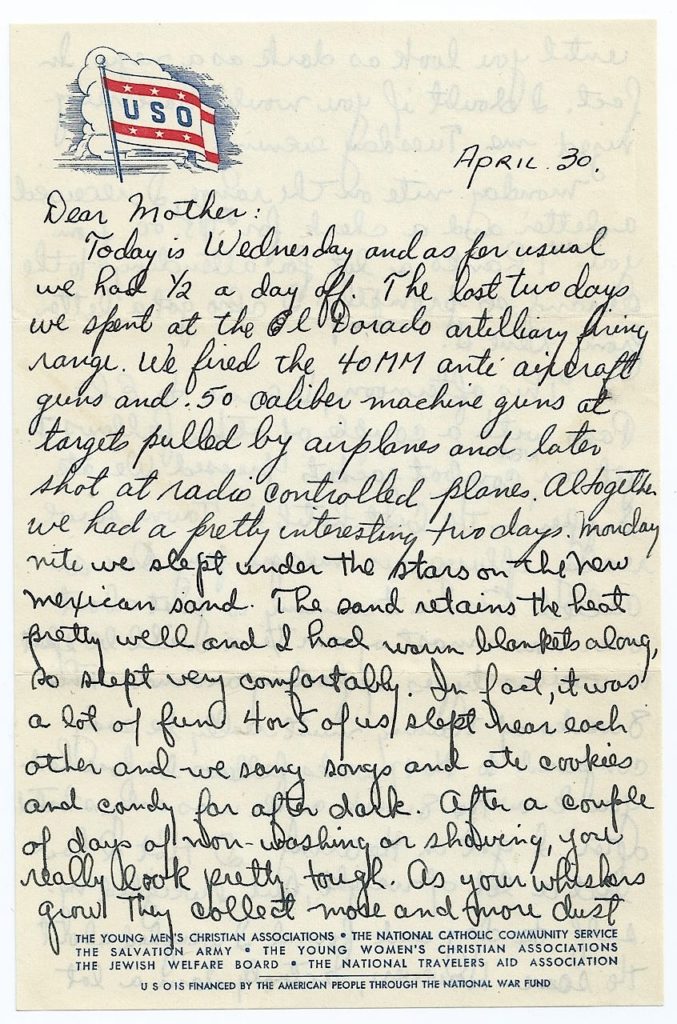
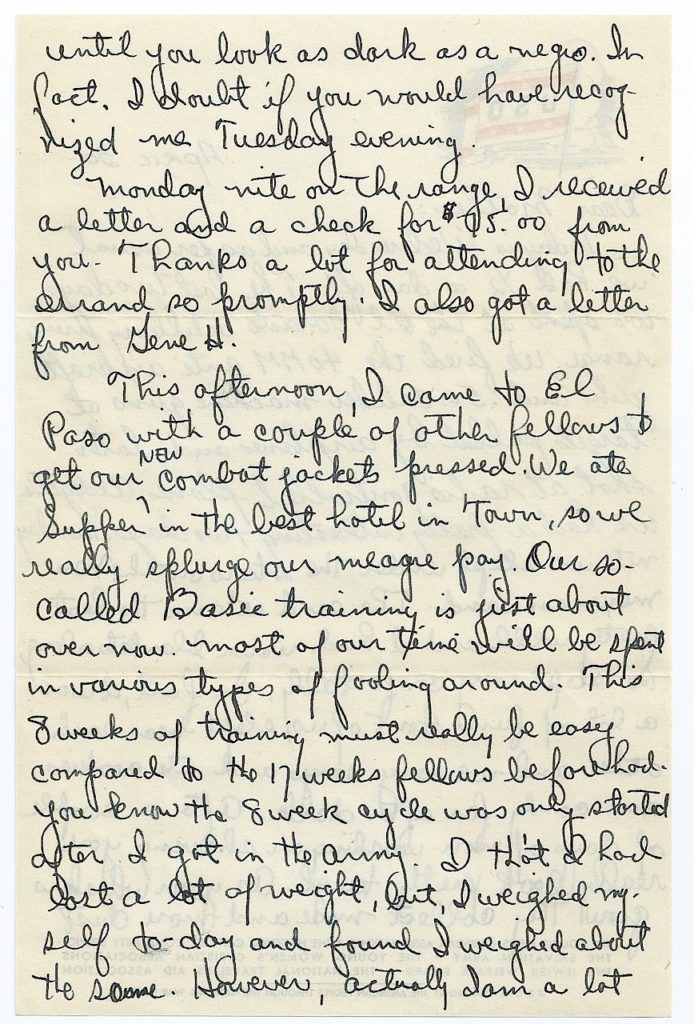
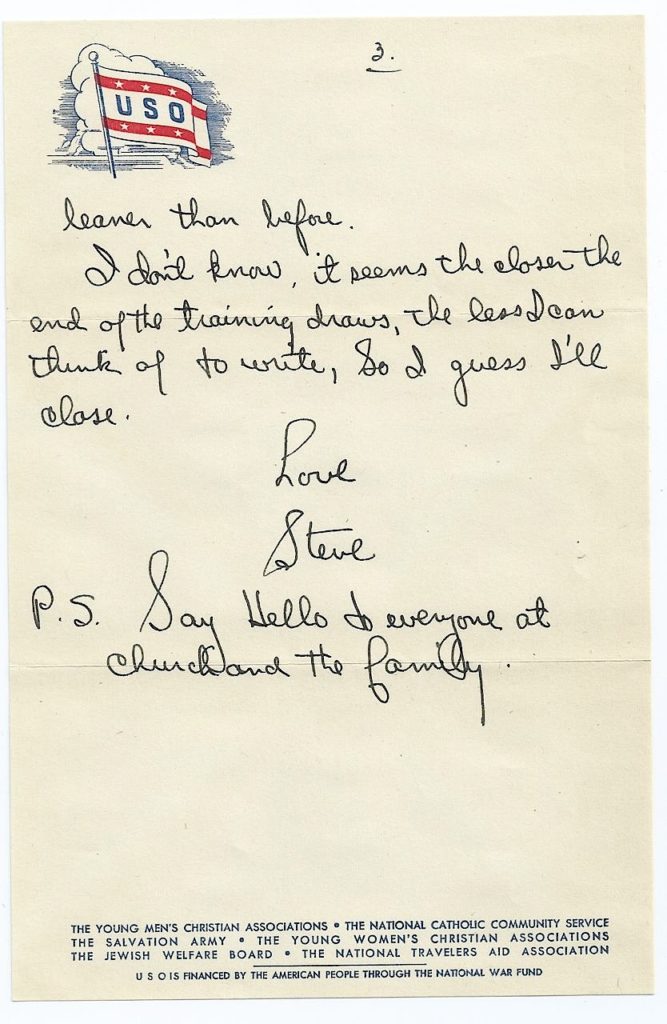
It’s my last night in Chicago for a while — now early morning, actually. I’ve stayed up way too late looking through a collection of letters Dad wrote when he was in Army basic training. That was in 1946, after World War II ended. The story we heard growing up, and I’ve got no reason to doubt it, is that he tried to enlist at the outset of the war but was rejected and rated “4F” because he had a punctured eardrum. That condition gradually healed, and he was rated fit to serve and drafted in late 1945 and inducted into the Army in January 1946.

Part of his parents’ legacy that I heard about growing up was a collection of more than 100 letters my grandfather, Sjur Brekke, wrote my grandmother, Otilia Sieverson, during their courtship and early marriage in the first decade of the last century. (The courtship started at a Lutheran parish in Chicago, where he was a visiting minister in training and my grandmother’s family were charter members. Sjur was a smooth operator. We have a note he wrote to Otilia on the back of a business card; the subject was a couple of volumes of commentary on scripture he had “taken the liberty” of loaning her. He also offered to hook her up with more such volumes if she liked the first two.)

Sjur died in 1932, when Dad was 10, and he said his mother not only hung onto all those letters, but read and re-read them. She numbered them and kept each one in its original envelope; she wrote key phrases from each letter on the envelopes, apparently her way of prompting herself as to the contents. When she died in 1975, the letters passed on to my dad. They’re among the papers he left behind. (If you’re wondering about my grandmother’s letters to my grandfather, well, so do we. She destroyed them at some point after he died.)

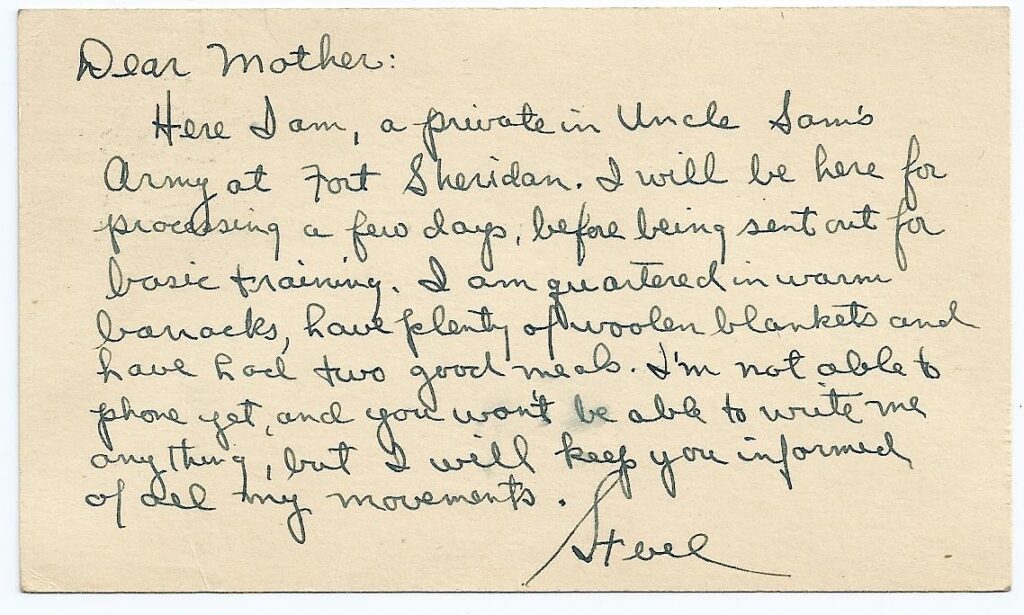
What I didn’t know, though, was that my grandmother kept a second letter archive. She saved all the correspondence Dad wrote during his year-plus in the Army, starting with a postcard from Fort Sheridan, north of Chicago, the day he arrived for processing.

“Dear Mother: Here I am, a private in Uncle Sam’s Army,” he began. I’m guessing the postcard was something the Army had its new inductees do to reassure the home folks they were OK.

There are about 75 of these letters in all — 20 or so from his time in basic training, which took him to Fort Bliss, near El Paso, Texas, and another 50 or so from his time serving in the occupation of Germany.

Leafing through the basic-training letters the other day, I felt like I was getting to know a person about whom I had only heard vague accounts. One thing comes through very clearly: the Army wasn’t really for him. He was interested in learning what he could in the ranks — he was being trained in a field anti-aircraft battery — but he had his own agenda, which always seemed to come back to music and whether he could finagle a way into an Army band (he couldn’t and didn’t). He also loved the opportunity to see a part of the country, dry, desolate West Texas, that was completely new to him.

I read a few of the letters aloud the other day to my siblings. One in particular delighted us. Dad describes a trip up to an artillery range to fire anti-aircraft and machine guns at aerial targets. It sounds like he enjoyed that somewhat. But he also liked the chance to camp out:

“Monday nite we slept under the stars on the New Mexican sand. The sand retains the heat pretty well and I had warm blankets along, so slept very comfortably. In fact it was a lot of fun. 4 or 5 of us slept near each other and sang songs and ate cookies and candy far after dark.”

Sounds like a kid at camp. He was also thrilled to go without shaving or bathing and said the grime made him “look as dark as a negro” (of whom there were none in his unit, of course). I’m not sure he ever really had any significant outdoors adventures before this. His parents were older and given to recreations like attending revival meetings. During an extended stay in Los Angeles in the early ’30s, their idea of a Sunday outing was to take Dad to see Amy Semple McPherson preach at her Church of the Foursquare Gospel.

The scan of the full letter is below.

‘The Smallest Minds … The Cowardliest Hearts’

Current reading: “Beyond the Hundredth Meridian,” by Wallace Stegner. It’s a biography of John Wesley Powell, known popularly for making the first boat trip through the Grand Canyon (in 1869), for being among the founders of the U.S. Geological Survey, for his thorough and sympathetic study of Native Americans and their culture, and for promoting a rational approach to the settlement of the arid West. (Among other details I didn’t know, Powell was also a faculty member at the college that became Illinois State University, in Normal, and lived in Bloomington).

Anyway, at one juncture, Stegner stops to contemplate federal government policy on the West. He quotes Mark Twain’s “portrait of the Congressman: ‘the smallest mind and the selfishest soul and the cowardliest heart that God makes.’ ” Harsh, but apt for our time, I thought (and sure, there are some who would say it’s a description with eternal currency).

I wanted to know the source of the quote. One’s first Google search turns up the fact it’s widely cited (to express disgust with today’s crop of solons) though the source is hard to come by. The closest you can get is along the lines of “an 1891 letter to an unknown correspondent.”

Twain died in 1910, and in 1912, someone named Albert Bigelow Paine came out with a massive biography that reprints the letter in full (or nearly full–there’s no salutation, thus the name of the recipient, if any, is unknown, and it begins with an ellipsis). The letter appeared five years later in a collection of Twain’s letters. The subject is the Twain’s real-life experience and how it has fitted him for the profession of novelist. Here’s the paragraph that’s the source of Stegner’s quote:

So, the quote was more expansive and changed somewhat as it passed through the many hands between Twain, Paine, and Stegner. Or maybe not. Stegner cites an edition of “The Portable Mark Twain” edited by his friend and mentor, the historian Bernard De Voto, as his source, and De Voto’s quote was identical to those printed earlier. Stegner appears to have cleaned it up and narrowed the context to fit his needs.

In any case, the original message was: Those lawmaker-government types–they’re all bums.