July 5

There was a birthday here today. The first time I spent a birthday with the person in question was 26 years ago. Against all the odds I’ve been invited back again and again.

This morning, we got up at 5:15 after a night trying to calm a fireworks-rattled to get ready for our annual First Sunday of the Tour de France race-watching extravaganza. The first neighbors showed up at 6 or so. Afterward, we pieced together the rest of the day.

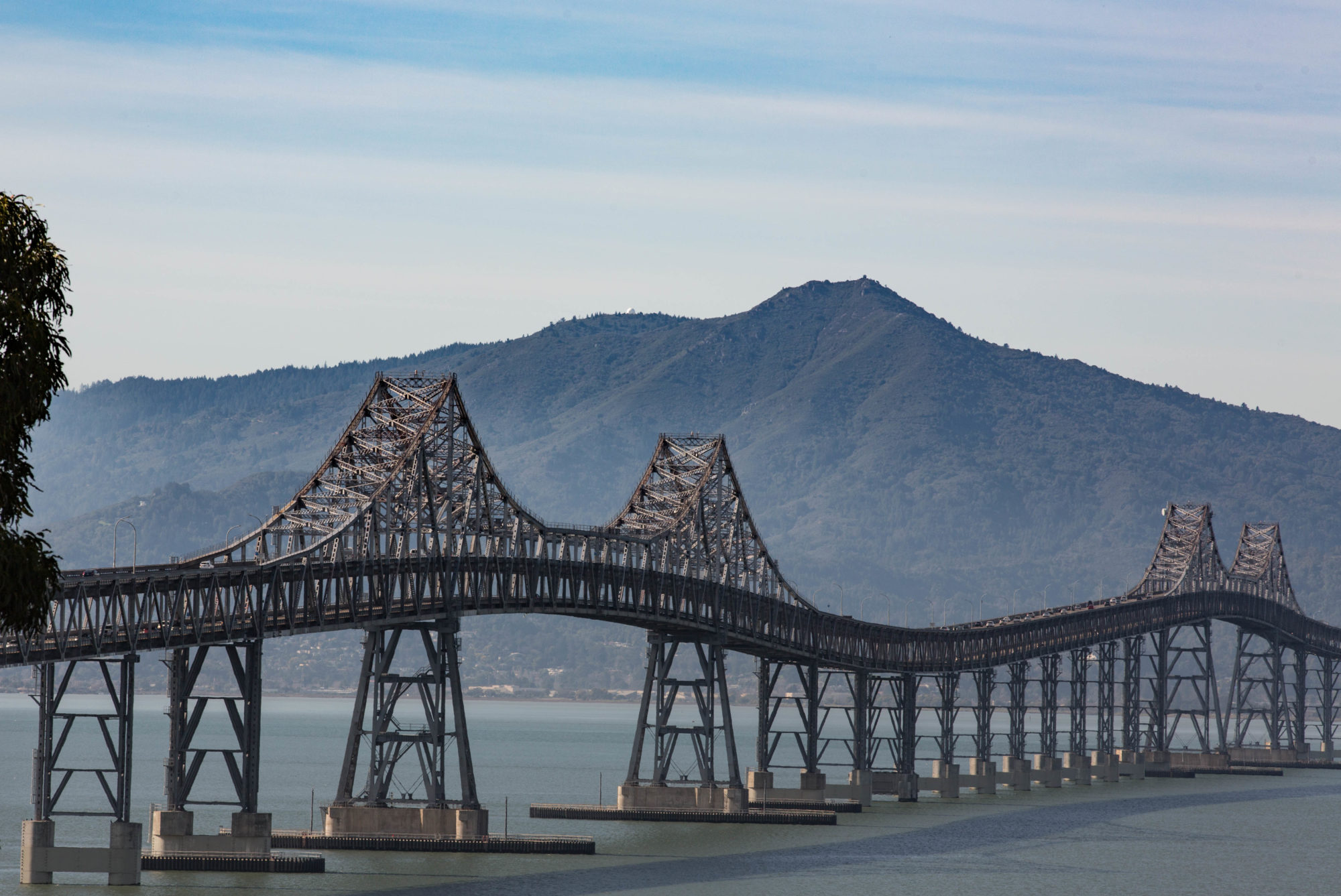
We had visitors: One son and his wife drove up from their place in far-away San Jose, and then we went hiking on Ring Mountain in Marin County. Clear day, with views into every distance.

Then we came home and cooked dinner and the other son and his, you know, very good friend, joined us. All six of us had a repast of buffalo stew (there’s a first time for everything) and salad and an excellent cake from the local French-like cake maker.

Then everyone went on their way, and we were left alone with the dog. What a great day, from first sleepy moment to the last, also a little sleepy. We’ll have to try the whole thing again next year.

Chrysalides

chrysalis062809.jpgchrysalis062809a.jpg
The something new I learned this minute: that the preferred plural form of chrysalis offered in the Merriam-Webster’s unabridged dictionary is chrysalides; the main stress is on the second syllable and the last syllable is pronounced “deez.” Me, I would have guessed, and written, chrysalises–and the M-W unabridged lists that second. (The abridged dictionary entry, which is not so different from the unabridged one, is here.)

Anyway, these chrysalides are both of the anise swallowtail variety. The one on the left is probably a couple weeks old and is strapped onto a fairly conspicuous spot on a fennel plant next door. It’s about two weeks old and has started to show that yellow color along its abdomen in just the last couple of days. That little piece of material below it is its last larval skin (see “Mascot Caterpillar” for what these guys look like before they go into the chrysalis).

The chrysalis on the right is also an anise swallowtail. It’s older–but I’m not sure how much older. It attached itself to the rarely visited north side of our house (don’t believe your monitors–the stucco isn’t really pink). When I first saw it back there this afternoon while on a foliage-clearing expedition I thought it was a curled-up leaf stuck to the wall. I’m not coordinated enough to do the “hold you thumb next to it so we get the scale” trick; but like the other chrysalis it’s maybe an inch and a half long. If you click on the picture, you can see the chrysalis looks like it’s cracking. Don’t know whether that’s a sign the adult butterfly is ready to emerge or not.

Maybe we’ll be tweeting its progress.

Mascot Caterpillar

aniseswallowtail061409.jpg

Last year, Kate started using anise swallowtail butterflies as part of the biology unit in her second-grade class. As the name might suggest, the anise swallowtail (Papilio zelicaon) are partial to anise (fennel) plants and their relatives; in some areas, the go for citrus, too. Our neighbor has a healthy stand of fennel in one corner of his yard, and the last two springs the plants have hosted anise swallowtail eggs and larvae (caterpillars). The one pictured here is apparently in its fifth and final “instar” (larval stage) before becoming a pupa (or, as I’ve always thought of it, “going into its chrysalis”). It’s an amazing little street-side biology lab we have here. (Oh, yeah: And you get a dollar if you can tell me what that little brown spheroid at the caterpillar’s posterior end is.)

Further reading:

UC Irvine Butterflies of Orange County: Anise Swallowtail
Berkeley’s Anise Swallowtails
Butterflies and Moths of North America: Anise Swallowtail
Wikipedia: Anise Swallowtail
Wikipedia: Butterflies

Friday Night Ferry Again

ferry061209.jpg

Due to a variety of strange occurrences during our news day today,I didn’t make it out of KQED until 7:35, 50 minutes before the ferry sailed. I thought about walking to BART and relaxing. Instead, I hoofed it over Potrero Hill and across the south of Market neighborhood and made the boat by about two minutes. One of the crew watched me walk on board, where Thom and Kate awaited, and said, “He’s sweating bullets.” (He was right — I ran the last few blocks, and was well warmed up when I got to the dock.) About 10 days before the summer solstice, it was a beautiful twilight on the bay. Then again, most of them are no matter what time of year.  

[If you’re keeping score of home, that’s downtown San Francisco, with the top of the Transamerica Pyramid, to the left; and in the right distance is Mount Tamalpais. Gorgeous, gorgeous night.]

Apparition

A week or two ago, I was talking to a couple neighbors about rats. They didn’t get the memo about how genteel Berkeley has become. Just about everyone here encounters them in compost bins or scurrying across backyard fences from one tangle of ivy to another. The guy next door said he thought it would be great if we had owls to take care of the rodents and had considered putting up a nesting box in his yard to attract one. We have seen owls here before, notably a great horned owl that showed up in a neighbors backyard cedar at dusk one day and seemed to be hunting our little cat. I wondered how easy it would be to attract owls, though (the evidence from my reading is mixed: they prefer a rural setting, naturally, but seem have adapted somewhat to the steamroller ways of Homo americanus.)

The other night, walking the dog a couple blocks from home in our un-rural neighborhood, we heard a sound nearby: a loud, pulsing creak. Two, three, four times, like a rusty gate opening and closing. It crossed my mind that it was an owl drawn to our rodent smorgasbord After a block, we heard the sound again, very close by. Then some sort of bird flew up off a telephone line just ahead of us, down the sloping street, then settled again. Close up, the sound had changed from a creak to a short, keening scream, a little unnerving in the dark. I had a bright LED headlight with me, and shone it on the bird from just across the street: a barn owl. So, maybe they’re moving into the area already. Can we encourage them to stay? Here’s one outfit (in Marin County) that seems to say yes.

June Rain

junerain.jpg

Just after 10 o’clock tonight, the dog and I walked out the front door for a walk. He stopped on the porch and stared out at the street as if asking, “What’s that?” It was rain, an out-of-season occurrence. My tendency, confronted with weather that’s not supposed to happen at whatever time of year it’s happening, is to say, “This never happens.” Then I try to look it up.

So here’s a brief rundown on June rain in Berkeley, thanks to the Climate Summary and Monthly Total Precipitation tables at the Western Regional Climate Center.

–Years of record: 102 (1893 through 2008, with 16 missing).
–Berkeley mean June rainfall: 0.19 inches (annual mean: 23.45 inches).
–June maximum: 1.24 inches (1907). Other Junes with 1 inch or more: 1894, 1929, 1967, 1995, 2005.
–June minimum: 0.00 inches (38 times).

Five highest June rainfall totals:
June 15, 1929: 1.04 inches.
June 2, 1967: 0.88 inches.
June 8, 1964: 0.69 inches.
June 17, 1894: 0.63 inches.
June 11, 1907, and June 24, 1912: 0.61 inches.

Friday Night Ferry

My significant spouse couldn’t make it to the ferry last night for our usual Friday night ride, so I went it alone. Left the office exactly an hour before the 8:25 p.m. sailing time of the day’s last boat, usually plenty of time to make the three-mile hike from the western slope of Potrero Hill to the Ferry Building. But in the interest of trying new routes, I wandered through the UC-San Francisco Mission Bay campus and then along the outside of the right-field stands at Phone Company Park and added about two-thirds of a mile extra to the trip, stopped to take a picture or two, and wound up having to run (or power-shuffle, as a casual observer might have called it) up the Embarcadero to the ferry slip. I made the boat with five minutes to spare.

The usual routine is to buy a glass (plastic, actually) of white wine for my shipmate and a beer for myself and sit under the heaters on the second deck. But the boat bar is cash only, so I climbed to the top deck, stood in the lee of the pilothouse, and watched the trip go by sans beverage. The light was striking, as always, with the low evening cloud cover moving in off the ocean and a much higher layer of clouds catching the last of the sun; the tide was ebbing in the Oakland estuary, moving so fast that it looked like a river current, though not as extreme as the flow you see in New York’s East River.

Heron

heron052409.jpg

Yesterday’s top Berkeley bird: This great blue heron, which was hunting in the meadow near the off-leash dog area in Chavez Park near the Marina. The place is crawling with ground squirrels, and you see herons and egrets stalking them — or staking out their burrows, anyway — fairly frequently. Other people in the park have told me they’ve seen a heron catch a squirrel — spear it, then swallow it whole. That’s what this one did as we passed yesterday, though I didn’t actually see the spearing part. It tossed its catch into the air and caught it, then took several minutes to work it down. I don’t think it was keen on flying while it was trying to swallow such a big lump of protein, and I was able to approach to about 30 feet with my non-telephoto-equipped digital camera for this shot.