The Hitchhiker: Heading West Through Amarillo, 1974

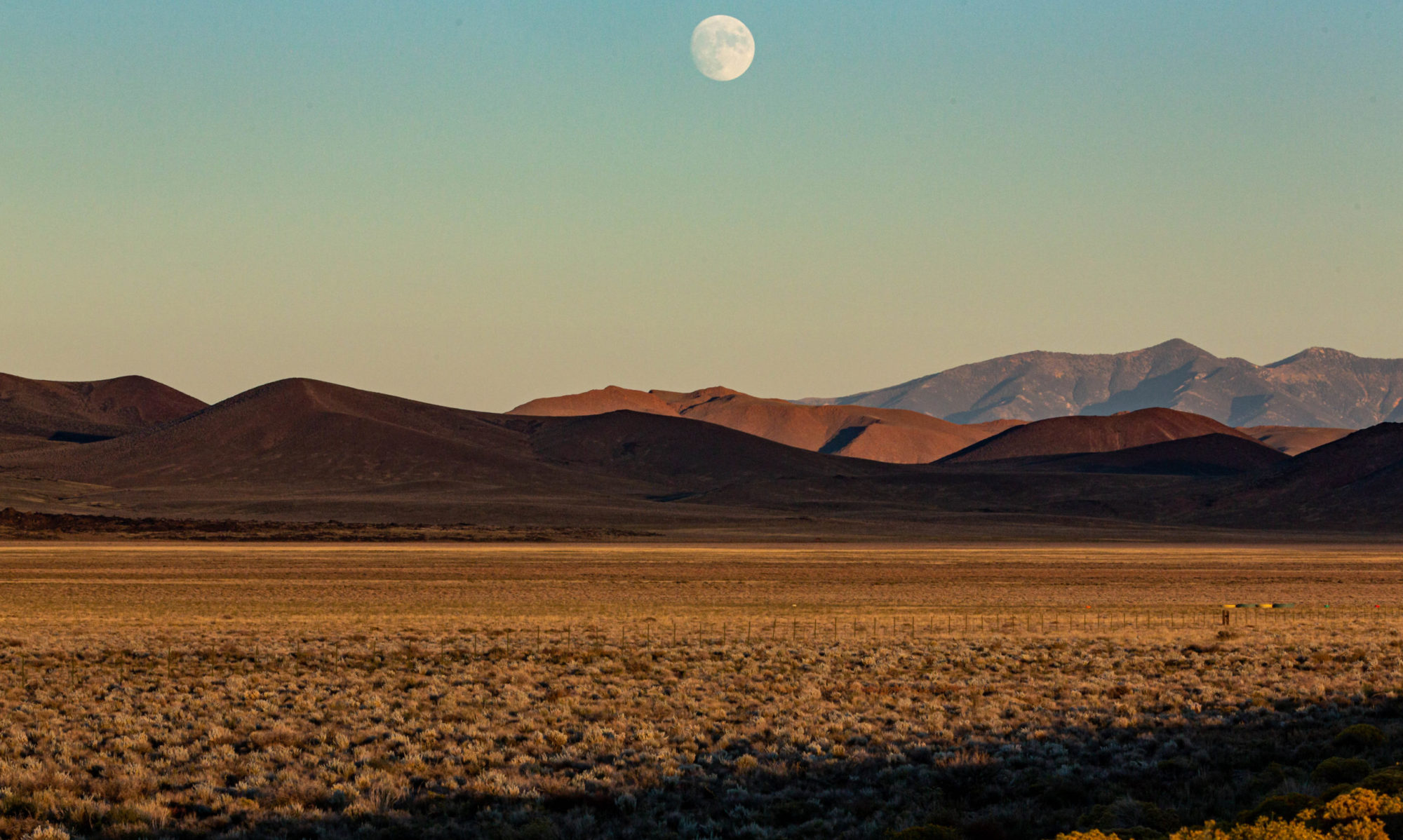
Foggy Interstate 40 on the western outskirts of Amarillo, November 2025.

Kate and I stopped overnight in Amarillo, on the plains of the Texas Panhandle, a few nights before Thanksgiving last fall. Fog descended on the area just after we got to our motel on the city’s western outskirts. The misty scene along Interstate 40 demanded an attempt to try to capture it, and the best camera I had for an immediate shot was my cellphone. I’m not unhappy with the result, though as usual I think about what I might do differently next time.

What the picture makes me think about now, though, is the first and I’m guessing only previous time I happened across this stretch of highway.

It was in late December 1974. I had taken it into my head that during Illinois State University’s holiday break, I’d visit friends in Berkeley and San Francisco. Furthermore, I’d decided to hitchhike from the Chicago area to Northern California. My concession to winter weather and the potential of freezing to death while waiting for a ride somewhere along Interstate 80 was to take a southern route that followed the old path of U.S. 66: first along Interstate 55 to St. Louis, then Interstate 44 through Tulsa to Oklahoma City, and from there along Interstate 40 to California. About 2,400 miles.

My mom drove me the first 30 miles or so from our place on the southern edge of Chicago’s south suburbs to Wilmington, a town on the Kankakee River and I-55. She didn’t say anything, or anything that I remember, to try to discourage me. I’m trying to imagine what she was really thinking as I climbed out of the car late on the afternoon of the day after Christmas. By this time, my brothers John and Chris and I had each taken at least one long hitch-hiking trip, so maybe she was thinking, “Well, I guess he knows what he’s doing.” Just as likely, she was saying a prayer that I’d come back in one piece.

Looking back from this distance, I don’t remember most of how that trip came together. How did I get through Bloomington, Springfield and St. Louis? I can’t tell you, but I’m sure it involved a series of short hops. I do remember being in a 1950s-era Chevy with two couples who liked REO Speedwagon and played it loud, maybe on an eight-track. It was near freezing and raining during that part of the drive, in MIssouri. I remember Tulsa, late on a sunny afternoon about 24 hours after I’d set out. The next place I remember clearly is Amarillo, or rather a spot that was far enough out into the country west of town that I didn’t see any lights except for a gas station just off the interstate.

It was after midnight, moonlit and cold, with virtually no traffic along the highway. Looking out over the countryside, the moonlight seemed to outline ravines stretching off into the distance. The impression that’s always stuck me was of being alone in a vast, silent, mysteriously bleak landscape. I could only guess when the next ride would come.

It couldn’t have been too long. I got to Grants, New Mexico, about 350 miles west, near the Continental Divide, just after sunrise. It was very cold — about 10 below zero. I was wearing a big orange down parka that was probably suitable for Everest base camp wear and made me reasonably visible to passing drivers, so I wasn’t too worried about the chill.

I stood on the side of the Interstate for all of 10 minutes before a Chevy sedan with California plates stopped. As I climbed in, the driver asked where I was headed. “Berkeley,” I said. “I’m going to Oakland,” he said. And he wound up driving me right to my friends’ house, where I announced my arrival to a sleeping household at 2 in the morning. There are stories to tell about the rest of that night and my New Year’s stay, but the one person I’d really like to reminisce with is no longer among us. After a week or so in Berkeley, I flew back to Chicago and returned to Illinois State and another semester of underachievement.

There isn’t a straight line between that moment of arrival in Berkeley and this one, which finds me living only a mile or two from where that trip ended. But in a way that I could never have foreseen standing in the moonlight outside Amarillo so long ago, that night along the highway, was a step on the path to everything that’s happened since.
Was It Wild?

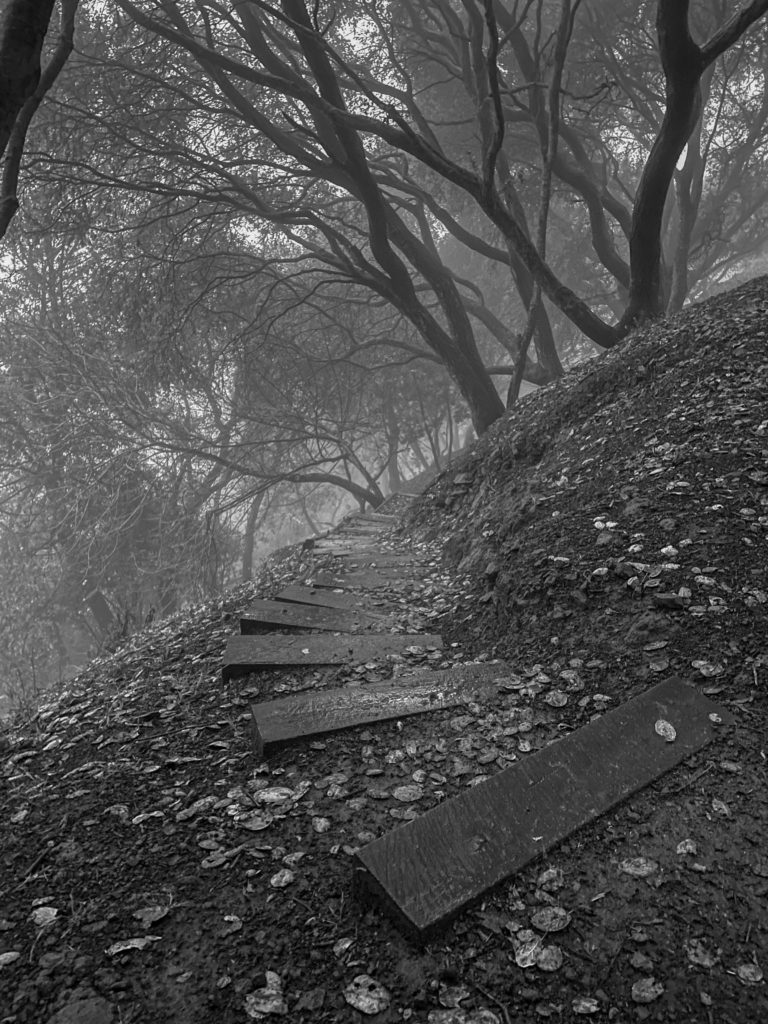
Boy Scout path, La Loma Park, Berkeley.

Late Guy Fawkes afternoon, the last bit of daylight before we turned the clock back an hour from “savings” to standard, I hiked up into the hills. It’s one of the best things about living here in Berkeley, the fact you can stroll out your front door and walk for miles and miles in any direction; and if you choose to head east and up, you’ll soon be far above the grid of city streets.

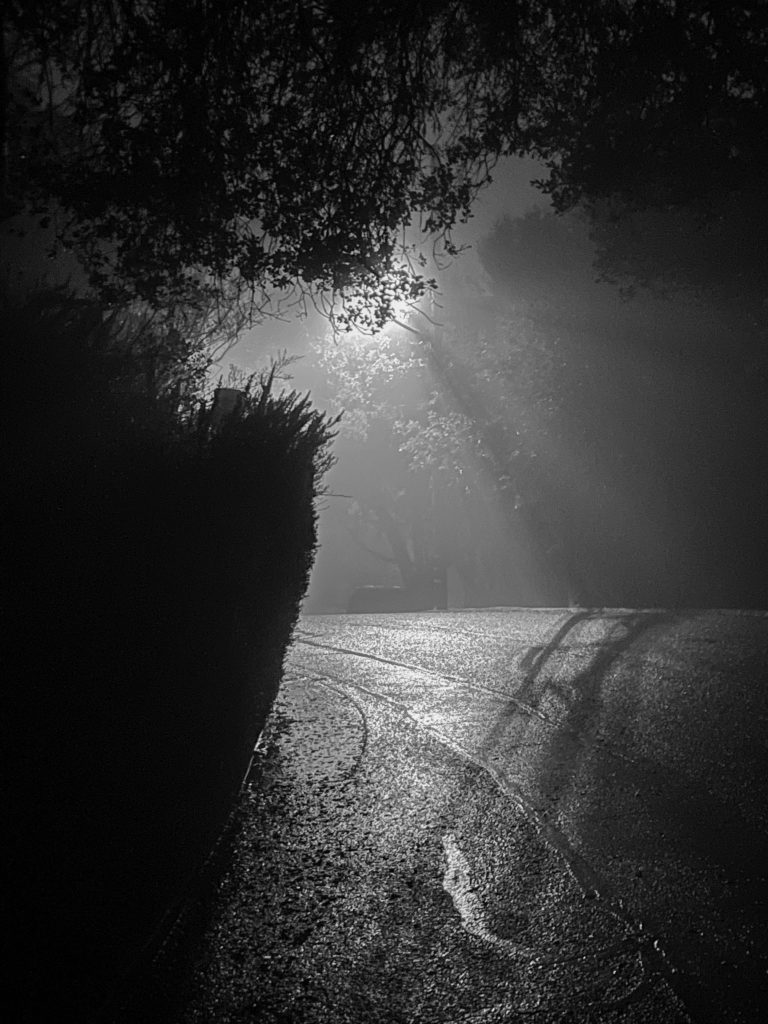
It was a misty, drizzly afternoon, with clouds hanging low. Less than half an hour from home, I reached the point where those clouds manifested themselves as fog and the mist and drizzle turned to on and off rain. I stopped at La Loma Park, an old quarry whose main features are a nice playground and baseball field, a working restroom, and, in clear weather, a view over the town below.

I stayed and listened. The dusk deepened and the fog seemed to dampen the noise that normally would wash up the hills from the freeway and street traffic and trains below. A single bird — a great horned owl if an app is to be believed — began calling.

After 15 or 20 minutes, I continued up the hill as it got dark, taking a series of stairways that bring you all the way up to Grizzly Peak Boulevard. Then it was downhill through the rain and fog in the dark.

All this reminded me of a nighttime walk many years ago, when my friend Gerry and I landed on the doorstep of a distant Irish cousin, Michael Joe O’Malley, for a nearly monthlong stay. This was on an island off the coast of County Mayo where at the time very few dwellings had electricity. There were no paved roads. Streetlights? No. One evening we hiked in the rain over to another cousin’s home. It might have been 10 o’clock when we departed on our return walk. The more civilized route would have been along a shore road to the dock and post office, the center of a little collection of houses. Instead, we walked up the road (a muddy track, really) over a steep ridge that led more directly to Michael Joe’s. I see from the journal I kept that the weather was clearing on the way back, and the moon was up. But on some stretches of the road, the darkness felt close and absolute, so dark, in fact, that I walked straight into a gate across the road without seeing it. It was kind of thrilling to be out alone in such a remote place by ourselves.

When we got back to Michael Joe’s, he was up listening to the BBC, as always.

“Did you walk up?” he asked. “Yeah. Up around the back,” I said.

“Around the dock?” “No, up around the back way.”

“Over the mountain?” “Yes.”

“Was it wild?”

And there was something in the way Michael Joe asked that last question that has stuck in my brain all these years without ever looking at the journal entry from that night. “Was it wild?” The way I heard it, anyway, he was asking whether we recognized what an adventure we’d just had and what we thought of it. My answer, in the moment, was, “It was beautiful.”

I have no way of really remembering what we saw as we walked “over the mountain” that night. My journal talks about moonlight on the sea, clouds scudding past, the sight of the shoreline on the mainland and nearby islands, the sound of the wind.

The Berkeley hills are not the west of Ireland, of course. Too much light. Too many cars with too-bright headlights. Houses crowded one upon the other ablaze with light. Yet that gloom in the city park and in the winding streets was wild in its own way.

Sunday Storm Report, or Emotional Rain

Rain shower, with scrub jay and stiff breeze.

Well, it’s here. Rain, I mean. Not in copious, toad-strangling, gully-washing volumes. And I just heard a National Weather Service forecaster on the radio counsel patience — more will be coming later today, overnight, tomorrow. As I said the other day, we’ll take what we can get. In drought times, and even just at the end of our long summer dry spells, water falling from the sky carries an emotional weight way out of proportion to what shows up in the rain gauge.

No, They Don’t Write Ledes Like This Anymore

The Berkeley Gazette, February 17, 1896.

Doing impromptu research on railroad mayhem of yore — unwary yard workers and pedestrian getting their feet caught in frogs and then run over by trains and the like — I found myself looking through old, old numbers of the long dead but still remembered Berkeley Gazette.

For a town that had maybe 10,000 people in the mid-1890s, Berkeley seems to have more than its share of dreadful rail episodes. The Gazette did not hold back on details, though it sometimes illustrated an odd sense of priority (no, not propriety) in how it ordered its facts.

An example from the front page of February 17, 1896.

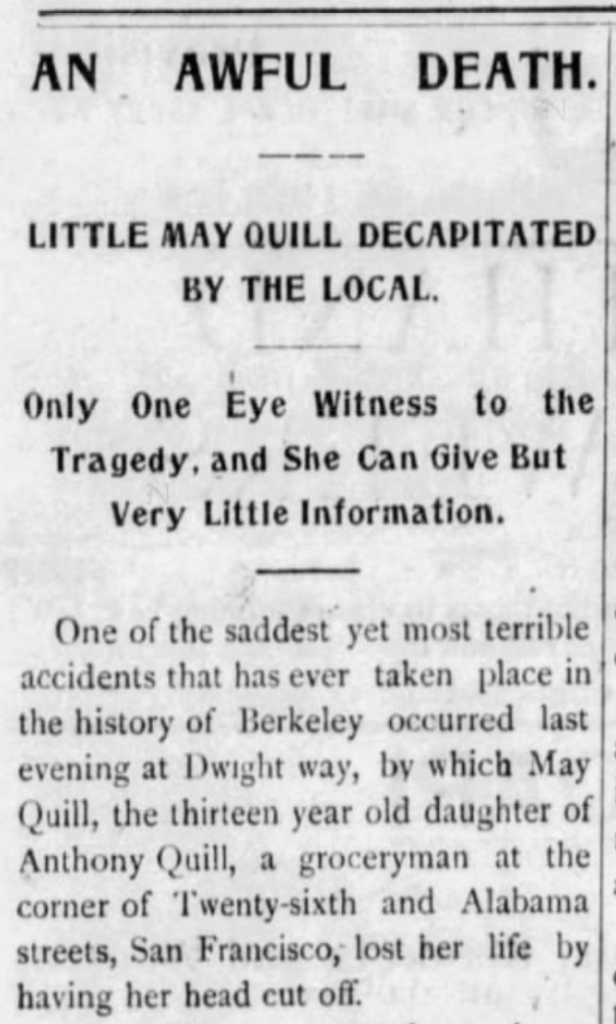
An Awful Death.

Little May Quill Decapitated by the Local.

Only One Eye Witness to the Tragedy, and She Can Give But Very Little Information. 

One of the saddest yet most terrible accidents that has ever taken place in the history of Berkeley occurred last evening at Dwight way, by which May Quill, the thirteen year old daughter of Anthony Quill, a grocery man at the corner of Twenty-sixth and Alabama streets, San Francisco, lost her life by having her head cut off.

I know the style of the day was to provide layers of detail in the descending series of headlines and subheads above the story, but I can’t help but admire the writers and editors who managed to work in the employment details of the victim’s father in the lede without touching on how the victim suffered her gruesome injuries.

Here’s how the San Francisco Call of the same date, on page 11 under the heading “Interesting Report of Up-to-Date News Items From Alameda County”:

Awful Death at Berkeley.

Young Girl Crushed Under the Wheels of a Local Train. 

Was Killed Instantly.

The Wheels Passed Over Her Neck and Severed the Head from the Body. 

There Was But One Witness. 

Little May Quill the Victim—The Train Went on to the Next Station—Who Is to Blame?

Berkeley, Cal., Feb. 16.—May Quill, a girl of 13 years, who lives with Mrs. Michael J. Powell at the corner of Magee [sic] and Allston way, Berkeley, was instantly killed by the 7 o’clock south bound local train this evening while attempting to alight from it near Dwight way station. The wheels passed over her head, completely severing it from her body and crushing it beyond description. No other injuries to her body were sustained save a few bruises. Her clothing was not even tattered. 

(Brutally explicit descriptions of streetcar victims seems to have been a specialty for the Call. Here’s how it described a 1906 incident in which a teenage girl was struck by a car at Mission and Third streets in San Francisco: “Mowed down by the thirty-ton juggernaut, her body was churned round the forward wheels and mangled so frightfully that it became almost welded to the [car] and could not be removed for more than an hour. When it was finally recovered the appearance it presented unnerved the great gathering that had watched employees of the United Railroads working round the car with primitive wrecking apparatus, and heads were turned away as it was borne to the Morgue wagon.”)

I see regular reports about rail deaths in the Bay Area today — mostly involving BART and Caltrain. The prevailing presumption is that most of these cases involve people taking their own lives. BART generally describes these incidents only as “major medical emergencies.” Perhaps the next day, BART police will refer to the incident by saying that they responded to “a report of a person under a train” and adding that the local coroner was called to the scene.

I often feel like those reports are overly sanitized and we ought to know more about the circumstances. How much more? Well, enough to have some insight into whatever the authorities know about the circumstances. The further gruesome details so frequently printed at the turn of the 20th century — no, I don’t need those. But those old accounts do make me wonder about the public appetite for that kind of reporting back then and about how sensitivities appear to have changed so much, at least in some respects, today.

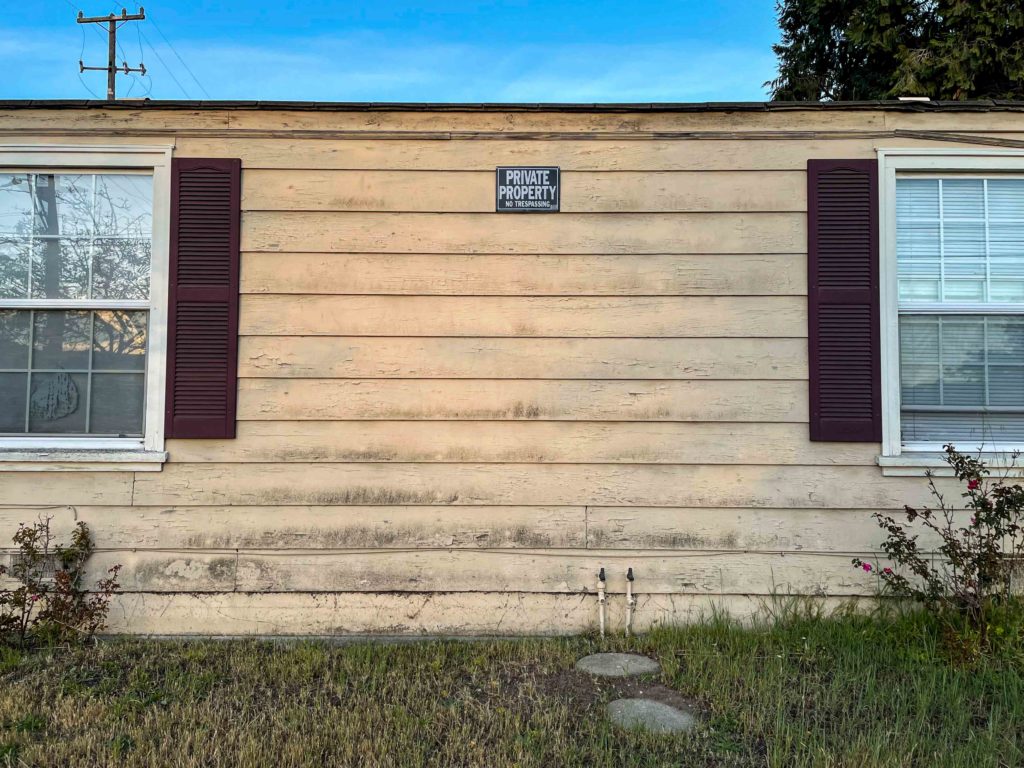
Private Property

Fifth Street, Berkeley.

I’ve been walking past this place for years, a house on the corner of Fifth Street and Allston Way in West Berkeley. I’ve always been struck by the place’s battered look and the declaration that it’s private property. I’m kind of wondering whether this is a warning to would-be trespassers or an announcement of principle. In Berkeley, you never quite know.

Executive Order 9066

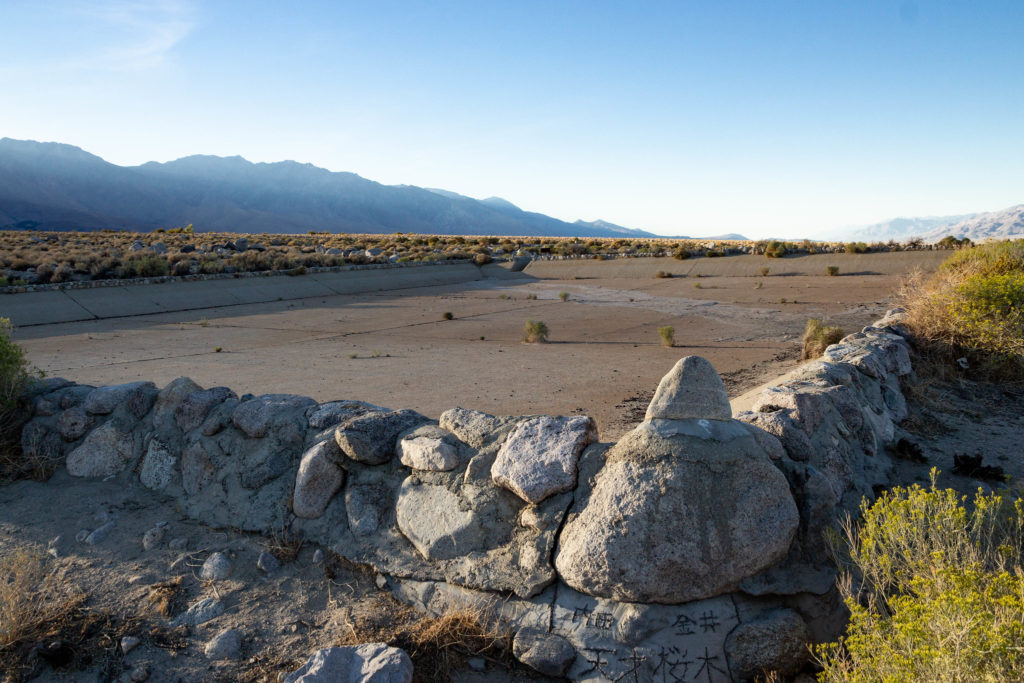
Manzanar Cemetery Monument.

The original version of this post was published February 19, 2005

The Writer’s Almanac notes today is the anniversary of the date in 1942 that President Franklin D. Roosevelt signed Executive Order 9066, ordering more than 120,000 Japanese Americans into remote internment camps. It’s an event we all know in the sense we’ve heard of it. Having heard about it, most of us have an opinion about it; the prevailing view, embraced eventually even by a president as conservative and all-American as Ronald Reagan, is that it was a tragic mistake.

In another way, it’s a history we know little about. Especially in a place like Berkeley where more than 1,000 residents (the official number, published in the Berkeley Gazette in April 1942, was 1,319) were forced to leave. Several older Japanese-American couples lived in our neighborhood when we moved here in the late 1980s. They were of a certain age — my parents’ age — that made me wonder not whether their families had been sent to the camps but what their experience of incarceration had been. I never talked to them to find out. But you realize that on this street, or the next one over, and all over town, families were sent packing. To the California deserts, Utah, Wyoming, Arkansas, wherever the camps could be set up quickly.

In San Francisco, the Chronicle ran a story marking the departure of the last “Japanese” from the city.

“For the first time in 81 years, not a single Japanese is walking the streets of San Francisco. The last group, 274 of them, were moved yesterday to the Tanforan assembly center. Only a scant half dozen are left, all seriously ill in San Francisco hospitals. “

At the University of California’s commencement, campus president Robert Gordon Sproul announced that the senior class’s top student “cannot be here today because his country has called him elsewhere.” Three weeks earlier, the student, Harvey Akio Itano, had been sent to the Tule Lake camp in northeastern California. (While his family remained incarcerated, he was released soon afterward and allowed to begin his medical studies in St. Louis. As a researcher after the war, Itano played a key role in discovering the molecular basis for sickle-cell disease and is recognized today as a pioneer in the study of blood diseases.)

Among the other UC seniors forced out of school before graduation was Yoshiko Uchida, who lived with her family on Stuart Street near Shattuck Avenue and kept a scrapbook (online through the University of California) of her new life (and later wrote many books about it).

You can go looking for scraps of the internment history, and sometimes they find you instead.

In October 2004, I was driving back to the Bay Area from Mojave and decided to take the long way, up U.S. 395, at the foot of the Sierra Nevada’s eastern flank. Late in the afternoon, speeding north up the dry floor of the Owens Valley, I passed a sign saying Manzanar was just ahead. I knew the name, that it was one of the camps, that it was out in the middle of the desert someplace, but not much more than that. Suddenly, here it was. So I turned off and spent a while driving around what is now a national historic site.

Sagebrush has claimed most of the camp, though you can see come of its streets leading off into the desert, and several barracks buildings have been rebuilt. The most-frequented place at Manzanar — not counting the visitor center — is the cemetery. The bordering fence is heavily festooned with origami cranes, and lots of impromptu memorial offerings have been left behind. The gleaming white cemetery monument is carved with the kanji “I rei to,” or “soul-consoling tower.”

Reservoir was originally built to serve a nearby agricultural community in the Owens Valley. It was improved and enlarged during World War II by internees. See: Manzanar Reservoir.

The Loneliness of the Pandemic Parking Lot

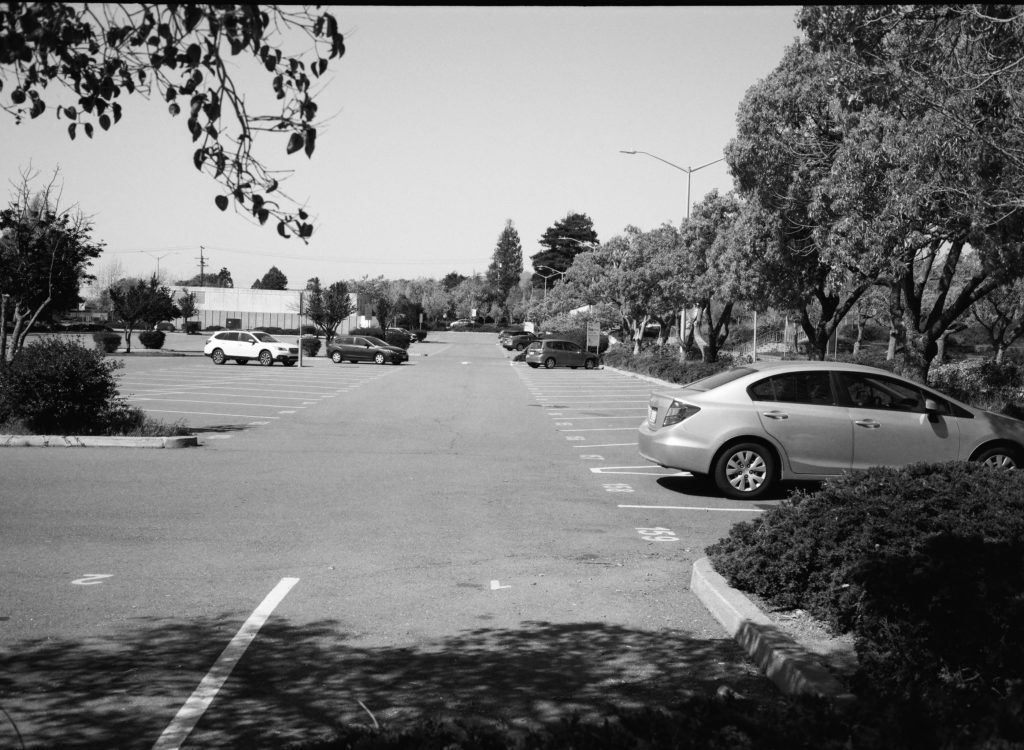
North Berkeley BART parking lot, April 5, 2021.

Up through the second week of March 2020, I was a regular BART commuter. That week, it turned out, I was traveling back and forth to downtown Oakland instead of to my office in San Francisco. Instead of covering the news, I was serving on a jury to hear a case involving alleged criminal threats. (Two neighbors had had a falling out over a cat that had gotten into a car; unpleasantness ensued, harsh words were exchanged, and the police were called; twelve of us were charged with determining whether laws had been broken; we decided none had. I also remember that the judge in the case admonished us to wash our hands every time the trial had a break.)

On March 16, with the trial done, nearly all Bay Area counties issued a stay-at-home order in response to the pandemic. Thus ended my routine commute and those of hundreds of thousands of other office types in the Bay Area who had the option of working at home. What happened to public transit at that point is a well-known story. Here in the Bay Area, ridership for most operators plunged to previously unimaginably low levels. Within a month, BART’s patronage was down 94 percent — I’ve kept my own daily spreadsheet — and the agency was forced to end late-evening service for more than a year.

Ridership has returned slowly and unevenly. BART’s recorded its highest weekday pandemic-era patronage a couple weeks before Christmas — 33 percent of its pre-pandemic level on December 12. The two downtown San Francisco stations that used to be the system’s busiest, Embarcadero and Montgomery, are still below 20 percent of their former traffic. North Berkeley, a couple of blocks from our house, is scraping along at just over one-fifth of its old passenger level.

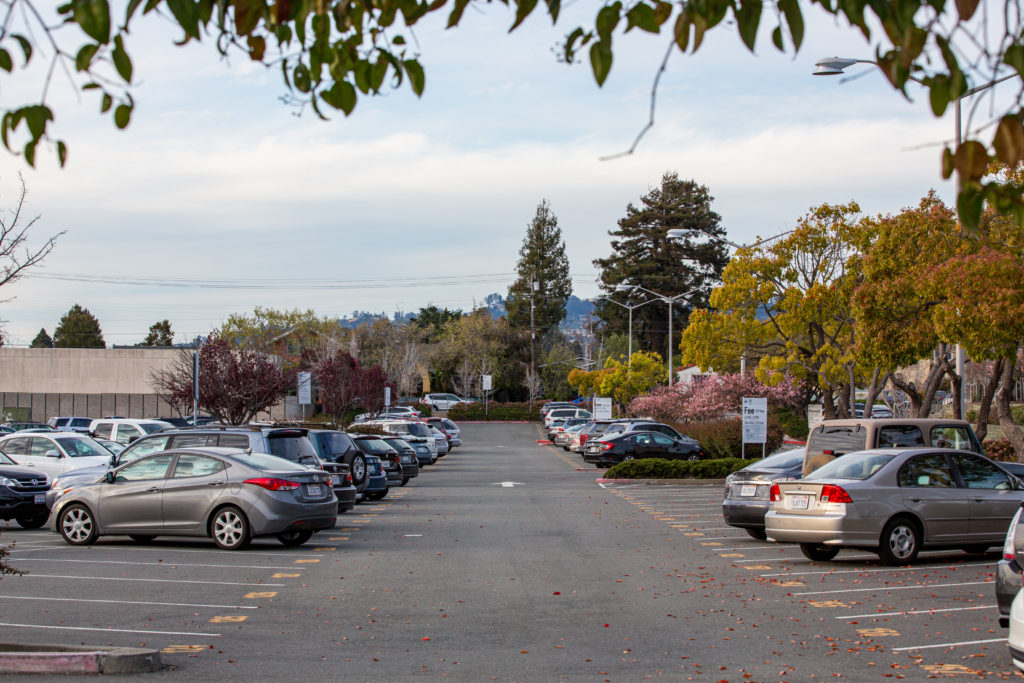
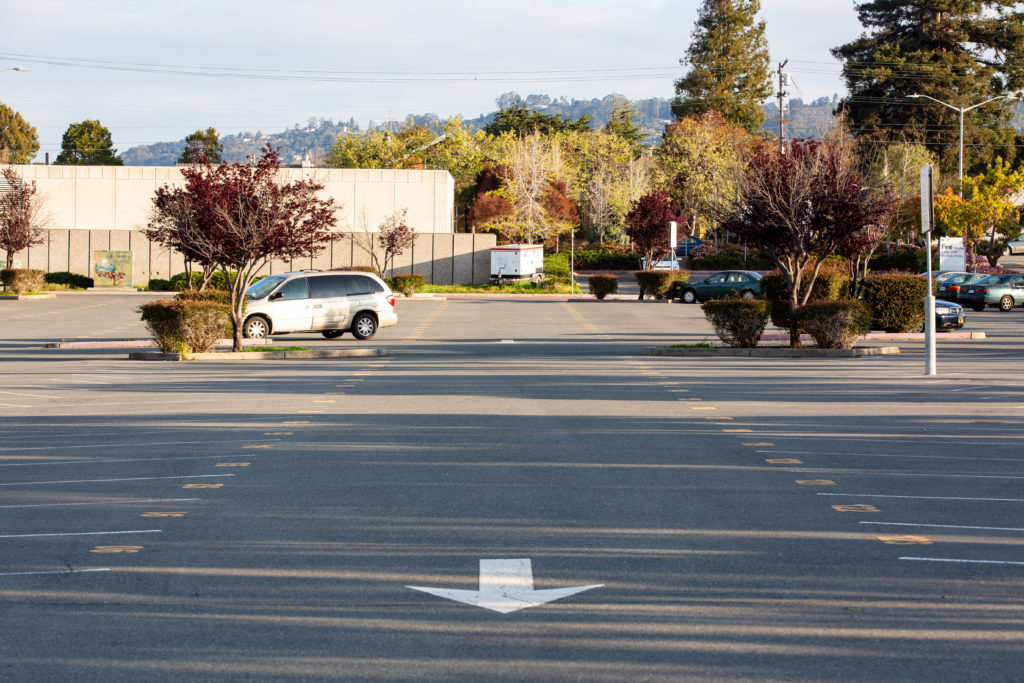
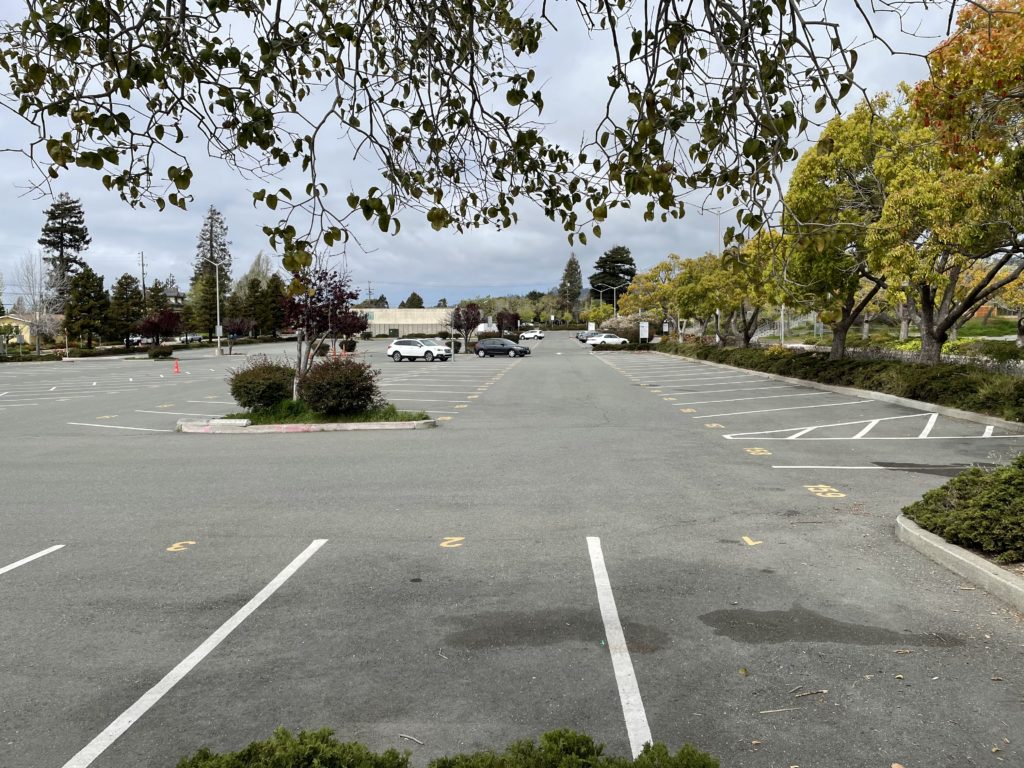
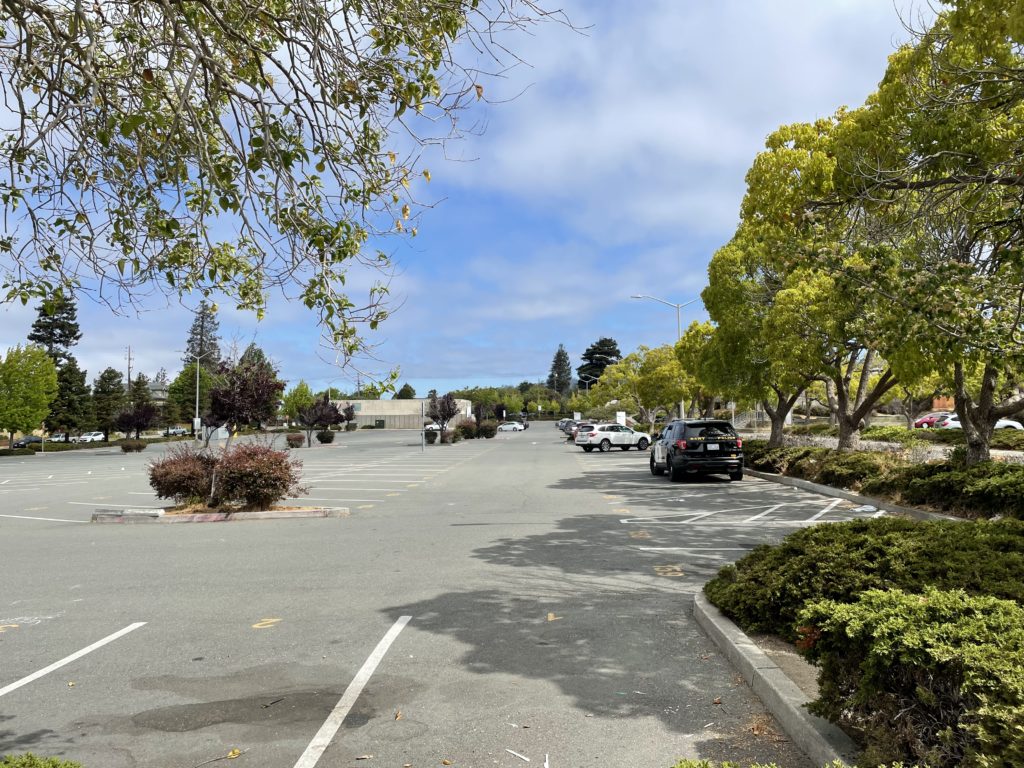
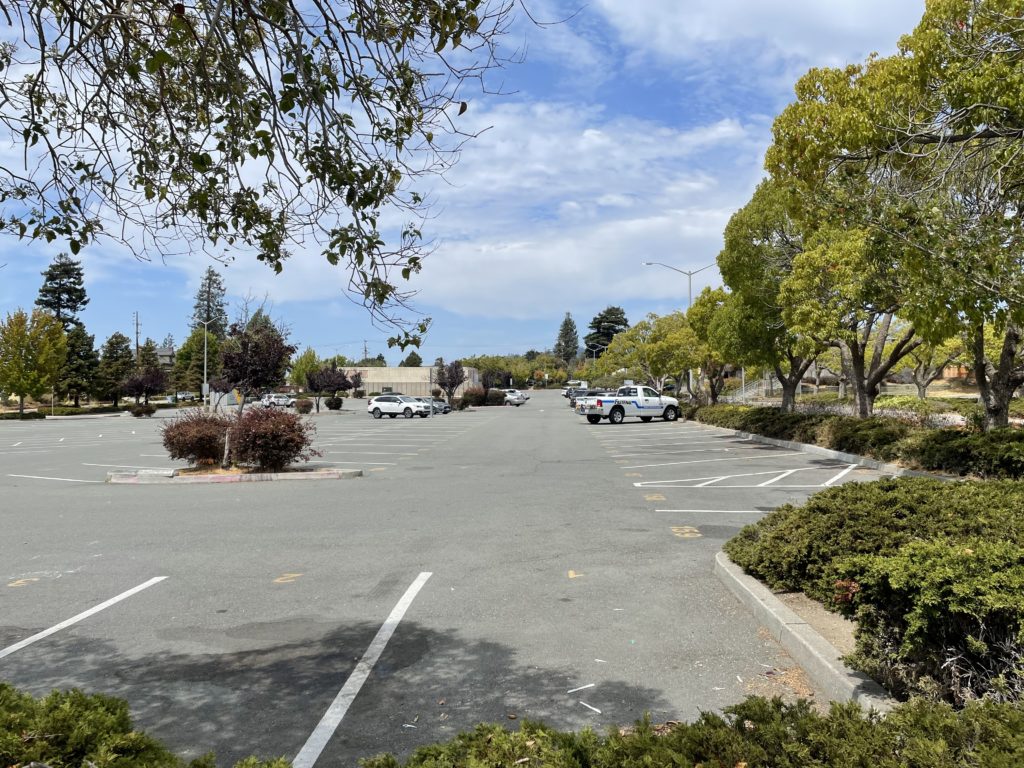
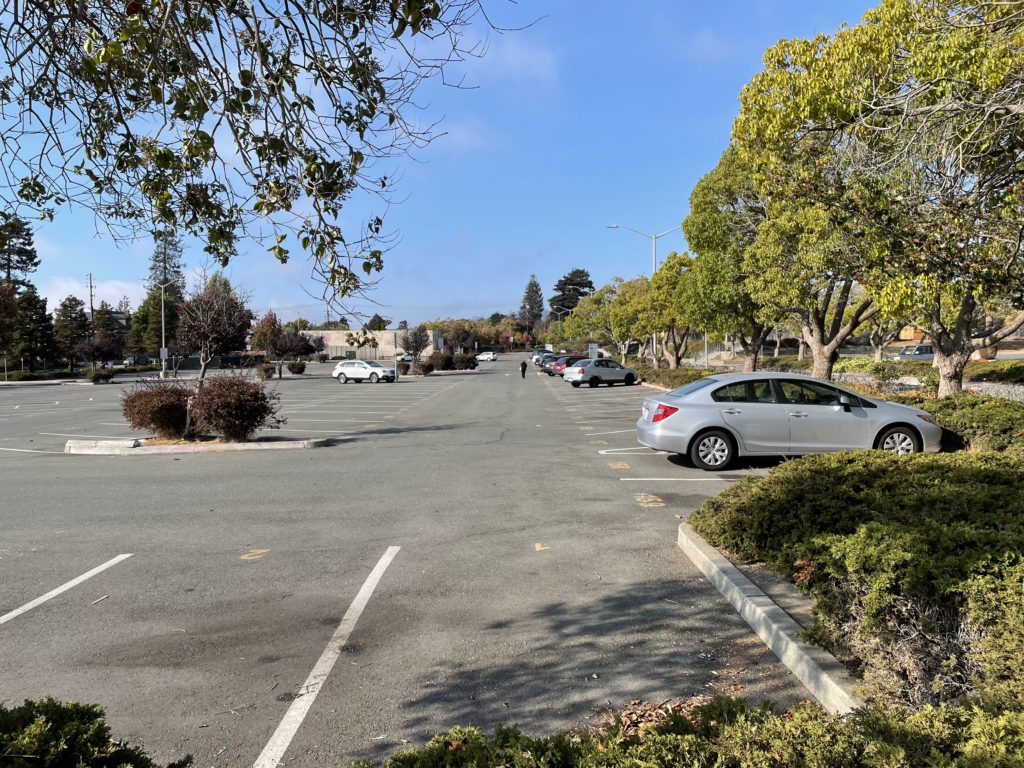
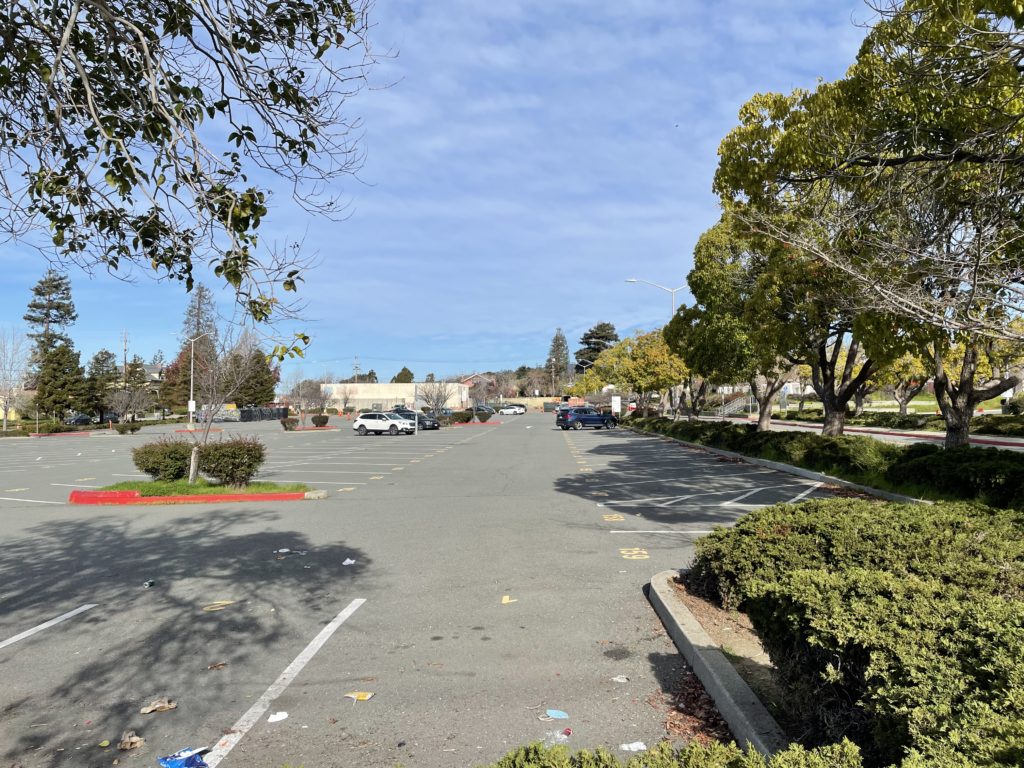
The week the shelter-at-home started in 2019, I strolled over to North Berkeley to see how dramatic the change in the station — did it look completely deserted? — had been. It was pretty lonely looking. The parking lots, which on a typical weekday would be completely filled from 8 a.m. or so until the afternoon rush hour was well under way, were virtually empty. Periodically since then I’ve gone back to take pictures. At some point, I started taking shots looking down the same row of parking spots in the station’s southwest parking lot. I figured that over time I’d get a portrait of a return to BART normalcy as commuters filled the lots again. I’ve gotten a portrait, all right, but one that shows how far from the old state of things we still are.

With all that as preamble, here’s a series of shots of the lot, starting with one that I took exactly two years before the pandemic stay-at-home orders were issued. It is enough to make me wonder whether that old “normal,” which we had no reason to think would change so abruptly, will ever return. (Not to mention that this parking lot is likely to be developed as housing — dense, apartment-style housing — sometime in the next decade.)

North Berkeley BART: Southwest parking lot at 6 p.m., March 19, 2018.
North Berkeley BART: Southwest parking lot, 815 a.m., March 19, 2020.
North Berkeley BART: Southwest parking lot at 6 p.m., October 19, 2020.
North Berkeley BART: Southwest parking lot, 2:07 p.m., April 5, 2021.
North Berkeley BART: Southwest parking lot at 10:30 a.m., June 29, 2021.
North Berkeley BART: Southwest parking lot at 2:03 p.m., July 29, 2021.
North Berkeley BART: Southwest parking lot at 4:19 p.m., September 24, 2021.
North Berkeley BART: Southwest parking lot at 11:05 a.m., January 21, 2022.

What Your Rain Gauge Says About You

The measuring tube from an official CoCoRAHS (Community Collaborative Rain, Hail and Snow Network) rain gauge. There’s nothing in it.

To answer the question implicit in the title: I really have no idea.

But your rain gauge, be it an expensive electronic home weather station variety for which you’ve shelled out many hundreds of dollars or a humble plastic tube that you read manually, will tell you one thing for sure this winter in California: It’s been much drier than normal throughout our rainy season, and it’s dry now.

So far, our backyard gauge has caught 6.83 inches of rain since last July 1 (which is the “rainfall year” that used to be the standard for the National Weather Service in California; a few years ago, the agency switched to the “water year,” which runs from Oct. 1 through Sept. 30. For what it’s worth, I recorded exactly one one-hundredth of an inch (.01 inch) from last July 1 through Sept. 30; the Berkeley normal for that three months totals .31 inch).

Where was I? Right — 6.83 inches of rain since last July 1. The Berkeley “normal” for July 1 through March 8, as calculated for the “official” Berkeley station on the University of California campus, is 21.49 inches. One way to look at that: We’re about 15 inches short of our “normal” wet season rainfall. Another way: We’ve gotten just 31.8 percent of that “normal” precipitation.

I’d love to be able to compare my numbers with that station on campus, which has been keeping records since 1893. But I can’t right now. The Department of Geography employee in charge of the weather station and sending data to the public National Centers for Environmental Information database retired sometime in the last few months, and the most recent available numbers from that station are from last September. I’m told that the later data will be forthcoming … soon.

(Much later: The grad student in charge of collecting the UC Berkeley did get back to me after this was posted. The rainfall at the campus station totaled 7.99 inches at the time this post was published.)

Since the UC Berkeley info isn’t available, I’ve checked to see what other nearby CoCoRAHS (Community Cooperative Rain, Hail and Snow Network) rain watchers have recorded and compared those to the official Downtown San Francisco record for the season.

One gauge, 1.4 miles to the northwest in Albany, has recorded 6.99 inches since July 1 (.16 inch more than my gauge); another, 1.6 miles to the southwest in South Berkeley, has measured 6.39 inches (.44 less than mine). And San Francisco’s Downtown station, which has the longest continuous rainfall record on the West Coast — going back to the summer of 1849 — has picked up all of 7.41 inches since last July 1, or 39 percent of normal.

A look at the California-Nevada River Forecast Center makes it clear that our local percentages of normal — figures in the 30 to 40 percent range — are pretty typical across our slice of Northern California:

Percentage of “normal” seasonal rainfall recorded from Oct. 1, 2020, through March 8, 2021, by way of the California-Nevada River Forecast Center.

One other observation for now, by way of Jan Null, a former National Weather Service forecast who works as a consulting meteorologist. As he noted last week, California is in its second very dry winter in a row and we have a recent historical parallel, from 2013, that we can use to measure advancing drought effects across the state:

‘It Was the Greatest Place on Earth’

The Bird, by Daniel Gies via Flickr.

When Kate and I got married, a rainy December evening in a past century, we ended the day by dropping into a bar that had been part of our courtship: The Albatross. The bartender, Bob Johnson, broke out a bottle of Cook’s to celebrate the occasion.

At one point in my early Berkeley wanderings, when I had a dozen addresses in half a dozen years, I lived about three blocks from the bar. I became a little bit of a regular, playing darts there and joining a softball team the bar sponsored. Later, a group of friends and I persuaded Bob, who along with his brother Val owned the place, to let us in an hour early on Friday nights so we could sit around a table in back and read “Ulysses” aloud. After Molly Bloom had breathed her final “Yes,” the group continued for awhile, going down to the bar to read poetry.

One Friday, the theme was baseball poems. Kate and I had just started going out, and she came with me. I only remember two poems from that night. Our friend Bill Joyce read “Ty Cobb Poem,” by William Packard (“…there is one question that usually never gets to be asked: who was the greatest major league baseball player of all time the first man who was voted into the Hall of Fame whose mother took a shotgun and killed his father during the first week of this player’s major league career?”)

The other poem from that evening that’s stuck in my brain is “Casey at the Bat,” because Kate, my date, performed it from memory. Wow! There may have been no joy in Mudville, but there was at our table. She won the hearts of all within earshot.

There were many other evenings at The Albatross. Kate and I would usually sit at the bar and talk to Bob or Val — I don’t remember them ever working together — and partake of The Bird’s proto-pub-bites gastronomical specialty, “muffies.” I guess they were a sort of pig in a blanket, a sausage of some kind swaddled in dough, precooked and heated to perfection in a secret room just behind the bar. Bob and Val also countenanced outside food, so sometimes we’d bring in plates from Everett and Jones, just down the street on San Pablo Avenue. And there was as much freshly popped popcorn as you wanted, for free.

Then the Johnsons sold the place in the late ’90s. We ran into Val once or twice afterward, but we saw Bob at his next stop, Berkeley Espresso, in a new building that had been put up at the corner of Hearst and Shattuck, fairly often. Kate and I asked about him at the cafe last year, and one of the long-time employees there told us he passed away a few years ago.

Now The Albatross itself is about to be history. The place has been closed since mid-March because of the plague. Its current owners announced earlier this week that they need to be off the premises by Nov. 30 because of “money running thin, no foreseeable re-opening date due to the ongoing pandemic, and new rent demands from our landlord.”

We hadn’t been down there much in recent years. After the Johnsons sold it — a full generation ago, for goodness’ sake — it got spruced up, expanded its hours (it had always opened at 8 p.m.), got a license for hard liquor and drew bigger and bigger crowds. Our infrequent drop-ins weren’t bad experiences, except for the one really awful Irish coffee I was served when Brennan’s was on its last legs and I was looking for alternatives. I think the last time I went in was for a Sunday night pub quiz with my son Thom and a few of his friends several years ago, and it was a blast to see how big and enthusiastic the crowd was (plus, we came in second and won some still-unredeemed drink tokens).

As I said long ago in writing about Brennan’s decline, a bar’s closing is a small loss in the big scheme. But it’s still a loss — of community, of a place that may have put a little bit of an imprint on you. (A friend, King Kaufman, said in remembering The Albatross that “it’s where I saw the only graffito that ever made me laugh out loud. I saw it on the Saturday night of Easter weekend, and it said ‘Easter’s cancelled: They found the body'”).

My own nostalgic feeling reminded me of “Bilbao Song,” a Brecht-Weill number we got to know as kids on a record by Will Holt. Play us out, Will. …

Bill's Dance Hall in Bilbao, Bilbao, Bilbao
Was the greatest dancehall in the world I'm sure.
There you could for just a dollar whoop and holler, whoop and holler, whoop and holler,
And do a lot of things I wouldn't call so pure.
All the same, I'm not so sure that if you'd gone there you'd have liked it - 'twas a special kind of place.
Brandy laughter hit you at the door.
Blades of grass grew right up through the floor.
The moon shone green through a roof of glass,
And the music that they played there had such class!

(Chorus)Ah that Bilbao moon, when love was worth your while,
Ah that Bilbao moon, when people lived in style,
Ah that Bilbao moon, where did the time all go?
Ah that Bilbao moon, I guess we'll never know.
I'm not so sure you would have liked it, ah but then,
It was the greatest, it was the greatest,
It was the greatest place on earth.

Bill's Dance Hall in Bilbao, Bilbao, Bilbao,
Has re-opened under different management.
Lots of palm trees, lots of ice cream, very flashy, very flashy,
But you know, it's not the same establishment.
Now I'll bet if you walked in you'd feel at home,
That is, if potted palms are just your style.
No grass is growing on that modern dancefloor,
The moon shining through the roof is just a moon,
And the music that they play there is the kind you'd never ask for.
Ah, Joe, play me that old time tune!

That Corrosive Effect

Monterey Avenue, Berkeley.

It’s the day we have an apparent victor in the presidential race. As a journalist working for a middle-of-the-road outlet that doesn’t hold with political activism — not something I’m arguing with for the purposes of this post — I’m not given to broadcasting opinions on the record. This preserves an appearance of fairness in the way I approach my work. Not to say that the appearance is an illusion, because being open to new people, facts, ideas and opinions, to listen, to try to understand them, weigh them, judge them and convey them fairly is central to the work.

But having developed a habit of thought like that also makes me constantly check myself and my own conclusions and to approach many — most?— claims I encounter in the world with at least a little skepticism. So on a day like this, when so many people around me — friends, family, community — are celebrating, I’m not inclined to join in the party.

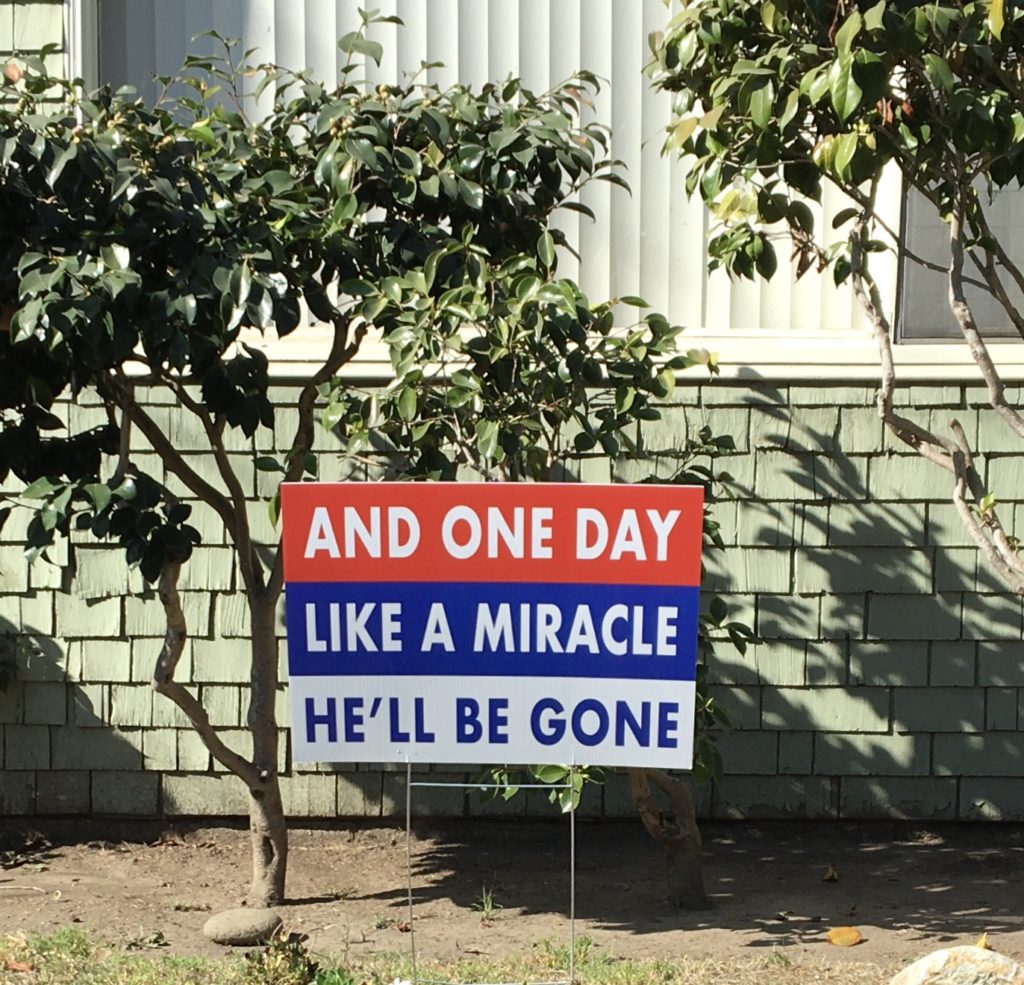
As I wrote a friend earlier, my pessimism is not to be easily tamped down, and I think the celebrations are a little premature given the reality that our defeated incumbent seems determined to put up a fight before acceding to the will of the voters. Foremost in my mind are fears about what the next chapter of the election battle — the recounts and the court fights — will look like and how much damage the disappointed loser can still do to the government and our democracy while he still controls the levers of power.

The net effect is a little corrosive to any sense of joy I might have. Yeah, the celebrations are ongoing, and it’s good to see the people around me relieved and happy. I just can’t stop myself from thinking, “It ain’t over till it’s over.” As my friend said in regard to the current occupant of the Executive Mansion, “Two and a half months is a very long time for a wounded sociopath of his magnitude to occupy the presidency.”