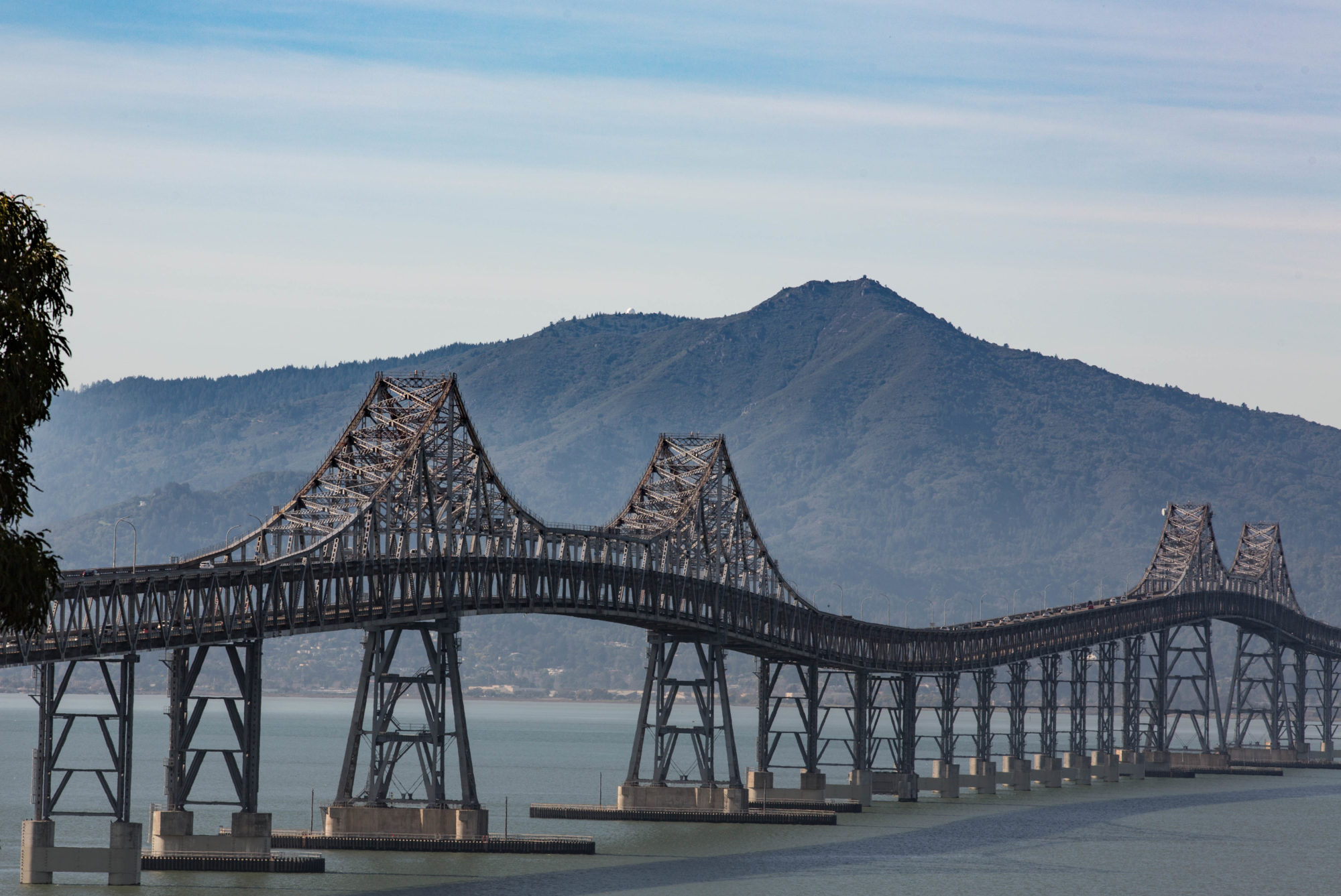
At the risk of unleashing a wavelet of hate mail, here’s a quick take on the Berkeley weather for this week. Meantime, the calendar says it’s November. Please remind me of this when next I snivel about the cold and rain. Of course, in the next 48 hours I’ll hear someone spoil the party by saying global warming is responsible for the continued warm, dry conditions.

Berkeley Halloween, Before and After

Halloween morning on Holly Street. You can just feel the anticipation: tricking and treating, overindulgence, and vandalism just hours away. Late in the afternoon on the front porch, Kate and I carved pumpkins. Hers looked like something; mine looked like nothing you could describe. Then nightfall and the troops of costumed youngsters. Well, first we saw maybe a dozen kids make their way up the other side of the street who never made it to our side. Maybe they were scared of odd-numbered addresses. After that, infrequent visits by one or two kids at a time. One bigger group, including the neighbor kids, knocked at the door. By the time we realized no one else would show up, at 8:30 or so, maybe 15 or 20 kids had contended for the five pounds of candy we had (a jumbo-sized bowl was contributed by a neighbor a couple of houses down at whose door no one stopped, apparently).
An acquaintance on Facebook talked up a San Francisco neighborhood where residents get together to do a full-on trick-or-treat fest. Lots of decorations and the like. “Haunted houses, horror films projected on bedsheets, hundreds of happy screaming kids trick-or-treating with their parents. Real Halloween.”
Real Halloween? Maybe where he came from. But in that odd place and time I grew up–the suburbia of the American Midwest, 1950s and ’60s–the adults didn’t organize much beyond treats and defensive measures against kids who might not be satisfied with them. Unless their kids were very young, parents didn’t have much of a presence on the street. There were hundreds of kids out and about because there were hundreds who lived in any given half-mile radius, and just about everyone was out in search of loot. A generation later, when our kids were little here in Berkeley, that culture didn’t seem to have changed a whole lot. Bunches of kids out after dark, trooping up front walks to whatever welcome awaited them.
The latter-day neighborhood festival my friend talked about in San Francisco is very un-Halloween-like in those terms. I suspect it’s purely a reflection of a culture that has decided that fun is fun within bounds: organized and controlled. You wouldn’t want kids interacting with strangers on the scary night of all scary nights, would you? So if there were kids out anywhere last night, I think that’s where you’d find most of them–where the parents could make sure the program contained enough of the right kinds of entertainment, but not too much, and none leading in some unpredictable or untoward direction.
You could argue about the value of our old Halloween customs. It has never been a favorite occasion of mine, even with the candy. Maybe there are good reasons for that tradition of door-to-door greeting to die. But I think its disappearance is just one more bit of distance we put between ourselves and whoever else we chance to encounter–not just on Halloween, but every other day and night of the year. Another barrier, another measure of isolation. And it’s really too bad for the kids, too.
“Modern American life”–i.e., we parents and our fears, helped along by media that seize on the most lurid of crimes, paint them as the stuff of unversal reality, and suggest we’re powerless to respond rationally–has already killed pick-up sports, going to and from school without a chaperone, and free-style loitering, among other pleasures of youth. In addition to the sweets, Halloween night used to represent a chance to explore one’s surroundings (an impromptu geography lesson), a chance to judge neighbors by the goodies they’d offer (applied sociology), experience in dodging ne’er-do-wells and dealing with fear of the dark (survival training), and hands-on practice with negotiations and bartering (economics and entrepreneurship). All that on top of healthy exercise in the out-of-doors.
It’s all a shame. Almost as big a crisis as the tens of thousands of candy calories our household must now figure out how to consume.
Berkeley Halloween, Before and After
Halloween morning on Holly Street. You can just feel the anticipation: tricking and treating, overindulgence, and vandalism just hours away. Late in the afternoon on the front porch, Kate and I carved pumpkins. Hers looked like something; mine looked like nothing you could describe. Then nightfall and the troops of costumed youngsters. Well, first we saw maybe a dozen kids make their way up the other side of the street who never made it to our side. Maybe they were scared of odd-numbered addresses. After that, infrequent visits by one or two kids at a time. One bigger group, including the neighbor kids, knocked at the door. By the time we realized no one else would show up, at 8:30 or so, maybe 15 or 20 kids had contended for the five pounds of candy we had (a jumbo-sized bowl was contributed by a neighbor a couple of houses down at whose door no one stopped, apparently).
An acquaintance on Facebook talked up a San Francisco neighborhood where residents get together to do a full-on trick-or-treat fest. Lots of decorations and the like. “Haunted houses, horror films projected on bedsheets, hundreds of happy screaming kids trick-or-treating with their parents. Real Halloween.”
Real Halloween? Maybe where he came from. But in that odd place and time I grew up–the suburbia of the American Midwest, 1950s and ’60s–the adults didn’t organize much beyond treats and defensive measures against kids who might not be satisfied with them. Unless their kids were very young, parents didn’t have much of a presence on the street. There were hundreds of kids out and about because there were hundreds who lived in any given half-mile radius, and just about everyone was out in search of loot. A generation later, when our kids were little here in Berkeley, that culture didn’t seem to have changed a whole lot. Bunches of kids out after dark, trooping up front walks to whatever welcome awaited them.
The latter-day neighborhood festival my friend talked about in San Francisco is very un-Halloween-like in those terms. I suspect it’s purely a reflection of a culture that has decided that fun is fun within bounds: organized and controlled. You wouldn’t want kids interacting with strangers on the scary night of all scary nights, would you? So if there were kids out anywhere last night, I think that’s where you’d find most of them–where the parents could make sure the program contained enough of the right kinds of entertainment, but not too much, and none leading in some unpredictable or untoward direction.
You could argue about the value of our old Halloween customs. It has never been a favorite occasion of mine, even with the candy. Maybe there are good reasons for that tradition of door-to-door greeting to die. But I think its disappearance is just one more bit of distance we put between ourselves and whoever else we chance to encounter–not just on Halloween, but every other day and night of the year. Another barrier, another measure of isolation. And it’s really too bad for the kids, too.
“Modern American life”–i.e., we parents and our fears, helped along by media that seize on the most lurid of crimes, paint them as the stuff of unversal reality, and suggest we’re powerless to respond rationally–has already killed pick-up sports, going to and from school without a chaperone, and free-style loitering, among other pleasures of youth. In addition to the sweets, Halloween night used to represent a chance to explore one’s surroundings (an impromptu geography lesson), a chance to judge neighbors by the goodies they’d offer (applied sociology), experience in dodging ne’er-do-wells and dealing with fear of the dark (survival training), and hands-on practice with negotiations and bartering (economics and entrepreneurship). All that on top of healthy exercise in the out-of-doors.
It’s all a shame. Almost as big a crisis as the tens of thousands of candy calories our household must now figure out how to consume.
New Ho Ho
A sighting on our weekly Friday night stops in Oakland’s Temescal neighborhood. One of many restaurants in the area and part of an almost equally large group we have not yet tried. “New Ho Ho”? Somewhere, there’s an original Ho Ho Restaurant, I guess. And the “Ho Ho” part? The Chinese version shown below, shot with exceedingly slow shutter and excessively moving hands, gives a hint. The character for “ho” is repeated (you can just make that out in the red characters above the awning). “Ho” apparently means “good.” I don’t know whether doubling it means “extra good.” Or maybe “greasy spoon.”

News Tales: ‘You’re Still a Kid’
Sometime back in the rich Early Middle Era of my news career — 1987, I’ll call it, at The San Francisco Examiner — something awful happened at about 5 o’clock in the afternoon. A wire-service bulletin said an airliner had gone down somewhere down the coast. I was new on the city desk, and had just started my shift. I had been part of many newsroom scrambles for big stories on deadline, but I was never really in charge of the response. I wasn’t, really, on this night, either. I remember that the senior city editor grabbed a reporter who was just about to leave for the evening and told him he needed to fly down to the crash site. Done. I think my fellow editor collared two or three other reporters who thought they were going home and told them to stand by.
Just recounting the incident revives its horror for me, though I don’t think of it often. What made a more conscious impression, one that still rises to the surface whenever I’m in a newsroom–every working day, now–was the way the editors and reporters reacted to the simple suggestion that a story was happening, that game was afoot.
I’m thinking about that now because my current newsroom, at KQED Public Radio, is in the midst of trying to respond to this week’s problems on the Bay Bridge. Circumstances are a little different now. Much smaller newsroom–which means much smaller staff. No one to stop at the door on the way out and say, “Hey — wait a minute. Big problem on the bridge.” In fact, when the incident occurred the other night, I was winding down from our evening newscasts and getting ready to edit a feature story, a guy wandered over from an adjacent (non-news) department and asked if we knew what was happening on the bridge. When it came down to it on night one, it was me, the local traffic reporting service, and our evening announcer who held the fort. (One of the bosses said to me, “These all-hands-on-deck situations are fun.” I didn’t reflect until later that at first, mine were the only hands on deck.) I had started work before noon and sent my last new email of the night after 1 a.m. I complained mildly on Facebook that it’s harder for me to do those long news days and come back the next day to do it again. The very same editor I was so impressed with that evening back in ’87 responded to that note: “And yet … you’re still a kid.”
Not so sure about that. But some old news reflex is still there.
‘Veni, vidi, velo’
I think Julius Caesar said the above after winning Milan-San Remo in a bunch sprint. It came to me while I was thinking of descending Arlington Avenue (a.k.a, The Arlington) in Berkeley.
From north to south, the street climbs precipitously from the Richmond flats into the El Cerrito hills. It has a nice, looping descent into Kensington. Once past the Kensington village shopping area (and the only stop sign below Moeser Avenue, I think), the road begins a nicely engineered descent to The Circle in North Berkeley.
This last stretch has several things going for it: It’s short. The pavement is pristine. Traffic is light. And it features some nice, plunging curves on what is for the most part a gentle grade. It’s not an extraordinary piece of work to get my out-of-shape 55-year-old body moving fast enough to keep a little ahead of car traffic; or sometimes fast enough to pass a car or two.
So yesterday: I could see I was gaining steadily on a couple of cars. The lead vehicle was poking along downhill at or just above the 25 mph speed limit, the rear vehicle was tailgating. I could see I was going to catch them about the same time we hit a semi-dramatic right-left S-turn, a place where the street rises just enough to soak up some of your momentum and make you pedal hard for 15 or 20 strokes to keep things going.
The day was dry and clear and the pavement was clean. Both cars slowed a little going into the right-hand bend; both went across the fog line a little as they cut the turn, but they left plenty of room for me to dive into the bottom of the turn and go inside them. I flew by the rear car so quickly that I realized the only issue was whether I’d be able to keep up enough speed to go by the front car, too. As I drew alongside, I hesitated a beat to see if the driver would accelerate. By then I was back on the descent and accelerated as fast as I could (i.e., sluggishly), pulled clear, and within another 10 or 12 pedal strokes had enough of a gap that I could pull back into the lane ahead of the cars.
And that’s where I stayed until we all got to The Circle. I had an opening to fly through the yield sign and down Marin. An exciting short blast that I know could also be filed under “stupid bike tricks.” Pretty irresistible on that piece of pavement, though.
Berkeley Hills: The Reward
A basic Berkeley bike ride: Start at my house, 120 feet above sea level. Take your favorite route up through the neighborhoods towards Spruce Street, one of the main roads into the hills (I ride up the north, purely residential end of Shattuck Avenue to Indian Rock, then to Santa Barbara, then the short, sharp climb up Northampton to Spruce). At the top of Spruce, roughly 2.2 meandering miles from home and at an elevation of about 800 feet, turn right on Grizzly Peak. The direction you’re conscious of going is up; you may not perceive until looking at a map later that you’ve been riding mostly north on Spruce and that as you climb the ridge on Grizzly Peak you’ve doubled back south. After the first quarter-mile on Grizzly Peak you get to a long stretch where the climb is pretty gentle. You plunge down past the intersection with Shasta Road, then climb again to the city limits and cross Centennial Drive where it tops out on its ascent from the UC-Berkeley campus, elevation about 1250 and about 5 miles from my front door. The road then climbs more twistily, steadily and steeply–though far from punishingly steep–for another 1.7 miles or so to the top of the road–a shade under 1700 feet.
So if you’re keeping track of all that, that’s a climb of something like 1550 vertical feet in 6.7 miles right outside the front door. Again, the way it unfolds with its long, gradual stretches is not a killer. But it’s not a bad workout, either.
When I first went up Grizzly Peak, in 1980, I think, I was stunned by the views. The road clings to the western slope of a very steep ridge, so you have a pretty much wide open view across Berkeley to the Bay and beyond. About a quarter-mile or so before the top of the road, where the pops over a last little rise before leveling out and pitching down toward toward the Claremont/Fish Ranch saddle, there’s a nice turnout with a stone wall. I used to stop there every time I went up the road to take in the view. I thought of it as my reward for working to get there. It was also a good place to take a breather. Then at some point I became more focused on getting up across the top as quickly as I could, and I didn’t stop there much anymore.
Today I did. For a minute. To see the view. To drink in the warmth of this amazing October day. To take a couple of pictures. It was a good reward.
The Reward

A basic Berkeley bike ride: Start at my house, 120 feet above sea level. Take your favorite route up through the neighborhoods towards Spruce Street, one of the main roads into the hills (I ride up the north, purely residential end of Shattuck Avenue to Indian Rock, then to Santa Barbara, then the short, sharp climb up Northampton to Spruce). At the top of Spruce, roughly 2.2 meandering miles from home and at an elevation of about 800 feet, turn right on Grizzly Peak. The direction you’re conscious of going is up; you may not perceive until looking at a map later that you’ve been riding mostly north on Spruce and that as you climb the ridge on Grizzly Peak you’ve doubled back south. After the first quarter-mile on Grizzly Peak, you get to a long stretch where the climb is pretty gentle. You’re around 960 feet or so when cross Marin Avenue and just under 1100 as you approach the Shasta Gate into Tilden Park. Then you plunge down past the intersection with Shasta Road and climb again to the city limits and cross Centennial Drive where it tops out on its ascent from the UC-Berkeley campus, elevation about 1250 and about 5 miles from my front door. The road then climbs more twistily, steadily and steeply–though far from punishingly steep–for another 1.7 miles or so to the top of the road–a shade under 1700 feet.
So if you’re keeping track of all that, that’s a climb of something like 1550 vertical feet in 6.7 miles right outside the front door. Again, the way it unfolds with its long, gradual stretches is not a killer. But it’s not a bad workout, either.
When I first went up Grizzly Peak, in 1980, I think, I was stunned by the views. The road clings to the western slope of a very steep ridge, so you have a pretty much wide open view across Berkeley to the Bay and beyond. About a quarter-mile or so before the top of the road, where the pops over a last little rise before leveling out and pitching down toward toward the Claremont/Fish Ranch saddle, there’s a nice turnout with a stone wall. I used to stop there every time I went up the road to take in the view. I thought of it as my reward for working to get there. It was also a good place to take a breather. Then at some point I became more focused on getting up across the top as quickly as I could, and I didn’t stop there much anymore.
Today I did. For a minute. To see the view. To drink in the warmth of this amazing October day. To take a couple of pictures. It was a good reward.
Guest Observation: Howard Nemerov
Kate’s a teacher. We talk a lot about school around here, and everything that happens there, and all that should or might and doesn’t. We brought out this poem this evening and read it aloud: “A school is where they grind the grain of thought,/And grind the children who must mind the thought.” Wow–what a description of the institution. (And who was Howard Nemerov? Here’s a good writeup from the American Academy of Poets.)
September, the First Day of School
I
My child and I hold hands on the way to school,
And when I leave him at the first-grade door
He cries a little but is brave; he does
Let go. My selfish tears remind me how
I cried before that door a life ago.
I may have had a hard time letting go.
Each fall the children must endure together
What every child also endures alone:
Learning the alphabet, the integers,
Three dozen bits and pieces of a stuff
So arbitrary, so peremptory,
That worlds invisible and visible
Bow down before it, as in Joseph's dream
The sheaves bowed down and then the stars bowed down
Before the dreaming of a little boy.
That dream got him such hatred of his brothers
As cost the greater part of life to mend,
And yet great kindness came of it in the end.
II
A school is where they grind the grain of thought,
And grind the children who must mind the thought.
It may be those two grindings are but one,
As from the alphabet come Shakespeare's Plays,
As from the integers comes Euler's Law,
As from the whole, inseperably, the lives,
The shrunken lives that have not been set free
By law or by poetic phantasy.
But may they be. My child has disappeared
Behind the schoolroom door. And should I live
To see his coming forth, a life away,
I know my hope, but do not know its form
Nor hope to know it. May the fathers he finds
Among his teachers have a care of him
More than his father could. How that will look
I do not know, I do not need to know.
Even our tears belong to ritual.
But may great kindness come of it in the end.
(Used without permission, but in a noncommercial spirit.)
A Stroll in Berkeley, or The Hostile Inebriate
For the late afternoon dog walk, we took a fistful of bills out to mail and walked downtown. We stopped at the PG&E office, then the post office. Then we decided to get what’s going to pass for our dinner tonight at Top Dog, just up Center Street from downtown Berkeley. Lots of Cal fans were walking the other way from the football game; the home team had given the visitors from Washington State an ugly thumping (the score was 49-17, but Cal, coached by a local gridiron millionaire, repeatedly committed stupid personal fouls and during one stretch appeared to stop playind defense).
Anyway. As The Dog and I waited outside Top Dog, a young woman wearing a Cal sweatshirt and seated at the open front window repeatedly sang, “We beat the Cougars! We beat the Cougars!” During her fifth or sixth round, I finally responded. “Yeah — everyone does.” Washington State’s known mostly for the big scores its opponents run up; its unofficial mascot is the crime-scene silhouette. She looked at me and said, “Yeah, isn’t it wonderful?” She explained that she’s from Seattle, which is University of Washington. She loves it when Huskies maul Cougars.
Kate came out of the restaurant and we walked up to the west entrance to campus to eat our hot dogs on the steps up there. It was a nice open-air repast as the sun got lower. Along the drive leading into campus, I heard someone angrily say, “F—!” I looked over, and a wiry guy with long hair and a beard, maybe in his early 40s, was walking toward us. He got to the top of an adjacent set of steps about 30 feet away and asked if we had a cigarette. Neither of us wanted to engage the guy, and we both shook our heads no. “What?” he said, and started to walk toward us. “No,” Kate said. He stopped and looked away. I had taken out my camera to take a picture of the sunlight on the steps. “What’s that?” he asked, and started to walk toward me again. He wasn’t menacing, exactly; more like drunk and challenging. “A camera,” I said. When he got to within about five feet of where I was sitting I put up my hand and said, “Back off.” He advanced another step. “You taking a picture of your dog?” “Yeah,” I said. “See?” I pointed the camera at him and took a shot. Simultaneously, he flipped me the bird, then stalked off cursing. Kate said, “Let’s get out of here.”
If things had gone any further than that, I would have called the cops. As it is, I have a nice likeness of my new friend as a keepsake.
We walked toward home, careful to take a different route from Mr. Finger’s. A large, fluffy cloud floated south over downtown. The setting sun illuminated it, creating a soft top-lit glow. Just another evening in the city.
