‘Land Logic’

When I turned 18, one of the birthday presents I got was a book-length poem called “The Donner Party.” I sold the book during a no-income period in my mid-20s, but as soon as I had some cash I went back to the used-book store that had taken it off my hands. It was still on the shelves, along with another book I’d sold, a picture biography of Yeats. I bought them back, though I was unable to find a third book I’d parted with–“Twenty Years A-Growing,” by Maurice O’Sullivan, which my Uncle Dick had given me. I found a copy of that eventually, but not mine. I still look for it.

Back to “The Donner Party,” which is right here beside me. It’s a retelling of a story of which everyone knows the shorthand version: pioneers, wagons, mountains, snow, death, cannibals. The book’s by a California poet named George Keithley, who taught (maybe still teaches) up at Chico State. The poetry is mostly blank-verse. It feels plain and authentic and sounds like it was transcribed by firelight.

Here’s one passage that has always stayed with me from a chapter called “Land Logic.” It takes place after the party’s disastrous crossing of Utah, with all of Nevada to cross before the ascent of the Sierra Nevada and hoped-for arrival in California’s Sacramento Valley

We wanted only to rest, at this juncture.
Seeing the snows, no one wished to look back
on our bad luck or talk of it anymore.

Reflection only led us to deplore
the sudden end of summer and lament
the time we wasted in this trap. Whole days

spent unloading. Stupid disputes. Delays
caused by the cattle roaming or Hastings’ wrong
advice … We were warned that to survive

we must lay up grass and water for a dry drive
of two days. Which means at worst we might
travel a day and a night—where we instead

wandered a week in the desert and left dead
a third of our herd of cattle. Add a third
of the wagons abandoned, still it doesn’t explain

all the destruction done. We could never regain
the time taken, or our goods or livestock left
on the salt. But this was not the only cost.

There is a land logic which we lost …
A sense of the likelihood of new terrain
to sustain us. The same logic that lives

in our blood, telling us that bottomland gives
promise for planting. Or for example
the simple certainty that we would find

spring water among rocks when the sun reclined
on green slopes gleaming like good pasture.
But we hurried out only to discover

a prickly patch of greasewood growing over
the dry soil, white with alkali…
Nothing in nature was what it might seem!

The promise of finding forage by a stream
proved false as well—both banks were bare
although the current there cut swift and deep.

We lost the last advantage which could keep
our company from harm. It was this sense
of the land that had departed in a dream
while we went on like souls that are still asleep.

Road Kill and Us

apologia.jpg

My brother John’s comment about the previous post–about the picture of the dead fawn–reminded me of a book by Barry Lopez. It’s titled not “Requiem,” as I remembered it, but “Apologia.” Here’s the opening:

A few miles east of home in the Cascades I slow down and pull over for two raccoons, sprawled still as stones in the road. I carry them to the side and lay them in sun-shot, windblown grass in the barrow pit. In eastern Oregon, along U.S. 20, black-tailed jackrabbits lie like welts of sod–three, four, then a fifth. By the bridge over Jordan Creek, just shy of the Idaho border in the drainage of the Owyhee River, a crumpled adolescent porcupine leers up almost maniacally over its blood-flecked teeth. I carry each one away from the tarmac into a cover of grass or brush out of decency, I think. And worry. Who are these animals, their lights gone out? What journeys have fallen apart here?

Berkeley Wildlife: Street Deer

deer060810.jpg

I’ve mentioned several times in the last couple of years–here and here, for instance–that it has become pretty commonplace to encounter deer here in the Berkeley flatlands (and in the hills, some deer are getting ornery.) Still, today’s experience broke new ground. First, during a noontime walk, The Dog startled a good-sized young adult deer–I’m guessing it was a male–that had been browsing the plants along a driveway adjacent to a vacant lot or overgrown backyard on Monterey Street. The deer bolted into the trees and watched us. Then a woman pulled into the driveway. She said she wasn’t surprised we had happened upon the deer. “There’s a family of three living in there,” she said. “The poor things are just running out of room.” She also mentioned that a dead deer was lying on the street nearby. Hit by a car? I asked. “No–it must have been sick. It doesn’t look like it was injured.” She added that someone had called Berkeley Animal Control.

Her description didn’t prepare me for the fawn that lay along the sidewalk two doors down. A beautiful animal. Surprisingly, The Dog wasn’t interested. I took a few pictures, and we continued on our walk. When we get home, I called animal control myself. When someone came on the line, I told them I wanted to report a dead deer on a street in North Berkeley. “Would that be the one on … Monterey?” the attendant asked. “Yeah, that’s the one.” “We already know about that,” she said. “Any ETA for when you might be out there?” “No. We have one officer in the field, and emergency calls come first. So ….”

I wonder how long it will take word to spread in the carrion-eating community of the choice meal awaiting out there.

Never Fear

neverfear052510.jpg

On Eighth Street, between Bryant and Brannon. This is the base of the massive supports that carry U.S. 101 at its junction with the beginning/end of Interstate 80. I like the serial messages.

Digital Existence, Bane of

Icarp081009a.jpg

I’m still using an iBook G4 laptop I bought six years ago. I’ll knock on wood and note also that it’s not as impressive as it seems. I had a hard drive die when the computer was in its third year, and I’m running on a refurbished one that Apple installed “free”–I had bought the long-term service plan. Although I got a functional computer out of the deal, I hadn’t backed up the big library of pictures on the original drive. That included a bunch of nice shots from a trip down to Southern Illinois my dad and I took in 2004.

Being a bottom-of-the-line machine from ancient times, the iBook doesn’t have a huge hard drive. It’s got about 25 gigabytes of total storage. I now back things up on a 200-gigabyte drive I bought after the Mac died. But here’s the thing about the pictures I download: I always want to sort through them and post some online and maybe someday do something ambitious such as actually make photo albums for relatives or friends. So I tend to keep them on the laptop than dump them on to the external drive (from which I have to transfer them to edit them). Of course, those projects, big and small, tend to get put off. So my laptop drive still gets eaten up, and I have accumulated a big pile of pictures I think about but do nothing with. Such as the ones here.

They’re nearly a year old. I took them during a drive Kate, my dad, and my brother John made to Lake Pymatuning, on the Ohio-Pennsylvania state line during our visit to Lake Erie last August. More specifically, these are pictures of carp that congregate at a spillway between the eastern and western sections of the lake. Why do they congregate there. Because the nice people who stop to see the sights throw them food; a nearby concession stand sells loaves of bread for tourists to throw, slice by slice, into the roiling mass of eager fish. I have about 20 pictures of the scene I took and another couple of dozen from my brother. I would say we documented the scene well. The question remains, do the carp go on to a less hellish-looking existence after the people leave for the day

Maybe now, having posted this, I can store the pictures on some other drive and move on to the next scene from last summer’s travels. After that, I might get to the pile of images still left to sort through from our 2008 trip to Japan. It could happen.

carp0811009.jpg

Berkeley Softball, Revisited Briefly

softball052410.jpg

Last Monday night, a book group came over to the house. Not my book group, though. So I made myself scarce with plans for a wild night out on the town. First stop: CVS, where I purchased some glucosamine and chondroitin among other supplies needed for my middle-aged lifestyle. That errand completed, I sought even more fun. A movie? “The Ghost Writer” sounded appealing, but I had missed the early showing at the only nearby theater running the film, and the second show, just before 10, was too late for the my middle-aged lifestyle. I had a book with me and thought about going over to a restaurant that serves good small salads and what they call a Portuguese sandwich–salt cod and some tasty tomato-based spread on thick toast. I could sit there, have a glass or red wine and modest dinner and read. I drove by, but the place is closed on Mondays. I rolled past a couple other restaurants but was not tempted to stop.  

By that time, I was near San Pablo Park where I used to play night softball games. I thought I’d drive by and see if I knew any of the teams that were out there playing. I checked out one game on a baseball-sized diamond. I recognized the umpire–someone who had been a decent player and who was OK when he started calling games–but no one else. I’ve thought about going back and playing sometimes, and I saw nothing in the play on the field–there were lots of balls hit in the air–that made me think I’d be too physically out of place. But I have to admit it didn’t look like a whole lot of fun. It was the late game of the evening and the plate umpire was running everybody in and out of the dugouts pretty fast and calling strikes that looked strange even given the weird strike zone in slow-pitch softball. He was just moving the game along. I took a few pictures, then strolled across the park to the next diamond.

At first glance, I didn’t recognize anyone in the second game, either. But at a distance something about one of the pitchers seemed familiar. And was: He turned out to be one of my teammates from the very first Berkeley team I played on, back in 1979. I hung around an inning or two and watched him pitch and hit. He did OK, even though I didn’t entirely approve of his team’s uniform shirts, which carried the players’ names on the back, a fussy and over-serious touch for a Berkeley league game. It was getting cold at the park, and I got a call that the book group had hit the road. I almost said hi to my old teammate, and then I headed home.

softball052410a.jpg

Up There

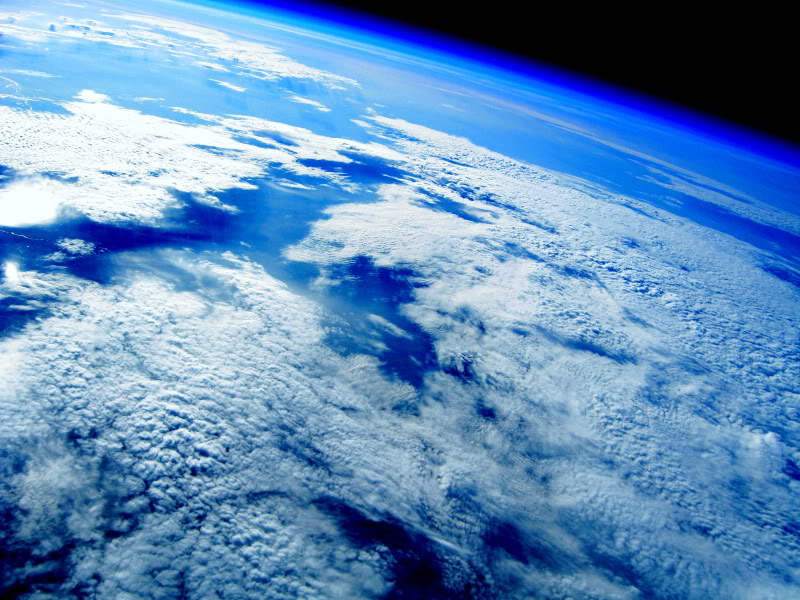
A nice little piece in The New York Times a few days ago: “Tweaking a Camera to Suit a Hobby.” The hobby in question is launching balloons with point-and-shoot cameras attached and, as far as I can tell, letting them go where they will go. The folks featured in the article, who go by the handle North Iowa Experimental High-Altitude Ballooning (NIXHAB), use balloons that have reached heights around 100,000 feet. That’s far enough up there to give the impression you’re on the edge of space. (My first question: Do these guys need to file flight plans or consult with the FAA?).

The Times story focuses on the software hacks that allow the balloonists and other hobbyists to set up Canon point-and-shoot cameras to record their images. Here’s one from the NIXHAB site (also used in the Times piece):

Safe Surrender

safesurrender052110.jpg

Firehouse on Bluxome Alley, just off Fourth Street, in San Francisco, during my Friday night walk to the ferry.

Bluxome runs parallel to and between Brannan and Townsend, well south of Market. I had never heard of it until the night of the 1989 earthquake. The quake caused a wall to collapse into the street at the corner of Sixth and Bluxome, less than two blocks from this spot, killing five people. I never actually walked along Bluxome Alley until 2001, when I went to work in an office at Eighth and Townsend. Occasionally I’d ride the casual carpool to First and Fremont, or somewhere in the vicinity, and walk over to Eighth. By the time I first strolled down the alley, the building that had partially collapsed was gone and a condominium building had gone up in its place.

(And what’s a Safe Surrender Site? Under a California law enacted in ’01, “a parent or person with lawful custody can safely surrender a baby confidentially and without fear of prosecution within 72 hours of birth.” The law “requires the baby be taken to a public or private hospital, designated fire station or other safe surrender site. No questions will be asked.” People who give up babies this way have 14 days to change their minds. The state says 348 babies have been surrendered in California in this manner since the law went into effect. Also: 46 other states have similar laws.)

Streetcorner Interlude

Walking to work early this afternoon, east on 16th. At Harrison the light is green. A white pickup makes a left turn as a fixed-gear rider comes down the hill toward the intersection. No problem–the fixie guy slows himself down and eases past the truck. I’m halfway through the crossing now, and I hear a voice, a male voice, say, “What a beautiful day!” It is. It’s cloudless and blue, sunwashed. The man who says this looks at me from behind the wheel of a blue Corolla.”Beautiful!” He repeats. “I can’t believe it.”

Prop. 16, Slate Mailers, and Voting ‘Green’

For the most part, California politics don’t rise to (or sink to, depending on your perspective) the corrupt heights (sleazy depths) that they do in, say, Illinois or New York. Which is to say, while California may have produced its share of rascals, bums, and incompetents over the years, I can’t think of a single governor here who’s been indicted in the past half-century or who’s been outed as a John.

Still, we have our moments, such as those provided every election season by slate mailers. What’s a slate mailer, you ask? They’re cleverly crafted direct-mail pieces that endorse a list of candidates and issues. If you don’t look at them hard, you might think you’re looking at the official word from your party about who and what it endorses. That’s because you’ll see well-known party figures in their predictable spots at the head of the ticket listed with both statewide initiatives and local candidates and measures. Since voter registration rolls are public information, slate cards go out to voters who have declared a party affiliation. So Democratic voters get slate cards listing Democratic candidates and issues, and Republicans get the GOP cards.

But rarely are the parties actually speaking through the slate mailers. Instead, they’re the work of political pros who have turned slate mailers into an industry; a lucrative one, apparently, given the persistence of the practice. They may list statewide candidates who are unopposed or virtually so–Jerry Brown, for instance, who’s running for the Democratic nomination for governor in next month’s primary. That makes the piece look like a party slate. Alongside those names, they’ll list candidates in contested races who have paid to appear on the same list with the big names.

votegreen.pngOver the weekend, we got one of the all-time best (sleaziest) mailers I’ve ever seen. It bears the legend “Californians Vote Green” and urges recipients to “Vote for a Greener California.” It depicts a scene from one of our fast-vanishing primeval woodlands. The question I had when I first saw it was whether it was from the Green Party. Then I looked inside. Yep, a list of candidates. Most had asterisks next to their names, and the fine print explained that meant they had paid their way onto the list.

But the real surprise was in the list of ballot propositions the mailer suggested “Californians Vote Green” endorsed–particularly Proposition 16. That’s a constitutional amendment bought and paid for by Pacific Gas & Electric Company that aims to make it virtually impossible for local communities to set up competing power districts. PG&E actually supported the 2002 law that permitted communities to create their own utility districts. But with the law’s concept becoming reality–Marin County has managed to get a community power district up and running this year despite PG&E’s efforts to undermine it–the utility has had a change of heart about competition. It not only wrote the new constitutional language in Prop. 16 and paid for the petition drive that got it on the ballot, it’s spending more than $30 million to get it passed.

In fact, a vast majority of environmental groups that have anything to say about Prop. 16 say they’re against it. The California Democratic Party has recommended a no vote. Many liberal (read “green”) Democratic legislators have condemned PG&E’s campaign. And voters who want a “greener California” ought to know that in fighting the Marin power district, PG&E is actively trying to scuttle a competitor set up expressly to provide cleaner electricity (using more renewable sources like wind and solar) than PG&E sells. But none of that prevented PG&E or its Prop. 16 cronies from buying a spot on the “green” mailer.

The California Secretary of State records say the PG&E-financed Yes on 16 committee paid $40,000 to Californians Vote Green for its spot on the slate card. To put that in perspective, the No on 16 side has raised a total of about $50,000 for its entire campaign. (That having been said, $40,000 is a cheap date for the Yes on 16 campaign. To date, it’s spent $630,000 for slate mailers targeting voters of both parties, including $200,000 to California Voter Guide, which has been churning out slate cards since 1986).

Let’s not drop “Californians Vote Green” matter without a tip of the hat to those responsible. If you check out the CVG website, it advises that if you want to purchase placement, you ought to contact rtaylor@californiansvotegreencom. “rtaylor” is Rick Taylor, a long-time Los Angeles hired gun who is now a partner in a firm called Dakota Communications. Check out the pictures of prominent clients on the site. I’d call the outfit connected.

If you feel like sharing your opinion of his handiwork with Californians Vote Green, you might give him a call at 310 815 8444.