Road Blog: August in Chicago

peets080211.jpg

Kate and I did what I termed “an epic walk” when we started out–from near Touhy and Western on Chicago’s far North Side to downtown Evanston, then back by way of the lakefront. When we got back and I checked our route on Gmaps Pedometer, we had strolled for 7.9 miles. Flat miles, yes. The degree of difficulty was furnished by a temperature in the low 90s and humidity high enough that my Bay Area-influenced constitution felt like we were in a steambath.

There were people on the beach, but I didn’t happen across a single scene, or wasn’t alert to one, that said “hot day in Chicago” to me. But I did capture the above: a quintet at Peet’s in Evanston, concentrating on their screens in air-conditioned comfort. (I’m thinking “air-conditioned comfort” would substitute for “happiness” were the Declaration of Independence to be redrafted today.) This was the smart place to be, not shuffling along Chicago’s August streets.

And outside right now: A cold front is moving down from the northwest that’s already brought squalls and severe thunderstorms to the lake cities north of here. After that, it’s supposed to cool down for the rest of the week.

gmap080211.png

Guest Observation: Minorities, Majorities

From Lincoln’s First Inaugural Address:

“If the minority will not acquiesce, the majority must, or the Government must cease. There is no other alternative, for continuing the Government is acquiescence on one side or the other. If a minority in such case will secede rather than acquiesce, they make a precedent which in turn will divide and ruin them, for a minority of their own will secede from them whenever a majority refuses to be controlled by such minority. …
“A majority held in restraint by constitutional checks and limitations, and always changing easily with deliberate changes of popular opinions and sentiments, is the only true sovereign of a free people. Whoever rejects it does of necessity fly to anarchy or to despotism. Unanimity is impossible. The rule of a minority, as a permanent arrangement, is wholly inadmissible; so that, rejecting the majority principle, anarchy or despotism in some form is all that is left.”

Salt Lake City Approach

trip073111b.jpg

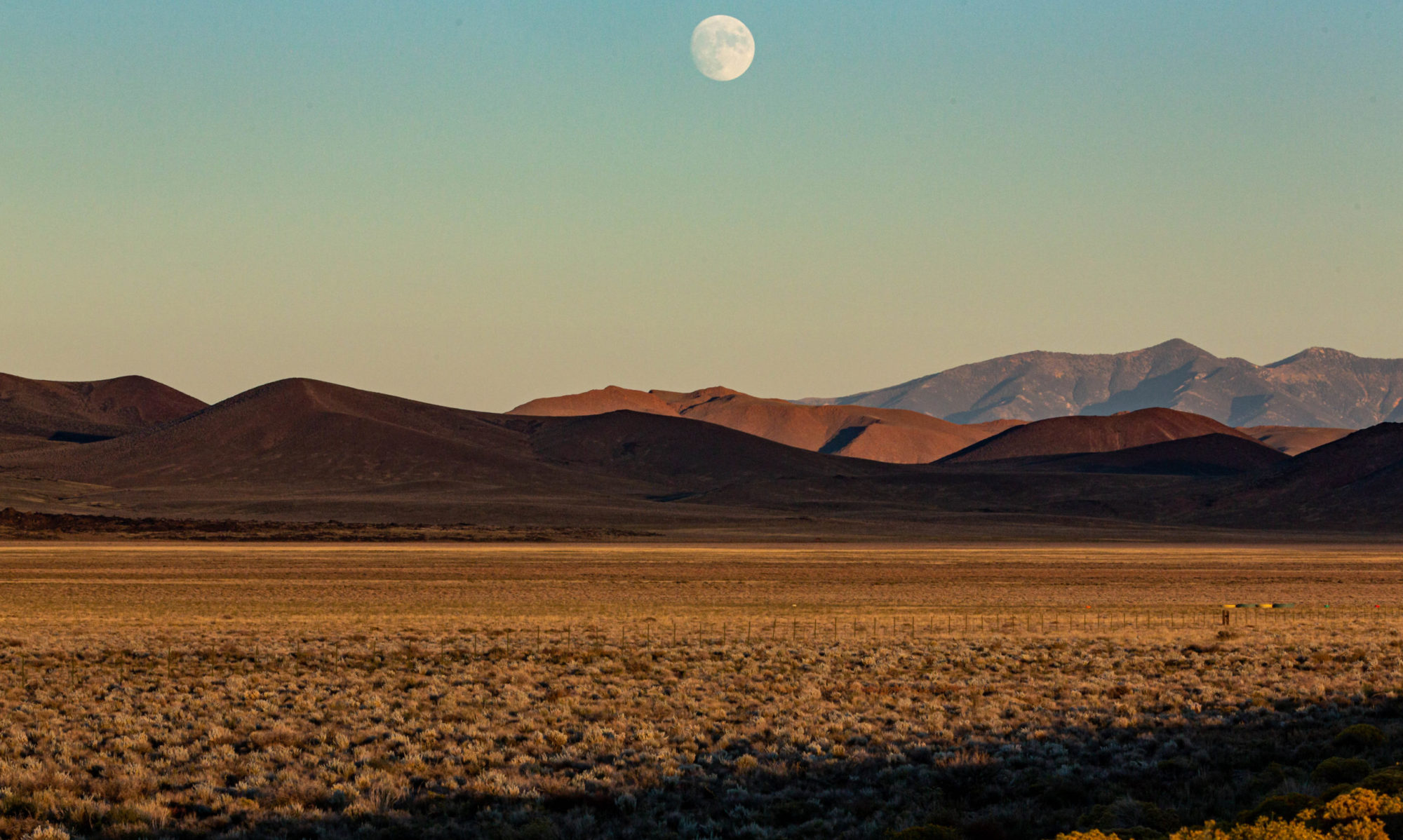
On approach to the airport in Salt Lake City: A storm was moving over the area, and we had flown a long northerly leg over the eastern edge of Great Salt Lake to what appeared to be the edge of the storm before looping back down south–the direction we’re headed here–to the airfield. If you take a look at the FlightAware track of the flight, it looks like we had flown a loop well west of the airport, too. It rained buckets afer we landed

Here’s the trip slideshow

Air-Road Blog: Chicago

chicago080111.jpg

We flew to Chicago yesterday. It was clear and warm as we left Oakland. We landed in Salt Lake City just as a big monsoon-driven cell passed over the area. And in Chicago, we emerged into a steam bath. It was about nearly 1 in the morning and about 80 degrees. My first impression was 80 sopping-wet degrees, but I think you get used to it. I say “I think” because like millions of others in Chicagoland, I’m living Monday morning in air-conditioned comfort as the temperature outside climbs toward the 90s (and there’s a complicating factor today: the National Weather Service has issued an air-quality alert for high pollution levels today).

In other weather talk: A neighbor mentioned she’d heard that Chicago had had more than 6 inches of rain in a day recently, but thought that might have been a typo. Well, no, it wasn’t. As the Chicago Weather Center site reports in detail, July 2011 was one of the driest Chicago Julys on record–until 10 days ago. Then storms began rolling in, including one that dropped 6.86 inches on July 23 (the most on one date in the city going back to 1870), and the month turned into the city’s rainiest July on record). Here’s the rundown from WGN’s Tom Skilling and company:

From one of driest to all-time wettest July in just six days

Wettest July also third-warmest

Chicago’s 24-hour rainfall record …

(And the picture? That’s Lunt Avenue, in front of my sister’s place in West Rogers Park. God’s Battle Axe? Well, it gets your attention. The church describes itself as “a fast growing charismatic prayer ministry … destroying the works of darkness thereby impacting the world.” The ministry’s leader “is referred to by some of his close friends as ‘a Praying Machine: The Anointed Apostle of Prayers.’ “)

Guest Observation: The Salmon

Kate was tidying up around the house yesterday and found a folded sheet of paper under our bed amidst the great clumps of dog hair that had accumulated there (mute testimony to the incompleteness of my periodic vacuum-powered housecleaning). On the paper was the following poem about the salmon, and about other things too. Kate said the paper must have been mine, and it must have, given my sometimes-preoccupation with the fish in question. But I can’t remember how I came by this piece at all, and I don’t really remember having read the poem. David Whyte is a Scottish poet, I believe, whom I know for a book he wrote back in the ’90s called “The Heart Aroused.” It was a call for humanizing the workplace, for recognizing the role of creativity to excite individual passions, a recognition he argues leads to more satisfied employees and more successful employers.
Song for the Salmon
by David Whyte

For too many days now I have not written of the sea,
nor the rivers, nor the shifting currents
we find between the islands

For too many nights now I have not imagined the salmon
threading the dark streams of reflected stars,
nor have I dreamt of his longing
nor the lithe swing of his tail toward dawn

I have not given myself to the depth to which he goes,
to the cargoes of crystal water, cold with salt,
nor the enormous plains of ocean swaying beneath the moon.

I have not felt the lifted arms of the ocean
opening its white hands on the seashore,
nor the salted wind, whole and healthy
filling the chest with living air.

I have not heard those waves
fallen out of heaven onto earth,
nor the tumult of sound and the satisfaction
of a thousand miles of ocean
giving up its strength on the sand.

But now I have spoken of that great sea,
the ocean of longing shifts through me,
the blessed inner star of navigation
moves in the dark sky above
and I am ready like the young salmon
to leave his river, blessed with hunger
for a great journey on the drawing tide.

Mechanics Monument

mechanics072611.jpg

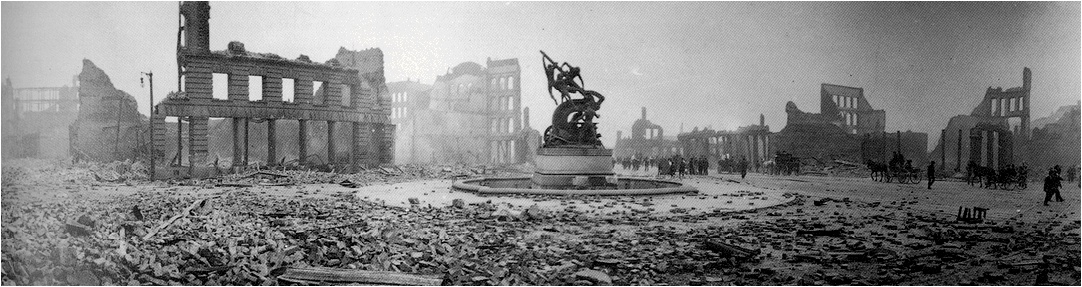
I stopped downtown on the way in to work yesterday. To give blood on Bush Street. When they’d gotten my pint, I walked down the street and got a cup of coffee (no longer recommended by the blood donation people since caffeine is a diuretic and they want to make sure you build up your fluids after you’re tapped). Right there where Bush meets Battery and Battery hits Market is this monument, the Mechanics Monument. It was created in honor of Peter Donahue, the cofounder of the city’s Union Iron Works, which I believe was the first heavy industry on the West Coast. Here’s a description of the monument from Gray Brechin in his fine and irascible history, “Imperial San Francisco“:

Douglas Tilden‘s heroic group of five nude men straining to punch a steel plate commemorated both the family that had built the West’s first foundry and the mechanics who built the Donahue fortune. [Mayor] Phelan … reminded the crowd that from the Donahues’ primitive foundry, once located just a block away in Tar Flat, had grown the might Union Iron Words whose ships had earned San Francisco worldwide fame and wealth.”

President McKinley was in the city to unveil the monument in 1901, but begged off because his wife took ill.

(And: another view of the monument a few years after its dedication.)

Oakland Estuary

ferry072211.jpg

The Friday Night Ferry, July 22 edition. I walked over to the Ferry Building from work and on the boat met Kate, who was just back from several days in West Marin, learning about salmon and creeks and watersheds (I worked all week to suppress my envy). Then the ride back to Oakland, with the sky and water as changing and captivating and full of seductively beautiful light as ever and always. The dusk closed down on the week, the weekend flew by, and just a few hours ago, the dawn again of another ferry week.

Tour de France Geek-Out: Some Time Trial Stats

Eye-catching stat from today’s time trial: Tony Martin, the Stage 20 winner in a time of 55:33, won on the same course June 8, Stage 3 of the Dauphine Libere, in 55:27. For the civilian cyclist and for anyone who looks at the Tour racers as I do and assumes that the race takes a brutal toll on bodies, endurance, and psyches, it’s sort of a starling statistic. The guy dominated then, and he dominated today at the tail end of a race in which he’s been driven very hard to help his team’s sprinter (HTC Highroad, Mark Cavendish) and has had to go over all the big mountains with the rest of the pack.

I figured there were more interesting comparisons to be made between the Dauphine and Tour performances. Here’s another: Cadel Evans, who rode a very strong second today in 55:40, finished seventh on June 8 in 56:47. So there’s a guy who’s been driving very hard for three weeks–has been on the spot to cover all his rivals’ mountain moves and with his team’s help (BMC) has reliably kept himself out of trouble near the front of the pack–who made a major improvement in his performance in the space of six weeks. Thomas Voeckler, fresh off several harrowing days defending his overall race lead, improved by almost a minute.

One question it raises–no, not about doping–is what are the factors besides fatigue that might explain such an improvement. I’m not taking that on right now. Instead, here’s a side-by-side comparison of some of the other Dauphine/Tour performances on the Grenoble course used in both races (I haven’t done them–yet–all because my painstaking one-at-a-time method takes a little too long; I’m about to break out a spreadsheet to do the whole list).

LATER: I did the list. A total of 77 racers rode in both the Dauphine and Tour time trials on the Grenoble course. Twenty-three recorded faster times (even if they had “slow” times on both occasions; for instance, Tyler Farrar finished his Tour stage 1 second faster than his Dauphine stage, but both times he was near the bottom of the standings) and 54 recorded slower times. The most interesting cases to me are those like Cadel Evans, who finished in the top ten the first time around and still recorded a marked improvement, and those like Geraint Thomas and Rigoberto Uran who had good or at least respectable Dauphine times who were nowhere near the top in the Tour. And of course, Tony Martin, who dominated both runs.

Racer Dauphine time Tour time Change
Juergen Roelandts 61:34 58:30 -3:04
Ivan Santaromita 63:44 61:19 -2:25
Ivan Basso 61:43 59:30 -2:23
Pierre Rolland 60:20 58:23 -1:57
Samuel Sanchez 58:54 57:10 -1:44
Carlos Barredo 60:12 58:31 -1:41
Haimar Zubeldia 61:21 59:43 -1:38
Samuel Dumoulin 64:09 62:52 -1:17
Jean-Christophe Peraud 58:20 57:06 -1:14
Cadel Evans 56:47 55:40 -1:07
Maarten Tjallingii 60:47 59:40 -1:07
Vincent Jerome 62:46 61:41 -1:05
Thomas Voeckler 58:45 57:47 -:58
Yannick Talarbardon 62:27 61:35 -:52
Jelle Vanendert 61:06 60:17 -:49
Manuel Quinziato 62:48 62:03 -:45
Grega Bole 62:26 61:44 -:42
Paolo Longo Borghini 62:29 62:18 -:11
Lieuwe Westra 58:28 58:12 -:16
Chris Sorenson 59:39 59:31 -:08
Christian Knees 59:59 59:56 -:03
Kristjan Koren 58:10 58:09 -:01
Tyler Farrar 63:18 63:17 -:01
Sandy Casar 58:31 58:36 +:05
Tony Martin 55:27 55:33 +:06
Michael Schär 60:42 60:49 +:07
Rein Taaramae 57:23 57:36 +:13
Julian Dean 62:40 62:55 +:15
Amael Moinard 62:07 62:23 +:16
Danny Pate 58:39 59:03 +:24
Mikhail Ignatyev 59:52 60:19 +:27
Sébastien Minard 60:31 60:59 +:28
Tomas Vaitkus 60:47 61:20 +:33
Adriano Malori 57:31 58:11 +:40
Vladimir Karpets 58:29 59:09 +:40
Markel Irizar 59:08 59:51 +:43
Fabrice Jeandesboz 61:09 61:54 +:45
Nicky Sorenson 58:37 59:24 +:47
Jerome Coppel 57:35 58:24 +:49
Jonathan Hivert 61:48 62:37 +:49
Jeremy Roy 58:05 58:56 +:51
Yury Trofimov 60:06 61:03 +:57
Arnold Jeannesson 59:16 60:15 +:59
Sébastien Hinault 61:00 62:01 +1:01
Rob Ruijgh 59:15 60:16 +1:01
Grischa Niermann 59:55 61:00 +1:05
Christophe Riblon 57:04 58:12 +1:08
Maxime Bouet 58:22 59:32 +1:10
Gorka Verdugo 58:35 59:46 +1:11
Juan Antonio Flecha 58:42 59:53 +1:11
Robert Gesink 58:16 59:34 +1:18
Xabier Zandio 59:06 60:27 +1:21
Simon Gerrans 60:06 61:36 +1:30
Edvald Boasson Hagen 56:10 57:43 +1:33
Steve Morabito 60:26 62:01 +1:35
Tristan Valentin 61:39 63:14 +1:35
Perrig Quemeneur 59:38 61:16 +1:38
Ramunas Navardauska 58:42 60:21 +1:39
Maciej Paterski 59:43 61:25 +1:42
Luis-Leon Sanchez 59:05 60:49 +1:44
Pablo Urtasun Perez 62:00 63:52 +1:52
Sergio Paulinho 59:12 61:15 +2:03
Edgar Silin 59:45 61:56 +2:11
Rémy Di Gregorio 59:20 61:40 +2:20
Andriy Grivko 59:58 62:24 +2:26
Rui Alberto Fario da Costa 57:27 60:02 +2:35
Imano Erviti 58:49 61:51 +3:02
Nicolas Roche 58:58 62:02 +3:04
Dmitriy Fofonov 60:51 64:19 +3:18
Andrey Amador 59:18 62:42 +3:24
David Moncoutie 58:29 61:58 +3:29
Joost Posthuma 58:36 62:09 +3:33
Geraint Thomas 57:03 60:48 +3:45
Maxim Iglinskiy 61:29 65:17 +3:52
Mickaël Buffaz 60:43 64:50 +4:07
Leonardo Duque 61:14 65:21 +4:07
Rigoberto Uran 58:08 62:24 +4:16
Biel Kadri 58:10 63:03 +4:53
Brian Vandborg 58:20 64:00 +5:40

Tour de France Stage 20: Time Trials

Eye-catching stat from today’s time trial: Tony Martin, the Stage 20 winner in a time of 55:33, won on the same course June 8, Stage 3 of the Dauphine Libere, in 55:27. For the civilian cyclist and for anyone who looks at the Tour racers as I do and assumes that the race takes a brutal toll on bodies, endurance, and psyches, it’s sort of a starling statistic. The guy dominated then, and he dominated today at the tail end of a race in which he’s been driven very hard to help his team’s sprinter (HTC Highroad, Mark Cavendish) and has had to go over all the big mountains with the rest of the pack.

I figured there were more interesting comparisons to be made between the Dauphine and Tour performances. Here’s another: Cadel Evans, who rode a very strong second today in 55:40, finished seventh on June 8 in 56:47. So there’s a guy who’s been driving very hard for three weeks–has been on the spot to cover all his rivals’ mountain moves and with his team’s help (BMC) has reliably kept himself out of trouble near the front of the pack–who made a major improvement in his performance in the space of six weeks. Thomas Voeckler, fresh off several harrowing days defending his overall race lead, improved by almost a minute.

One question it raises–no, not about doping–is what are the factors besides fatigue that might explain such an improvement. I’m not taking that on right now. Instead, here’s a side-by-side comparison of some of the other Dauphine/Tour performances on the Grenoble course used in both races (I haven’t done them–yet–all because my painstaking one-at-a-time method takes a little too long; I’m about to break out a spreadsheet to do the whole list):

Racer Dauphine time Tour time Change
Jean-Christophe Peraud 58:20 57:06 -1:14
Cadel Evans 56:47 55:40 -1:07
Thomas Voeckler 58:45 57:47 -:58
Lieuwe Westra 58:28 58:12 -:16
Kristjan Koren 58:10 58:09 -:01
Tony Martin 55:27 55:33 +:06
Sandy Casar 58:29 58:36 +:07
Rein Taaramae 57:23 57:36 +:13
Danny Pate 58:39 59:03 +:24
Adriano Malori 57:31 58:11 +:40
Vladimir Karpets 58:29 59:09 +:40
Nicky Sorenson 58:37 59:24 +:47
Jerome Coppel 57:35 58:24 +:49
Jeremy Roy 58:05 58:56 +:51
Christophe Riblon 57:04 58:12 +1:08
Maxime Bouet 58:22 59:32 +1:10
Gorka Verdugo 58:35 59:46 +1:11
Juan Antonio Flecha 58:42 59:53 +1:11
Robert Gesink 58:16 59:34 +1:18
Edvald Boasson Hagen 56:10 57:43 +1:33
Ramunas Navardauska 58:42 60:21 +1:39
Andriy Grivko 59:58 62:24 +2:26
Rui Alberto Fario da Costa 57:27 60:02 +2:35
David Moncoutie 58:29 61:58 +3:29
Joost Posthuma 58:36 62:09 +3:33
Geraint Thomas 57:03 60:48 +3:45
Rigoberto Uran 58:08 62:24 +4:16
Biel Kadri 58:10 63:03 +4:53
Brian Vandborg 58:20 64:00 +5:40

Eastshore in Blue

eastshore072011.jpg

Yesterday: Just after 11 a.m., on the Eastshore Freeway (a.k.a., Interstates 80 and 580), at the Powell Street entrance. A beautiful day with no accidents in the vicinity. Just a lot of cars. The reason for all the cars well after the height of the commute hour: a day game between the Giants and the Dodgers, just across the Bay Bridge). When I drive in to work, I usually drive late and am spoiled; with an electronic toll pass, I don’t even slow down much for the toll plaza anymore, and I make it to the office reliably in about 30 minutes, door to door. Yesterday it was a little more than an hour, a lot of it spent just like this–in traffic that was going nowhere fast.