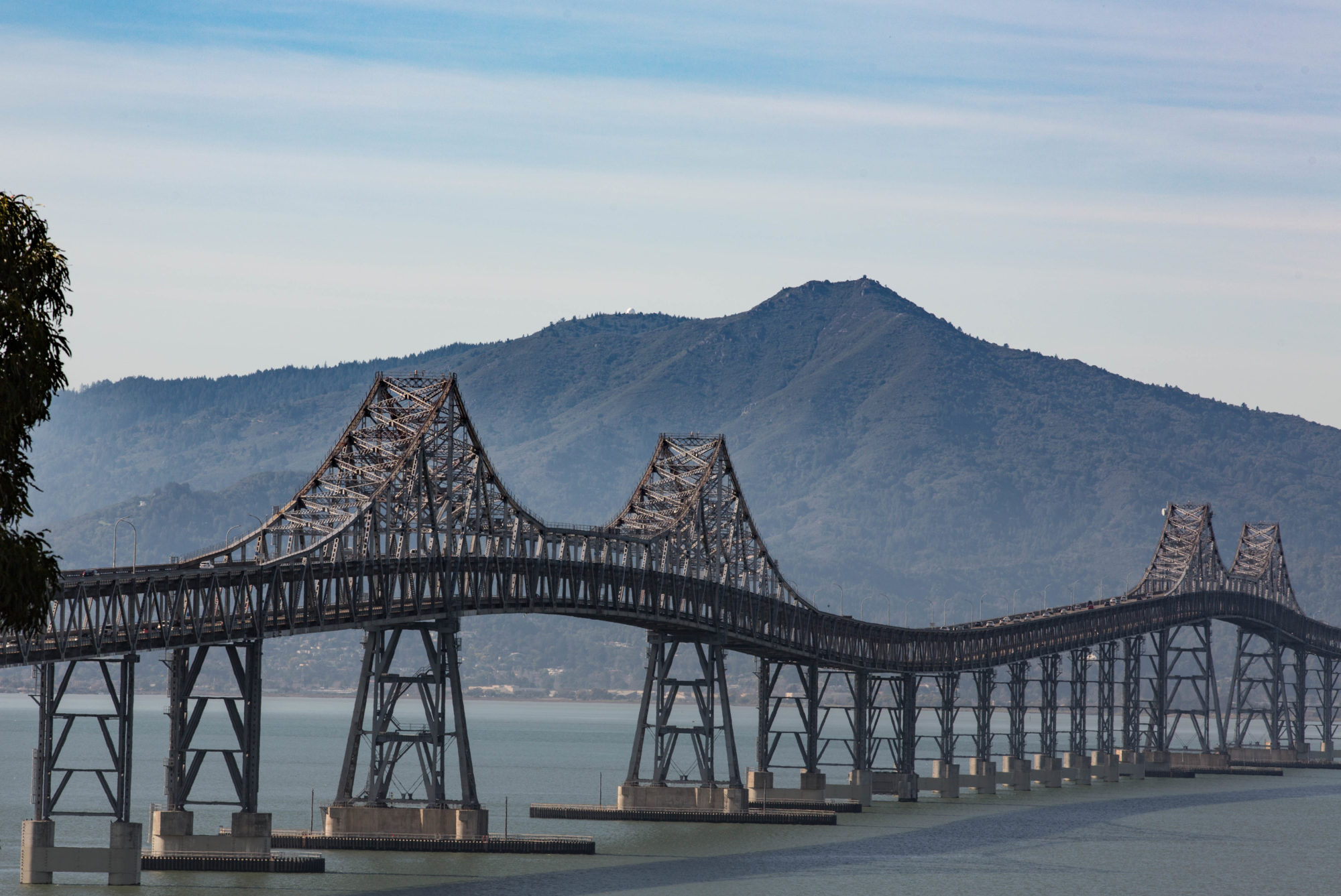
The day began with rain, and with rain it ends. A sort of anemic late-season storm arrived before dawn and then parked. Even a weak little storm will get you wet when it decides not to move on. I can hear rain on the roof and running down the drainpipes. At the other end of the house, I can hear the TV weather guy talking about the rain continuing. I’m thankful for a dry space to sit and listen.

Local and Regional Weather

If you spend time on the National Weather Service sites, you’re familiar with their regional forecast maps, mosaics of color denoting advisories for floods (in different shades of green), winter storm watches and warnings (purple and pink), and red-flag alerts (an alarming scarlet). One “forecast advisory” I had never encountered on a weather map before: a child abduction emergency.
Wow. I get the whole amber alert movement, even though I have to admit that the ubiquitous bulletins to keep an eye out for certain cars always triggers a creepy sensation for me (it would be easy to use the alert network for other purposes, like looking out for subversives). I just wonder how useful weather mapping is for spreading the news about an apparent parent-abduction case. Maybe it’s very effective. It got my attention.
As to the son and father and mother involved in this incident: I hope it all ends well.
Birthday Celebration

It was raining hard last night when I left work, so instead of hiking over to the ferry as usual, I walked over to the 16th Street BART station, and rode downtown. I strolled across the rainswept plaza to the Ferry Building. Inside, I stopped to fiddle with some important matter on my phone. After a couple minutes, I was approached by someone and without looking knew I was about to get hit up for some change.
“Sir, it’s my birthday and I just need 50 cents so I can celebrate” was the gaff, delivered by a guy a little younger than me. He was wearing a black watch cap and sweatshirt and some other foul-weather gear and looked like he lived outside.
“What kind of celebration are you going to have for 50 cents?” I asked. Really. And I realized I probably did have 50 cents in my jeans pocket.
“Well, actually I could use any kind of change at all,” he said. I looked at the coins I’d dug out of my pocket–two quarters, a dime, a nickel. Then I thought about how much money I had on me. A coworker had needed to borrow twenty bucks earlier in the week and had just repaid me. I had another twenty in there, too, which I was going to use to buy our customary Friday night drinks–a beer for me, a white wine for Kate–on the boat.
What the hell, I thought. I took out my wallet, took out one of the twenties, and handed it to the guy. “Don’t celebrate too hard, I said.”
He thanked me, then looked down at the bill. And then he grabbed my hand and really thanked me. He had an urgent, almost shocked look in his eyes. “Take care of yourself,” I said. “It’s wet out there.” I thought: “Is it your birthday? Doesn’t matter. How much difference can that cash really make?”
If I’d really been thinking, I would have asked his name.
Till It’s Over Over There
U.S. Sergeant Is Said to Kill 16 Civilians in Afghanistan
PANJWAI, Afghanistan — Stalking from home to home, a United States Army sergeant methodically killed at least 16 civilians, 9 of them children, in a rural stretch of southern Afghanistan early on Sunday. …
You can be angry about this, or heartsick, or both. Most of us—and I emphatically include myself in that “us”—don’t give a thought to what’s happening over in Afghanistan, either to the Afghans or to the people we’ve sent to carry out a mission we no longer understand (and without understanding, it’s beyond me how there can be any real support). It’s true that a report of violence will interrupt the general silence over this war and momentarily attract some attention (“Burn any Korans lately? And how did that go for you?”).
We’ve had a copy of a literary magazine–The Sun– sitting amid the pile of papers on our dining room table the last couple of weeks. A friend gave it to us because she has a poem in the issue. By coincidence, I picked up The Sun after reading the story above. Leafing through it from back to front, I came across a page that featured portraits of two Marines in Afghanistan. There were two pictures of each Marine: on the left, a frame showing them in full combat gear; on the right, a frame of them with no gear.
There were six pages of portraits, twelve Marines, members of a platoon in the middle of a seven-month tour of duty in Helmand Province last year. A short essay by the journalist who took the pictures, Elliott D. Woods, summarized what had happened to the platoon during its first few months in the country:
“Four months into their seven-month tour, the mostly nineteen- and twenty-year-old marines at Patrol Base Fires in Sangin, Afghanistan, had seen enough violence to permanently line their boyish faces. Two of their platoon’s men had been killed by improvised explosive devices (IEDs), one of them blown literally in two. A half dozen had gone home without their legs, and others had suffered severe concussions or taken fragments of flying metal on their exposed faces and through the gaps n their Kevlar armor. By the time I arrived to photograph them in July 2011, First Platoon’s casualty rate was more than 50 percent.”
(You can find the photo essay, in three parts, on Woods’s site, Assignment Afghanistan, or at the Virginia Quarterly Review.)
Woods also has this to say about the setting of the Marines’ mission: “The district is so remote, so cut off from the Afghan government, that none of the farmers with whom I spoke knew the name of their country’s president. They could not name Helmand’s provincial governor either, or even their district council leader. They did not know what country the marines in their fields had come from, let alone why they were there. They did know that they were tired of living in a war zone. They were afraid of everyone, and that fear had driven hundreds of Sangin families to Kabul, where they were waiting out the war in filthy encampments on the city’s western outskirts.”
One other thing about Sangin: This is one of the places the British fought during their part of the Post-9/11 War. See the video below.
California Salmon: Slideshow of the Day
Some pictures I’ve been sitting on for oh, the last year and a half. The September before last, Kate and The Dog and I took a Sunday field trip to the state fish hatchery just below Oroville Dam. It was a perfect day in the Sacramento Valley, clear and brilliantly sunny but not really hot — maybe 85 degrees. The first decent chinook salmon run in several years was under way, and in the three or four hours we hung around, several hundred people, almost all locals, showed up to take a look at the fish. A quick look at some of what we saw (captions to come):
Guest Observation: More on Crazy Horse
I just re-read Ian Frazier’s “Great Plains.” I had forgotten that among the many subjects he focuses on is Crazy Horse, the Lakota Oglala chief (how times change: a generation ago, his predominant identification among the wasichu would have been Sioux. I digress. Back to Frazier …). He’s got a chapter that ranges from a street in Manhattan, where he encounters a man who says he’s the grandson of Crazy Horse, to Fort Robinson, Nebraska, where Crazy Horse was killed. Here’s the end of the chapter, which I love for the way he reaches beyond a recitation of facts and tries to bring into the open the sentiment and emotion and meaning the facts inspire for him.
“Some, both Indian and non-Indian, regard him with a reverence that borders on the holy. Others do not get the point at all. George Hyde, who has written perhaps the best books about the western Sioux, says of the admirers of Crazy Horse, ‘They depict Crazy Horse as the kind of being never seen on earth: a genius in war, yet a lover of peace; a statesman, who apparently never thought of the interests of any human being outside his own camp; a dreamer, a mystic, and a kind of Sioux Christ, who was betrayed in the end by his own disciples–Little Big Man, Touch the Clouds … and the rest. One is inclined to ask, what is it all about?’
“Personally, I love Crazy Horse because even the most basic outline of his life shows how great he was; because he remained himself from the moment of his birth to the moment he died; because he knew exactly where he wanted to live, and never left; because he may have surrendered, but was was never defeated in battle; because, although he was killed, even the Army admitted he was never captured; because he was so free that he didn’t know what a jail looked like; because at the most desperate moment of his life he only cut Little Big Man on the hand; because, unlike many people all over the world, when he met white men he was not diminished by the encounter; because his dislike of the oncoming civilization was prophetic; because the idea of becoming a farmer apparently never crossed his mind; because he didn’t end up in the Dry Tortugas; because he never met the President; because he never rode on a train, slept in a boardinghouse, ate at a table; because he never wore a medal or a top hat or any other thing that white men gave him; because he made sure that his wife was safe before going to where he expected to die; because although Indian agents, among themselves, sometimes referred to Red Cloud as ‘Red’ and Spotted Tail as ‘Spot,’ they never used a diminutive for him; because, deprived of freedom, power, occupation, culture, trapped in a situation where bravery was invisible, he was still brave; because he fought in self-defense, and took no one with him when he died; because, like the rings of Saturn, the carbon atom, and the underwater reef, he belonged to a category of phenomena which our technology had not then advanced far enough to photograph; because no photograph or painting or even sketch of him exists; because he is not the Indian on the nickel, the tobacco pouch, or the apple crate. Crazy Horse was a slim man of medium height with brown hair hanging below his waist and a scar above his lip. Now, in the mind of each person who imagines him, he looks different.
“I believe that when Crazy Horse was killed, something more than a man’s life was snuffed out. Once, America’s size in the imagination was limitless. After Europeans settled and changed it, working from the coasts inland, its size in the imagination shrank. Like the center of a dying fire, the Great Plains held that original vision longest. Just as people finally came to the Great Plains and changed them, so they came to where Crazy Horse lived and killed him. Crazy Horse had the misfortune to live in a place which existed both in reality and in the dreams of people far away; he managed to leave both the real and the imaginary place unbetrayed. What I return to most often when I think of Crazy Horse is the fact that in the adjutant’s office he refused to lie on the cot. Mortally wounded, frothing at the mouth, grinding his teeth in pain, he chose the floor instead. What a distance there is between that cot and the floor! On the cot, he would have been, in some sense, ‘ours’: an object of pity, an accident victim, ‘the noble red man, the last of his race, etc. etc.’ But on the floor Crazy Horse was Crazy Horse still. On the floor, he began to hurt as the morphine wore off. On the floor, he remembered Agent Lee, summoned him, forgave him. On the floor, unable to rise, he was guarded by soldiers even then. On the floor, he said goodbye to his father and Touch the Clouds, the last of the thousands that once followed him. And on the floor, still as far from white men as the limitless continent they once dreamed of, he died. Touch the Clouds pulled the blanket over his face: ‘That is the lodge of Crazy Horse.’ Lying where he chose, Crazy Horse showed the rest of us where we are standing. With his body, he demonstrated that the floor of an Army office was part of the land, and that the land was still his.”
Berkeley Earthquake Report
Woke up to some shaking at 5:33 a.m. The technical details are here at the U.S. Geological Survey website: Magnitude 4.0.
The experience: I was lying in bed awake. First, a distant rumble, then a good sharp jolt. A pause of a couple of seconds, and then another stronger jolt, followed by five to ten seconds of light shaking.
It’s always the seconds after the first shaking sensation that I kind of dread. How bad is this thing going to be? Is it going to intensify, or is that it?
Here’s the Google map of the epicenter locaction, about two, two and a half miles north of us:
View Larger Map
And with that, I’m going to follow a colleague’s advice and go back to bed.
A New Mini-Project: ‘Posted in Berkeley’

Pretty soon after I came to Berkeley in the mid-70s, I noticed that people here like to communicate via wall and telephone pole. Usually, they’ve lost something and are hoping a poster will help their lost dog, cat, earring, belt buckle, notebook, or laptop computer come home.
Why do they catch my eye? Sometimes they’re a kind of found poetry. Sometimes there’s some news there. Sometimes the postings are poignant or tell a story. Sometimes they’re funny, and sometimes unintentionally so. Sometimes there’s a bit of unhinged emotion or alarm on display (see above).
Anyway, after occasionally shooting these things for the past few years, I’m collecting them in one place, a Tumblr I’ve set up called Posted in Berkeley. I’ve put up about a dozen postings from the past year or two. It’s set up to allow others to submit posts, too. (Non-Berkeley-ites, feel free to submit. Maybe I’ll come up with a name that’s more inclusive/expansive than “Posted in Berkeley.” My first thought, “Post No Bills,” is already taken.)
Superior Suds
A random Sunday morning find in my 2011 photos–an August street scene in Brooklyn. This was at 5th and Baltic, as Kate and I walked from Court and Warren streets down to Grand Army Plaza to meet our friends Jan and Christian at the Brooklyn Public Library.

Moonlight, Self-Portrait

The International Space Station was advertised to make a two-minute pass to the southwest and south tonight. When it showed up, it was actually visible for close to five minutes. I tried to take time exposures of it tracking across the sky, but those didn’t pan out. There was enough moonlight, though, to play with a long exposure of my shadow on the sidewalk.