There and Back

Two hundred kilometers in the rain. It was even wetter than it sounds. Windy, too: Coming back across the Golden Gate Bridge just before dark, the towers were funneling wind downward; the turbulence was strong enough to nearly knock me down when I rode the little semicircle around the tower bases. The rain at that point was cold and driven nearly horizontally in off the ocean; it stung like sleet.

More later. I’d do it again. Just don’t ask me to saddle up tomorrow.

Cycling Forecast

I’ll stop later to consider why we really do this stuff — superficial analysis suggests it’s because it make great storytelling later — but the ride tomorrow is on (meaning: I’m riding; the event, with 75 riders signed up, would obviously go on without me).

In the meantime: No reprieve from the forecasters or their all powerful weather models. The probability of measurable precipitation in the area we’ll be riding in the morning is 90 percent. At some point, when those in charge of interpreting all the weather data realize their models are actually a reflection of reality, they seem to relax and shift their predictions from “chance of rain” or “rain likely” to “the hose will be on full force; don’t even think anything else can happen.” Besides the rain, which is an interesting element in which to ride, there will be wind. Maybe 30 or 40 mph gusts on the coast. Parts of the route, I know already, are going to be a slog.

Time to stop talking about it and go to bed so I can rest up a little for it.

Brevet Weather

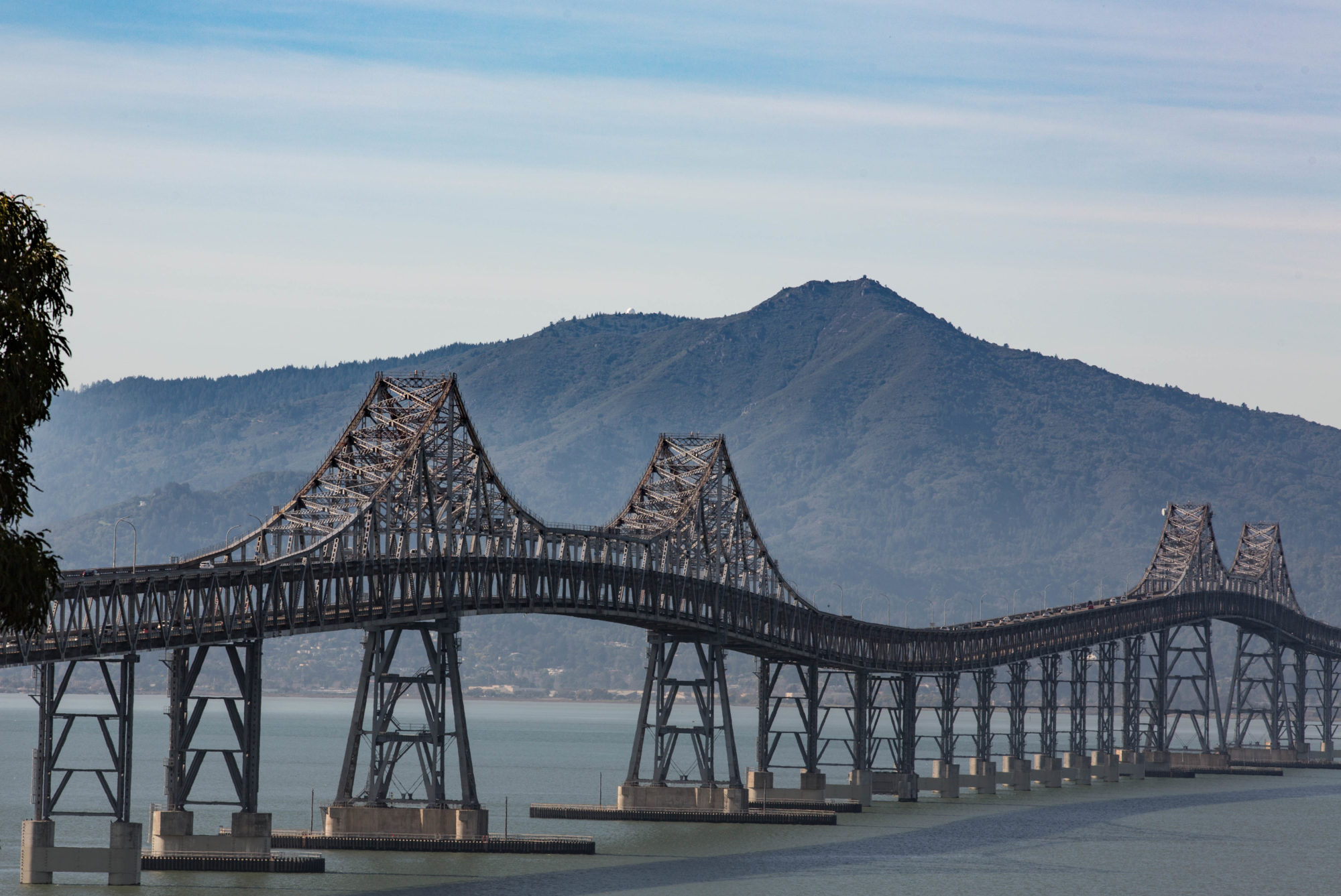
Saturday is the first brevet of the year on the Bay Area randonneuring calendar. “Brevet” and “randonneuring” are French words that mean — well, they mean something about riding your bike a long way (I covered that ground last year about this time). Anyway, first brevet of the year: From the Golden Gate Bridge, north into Marin County and through a string of small towns: Sausalito, Mill Valley, Larkspur, Ross, San Anselmo, Fairfax before riding up west into rolling country out to the Point Reyes Lighthouse, 50-some miles from the start. Then the route returns to the mainland and heads north for a piece, then doubles back, eventually, to the bridge. It’s a 200-kilometer route — the shortest regular brevet distance — about 125 miles. I’m signed up and mostly ready to go.

Just one thing: Here’s what the local National Weather Service forecaster has to say about Saturday:

“EXPECT RAIN TO DEVELOP BY SUNRISE ACROSS THE NORTH BAY AND THEN ENVELOP MOST OF THE BAY AREA BY LATE MORNING. RAINFALL SHOULD EVENTUALLY REACH AS FAR SOUTH AS MONTEREY. … THIS HAS THE POTENTIAL TO BE A MODERATE RAIN PRODUCER … WITH RAIN TOTALS IN EXCESS OF AN INCH ACROSS THE NORTH BAY. … SOMEWHAT BREEZY CONDITIONS ARE LIKELY AS WELL ACROSS THE NORTH BAY ON SATURDAY WITH THE MAIN FOCUS ALONG THE COAST AND IN THE HILLS.”

Well, the upside is that it’s only a bunch of supercomputerized mathematical weather models that say this is going to happen. They could always be wrong.

Technorati Tags:

Berkeley Apostrophe Watch

Californiaapts

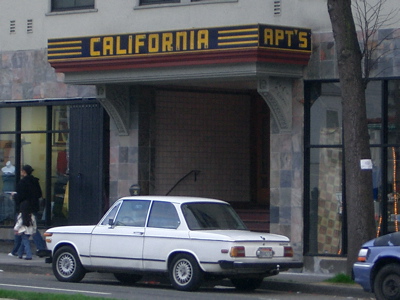
I love the old marquee entrance to this apartment building on University Avenue. I have a vague idea it goes back to the 1920s. I lived in a building a half-block away in 1978, and the manager — Doug, a Briton who said he was a retired race-car driver from way back — told me that it had been put up at the same time as this one, for the same owner, and he put it in that ’20s time-frame. Don’t know whether his report was accurate. Anyway, the APT’S sign survives.

Democracy, Iraq Style

An Iraqi professor, a Kurd, writes harsh things about fellow Kurds who rule their de facto independent state in northern Iraq. Then the liberators show up — our men and women, the Brits, the coalition of the willing, Halliburton, and every U.S. taxpayer — to throw out the Kurds’ long-time persecutor and plant the flag of democracy. The professor returns to his native country, now basking in the light of freedom. He is arrested for the mean things he’s said about the boss Kurds, subjected to a perfunctory trial, convicted, and sentenced to 30 years in prison. The story is in Thursday’s New York Times.

Before I say the obvious — For this we’ve given 2,237 U.S. lives (and counting), spent hundreds of billions of dollars, and required tens of thousands of Iraqis to bear the ultimate price? — let’s consider for a minute: The merchandise we were told we would buy with all that blood and money , the goods our president insists we’re still buying, is American civics-class democracy, transplanted to a grateful nation yearning for its own modestly dressed Miss Liberty. Granted that it’s a ludicrously simplistic expectation — that is at the heart of the administration’s argument for going to war.

Now the fantasy meets the reality that was always waiting. Or, as the Times puts it, straight-man style: Iraq “has made remarkable steps away from totalitarian rule. … But it remains to be seen how far Iraq will ultimately travel toward true Western-style democracy.”

You have to wonder: If people here had been able to see a little way down the road — say to the place we’re standing now — would they have been nearly so satisfied to tell the president to go ahead with his plan? How many look at the mess Iraq is, and will likely remain for decades, and feel satisfied with our handiwork? Will it make any difference on the day that’s sure to come when this president or a successor stands up and tells us there’s another threat we need to extinguish by force of arms?

The War We Can’t See

Sydney Schanberg, the former Times reporter (played by Sam Waterston in “The Killing Fields“), borrows on his Vietnam/Cambodia experience to speculate in The Village Voice on the past, present and future dimensions of the U.S. air war in Iraq:

“Little is known or seen of the air part of the American war of today, in Iraq. One of the reasons is that the press, with less mobility because of security risks, has to be focused on what’s happening on the ground, where the damage, human and material, is taking place. A more crucial reason is that the Pentagon and the CIA prefer to tell us as little as possible about air war operations.

“Recently, but only in bits and pieces, military officials in Washington have acknowledged that after the U.S. and Britain withdraw the bulk of their ground troops, the American air component will be kept in the region to support the American-trained Iraqi ground forces who will be taking over the ground war. While the Pentagon doesn’t say anything about increasing air power in Iraq, other military sources—speaking anonymously because the information is classified—confirm that the plans call for the air war to be beefed up and kept that way for years to come. These sources also point to Iran and its nuclear ambitions as a reason for keeping air power at a high-alert level in the region.

“Since air strikes cause a significant percentage of civilian casualties, the air war’s continuance ensures that the U.S. will wear a bull’s-eye on its back indefinitely in the Middle East. It also means that the American press will have to push harder to provide more detailed and regular coverage of the air war.”

’24’: Jacktracker

Via Gridskipper.com, the Jacktracker:

Using community mapping and picture-sharing sites ‘n’ services, Jacktracker furnishes a global geographic view of the weekly proceedings on “24,” an illustrated plot synopsis (both on a site called Wayfarer) and an accompanying statistical guide (number of killed, wounded, etc.) and reality checker (could Jack could really cover 56 miles in 17 minutes in L.A. freeway traffic?). All very fun and very cool.

How to Win Friends and Monetize People

Just after New Year’s, I got an email from a former colleague. The subject line carried the sender’s name and said, “Do Not Delete.” I recognized the name — we’ll call him Stephen, since that’s his name — though it’s been years, I think, since I last saw him. His message asked for my home address so that he could mail me something. He was a little cryptic about what it might be, saying only that it wasn’t what his mother hoped he’d been sending. (What his mother hopes for, I’m guessing, is a wedding announcement.)

I let the email sit there for a day or two before replying. I sent him my home address, which is publicly available for anyone who wants to spend 10 seconds looking for it, along with a 23-word greeting. Why did I reply? What was I expecting?

I was curious. What was it my non-bosom-pal Stephen wanted to share with me? Maybe he was inviting some old acquaintances to a party of some kind; nothing extraordinary in that. Maybe he had just found out he was terminally ill and wanted to bid his friends goodbye (I’ve never shaken off the shock of getting a flyer in the mail announcing the memorial service for a friend I hadn’t seen for awhile and hadn’t known was dying). Maybe he’d won the lottery and would be showering those most dear to him (me?!) with surprise checks (that’s what I’d have done if I won — I’m sure of it). I didn’t think about it too hard, though, and by the time a big manila envelope from Stephen arrived in the mail last week, I had more or less forgotten about it.

Here’s what was inside:

A one-page letter from Stephen talking about how, after 15 years as a writer and editor, he had changed careers a couple of years ago and gone into real-estate sales. You can probably guess what came next: He talked about how rewarding and challenging his new line of work was. He cleared $6 million in sales last year. And now, he wanted to reach out to his wide circle of buddies and semi-buddies to spread the good news and ask for referrals, either directly from us or from anyone we know who might be contemplating a real-estate deal. For our convenience, he had enclosed his business card.

I’ve got to say this: The letter has as much class as any of its kind can have; which is to say, not much. It was well thought out. It was nicely crafted. It had a friendly tone (I’d quote it, but the message seems to have found its way into the recycling). But at its heart — the mysterious email, the group letter personalized with the salutation “Hi, Brekke!” scrawled at the bottom — the effort was still crass, right out of some playbook on how to “leverage” friends and family as part of creating a successful business enterprise: “I know and like you. You know and like me. I’m in a new business now. Won’t you let me sell you my service? It’ll help you as much as me.”

Don’t get me wrong. First, I’d feel different if I were dealing with someone I’m close to. With a real relationship in place, I certainly wouldn’t resent the suggestion that I might consider using a service, and chances are I’d try to figure out a way to help. Second, I don’t have anything against people who make their living in a tough, unforgiving profession. Sales is brutally direct in its feedback on your product and performance. To do well at it requires a combination of knowledge, preparation, endurance, optimism and perhaps charm with which I, for one, have not been abundantly blessed. Third, I don’t dismiss the advantages of engaging someone you know and trust to help with a daunting business transaction. I got an attorney who played on one of my old softball teams to help Kate and me when we bought our house in the late ’80s. And the last time I wanted to refinance the (same) house, I looked up a former colleague from my last news gig who has since become a mortgage broker.

Would I have gone to either guy if they had first let me know beforehand, the way Stephen did, that they viewed our acquaintance as a sales opportunity? I can’t say for sure, though it’s clear that I have a low tolerance for marketing. For me, the difference is that the only marketing either the lawyer or the mortgage banker did was to be themselves; and until I initiated a conversation about doing business, I never got the feeling either one of them saw me as a potential source of income or our relationship as a resource to be monetized.

Monetizing Democracy

The San Francisco Chronicle’s Sunday opinion section ran a stunning piece today reviewing the rise and fall of the government of Peru’s Alberto Fujimori. More specifically, the story (a cut-down version of an article that ran in the Journal of Economic Perspectives in fall 2004) focuses on how Fujimori’s chief of national intelligence, Vladimiro Montesinos Torres systematically turned the nation’s legislature, judiciary and news media into subsidiaries of the executive. Montesinos set up a bribery network in which everyone who needed to be bought to ensure the administration’s success — lawmakers, judges, media magnates — was paid.

The breathtaking part of Montesinos’s scheme: He documented everything: The people he bribed were required to sign contracts laying out exactly what they’d promised to do for the money they were getting; Montesinos videotaped many of his meetngs with bribe takers (and givers) to ensure he could pressure those who might want to back out of their arrangements. The end to all this came when cable network that had refused bribes got hold of one of the tapes and put it on the air.

The authors, John McMillan and Pablo Zoido (a professor and former student at the Stanford Graduate School of Business, respectively, emphasize the importance Montesinos attached to controlling the media. TV broadcasters and newspaper owners received payments in the millions of dollars to ensure their coverage both promoted the government’s views and attacked the opposition. Montesinos’s contract with one station gave him direct editorial control over its daily newscasts. The media bribes were orders of magnitude larger than anything paid to elected and appointed officials. The rationale was twofold, McMillan and Zoido say:

“The judges’ bribes were one-and-a-half times to four times their official salaries. The politicians’ bribes were multiples of their official income. By contrast, a few thousand dollars a month might not have impressed a wealthy television-channel owner.

“The difference between the news media and the other checks and balances in a democracy is that television, by informing the citizenry, can bring forth the ultimate sanction of citizen reaction. In the absence of citizens’ oversight, there would be little to prevent the government from buying off politicians and judges. …

“…’If we do not control the television, we do not do anything,’ said Gen. Elesván Bello at a 1999 meeting involving Montesinos, high-ranking members of the armed forces and television executives.”

The original McMillan-Zoidos study is available through the Journal of Economic Perspectives (for $11) or from Zoidos’s personal Stanford home page: (PDF file).

Technorati Tags:

This Week’s Sky Highlights

Cimg5109

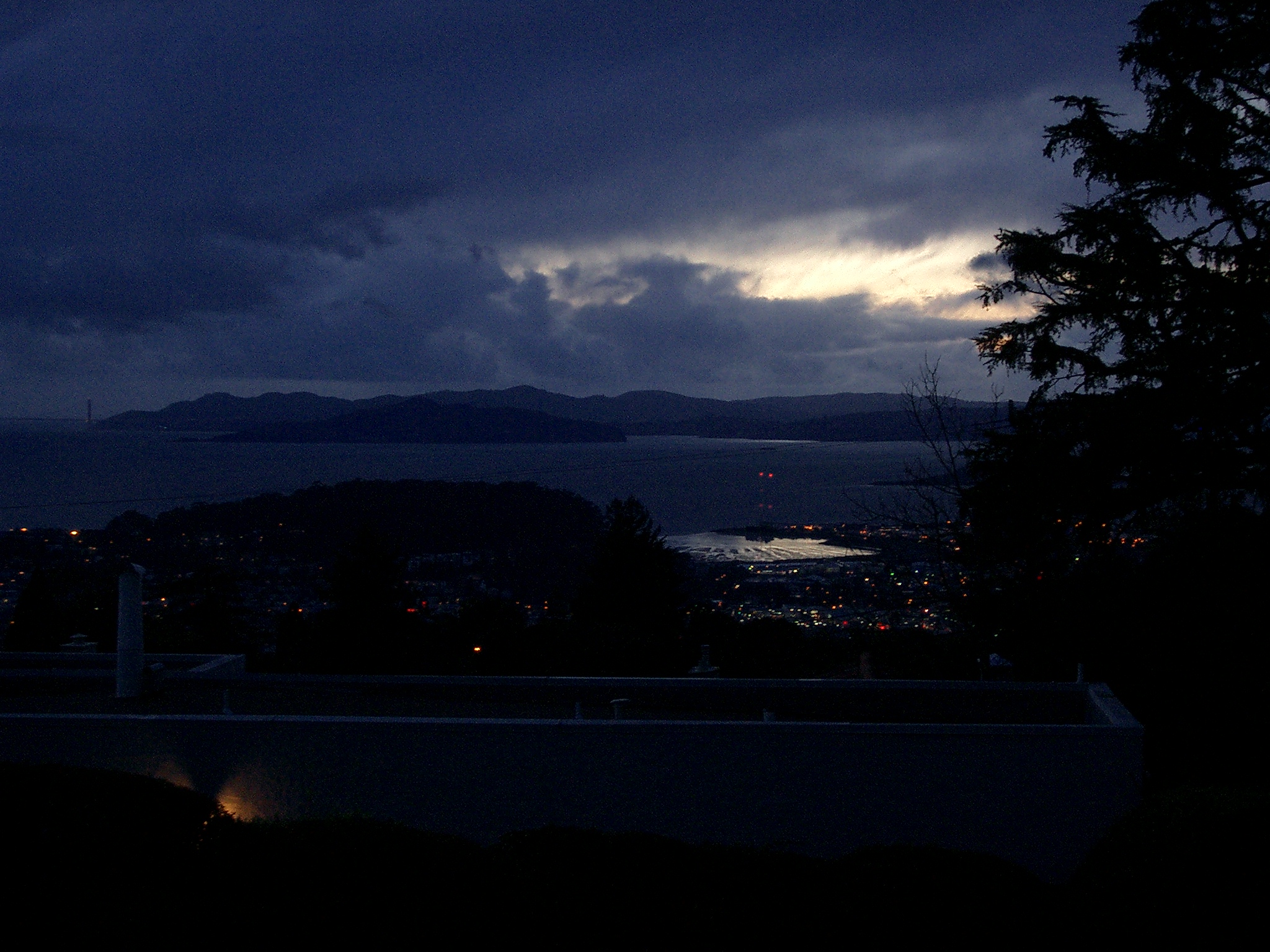
Last Saturday: North Berkeley and Albany from Vassar Avenue, just below Spruce Street, in the Berkeley Hills.

Cimg5132 1

Wednesday, looking east up Virginia Street from McGee Street. A pretty brisk late-afternoon shower opened up just as I walked home from downtown Berkeley.

Technorati Tags: