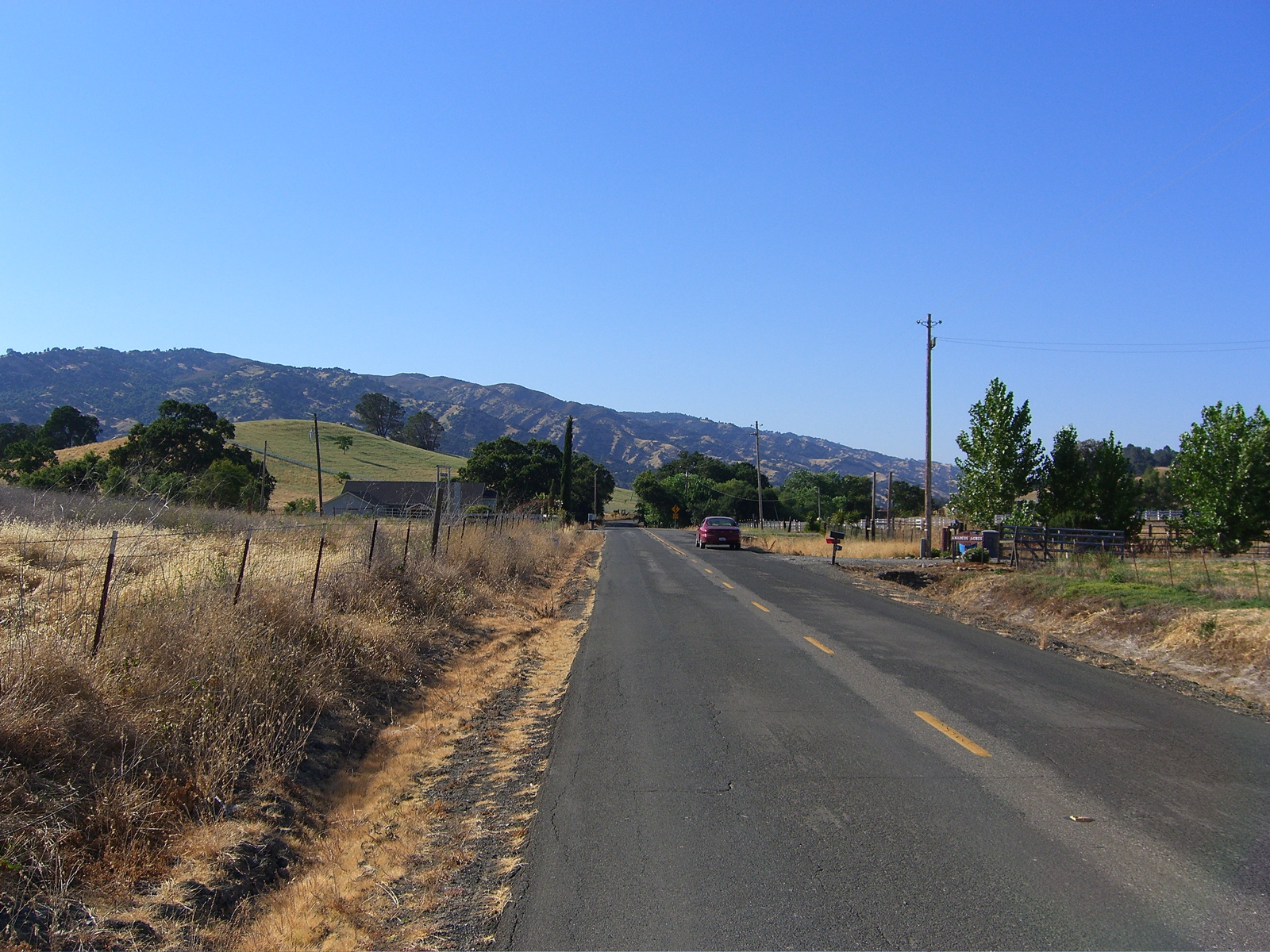
July, California

Pleasantsa070706 Pleasants070706

One of my favorite landscapes: Pleasants Valley Road, running north from the Fairfield/Vacaville area, just north of Interstate 80, up to pretty close to nowhere on state Highway 128. This is one of the places I think of as a real California place: hills and low mountains folded up, the winter’s green grass turned golden in the heat of the early summer, and just three or four miles to the east, the table-flat margin of the Sacramento Valley.

Kate and I were going up to some friends in Fair Oaks, east of Sacramento, on Friday. I took the afternoon and early evening to ride from Berkeley to Davis, about 100 miles the way I go. In the summer, you can count on much warmer weather as you travel from the coast to the interior here. Define “much warmer.” It might be in the low 60s at the beach, low 70s around the shore of San Francisco Bay, and in the low 90s to low 100s as you move from the valleys east of the coastal mountains into the Central Valley. In Berkeley, the transition happens as you cross the hills headed east; there’s a short stretch on one of the roads up there where in the space of 100 yards or so the marine influence vanishes, the temperature rises, the humidity drops, and you’re in the interior.

I could tell Friday’s ride would be warm. It was pushing 80 in Berkeley when I left at 12:30 p.m. I couldn’t have told you how hot it was later, just that it was. Later I saw that the official temperature was in the mid to upper 90s along the route I took; my bike computer’s thermometer, which gets the sun-affected, on-the-asphalt reading, recorded a high of 115.

On my route, you hit Pleasants Valley Road after 65 miles or so. It marks the only place along the way where you have an extended feeling of having left the sprawl truly behind: 13 rolling, twisting miles, orchards giving way to ranches, deluxe estates, and then ranches with orchards. Beautiful even in the heat, though I was less inclined than usual to just drink in the scene.

Technorati Tags: , , ,

Two Bucks

For tonight, at least, I declare the notion of currency is overrated. John, my brother, points out a good Nicholas von Hoffman piece in The Nation on the new United States “embassy” in Baghdad. Another development in plain sight but somehow virtually invisible from these shores:

“Among the many secrets the American government cannot keep, one of its biggest (104 acres) and most expensive ($592 million) is the American Embassy being built in Baghdad. Surrounded by fifteen-foot-thick walls, almost as large as the Vatican on a scale comparable to the Mall of America, to which it seems to have a certain spiritual affinity, this is no simple object to hide.

“So you think the Bush Administration is planning on leaving Iraq? Read on. …”

Yes, read on: Here. By the way, that $592 million price tag — which I’m sure we’ll be able to multiply by two or three or four by the time all is said and done — is two bucks a head for each and every American.

Technorati Tags:

In Port

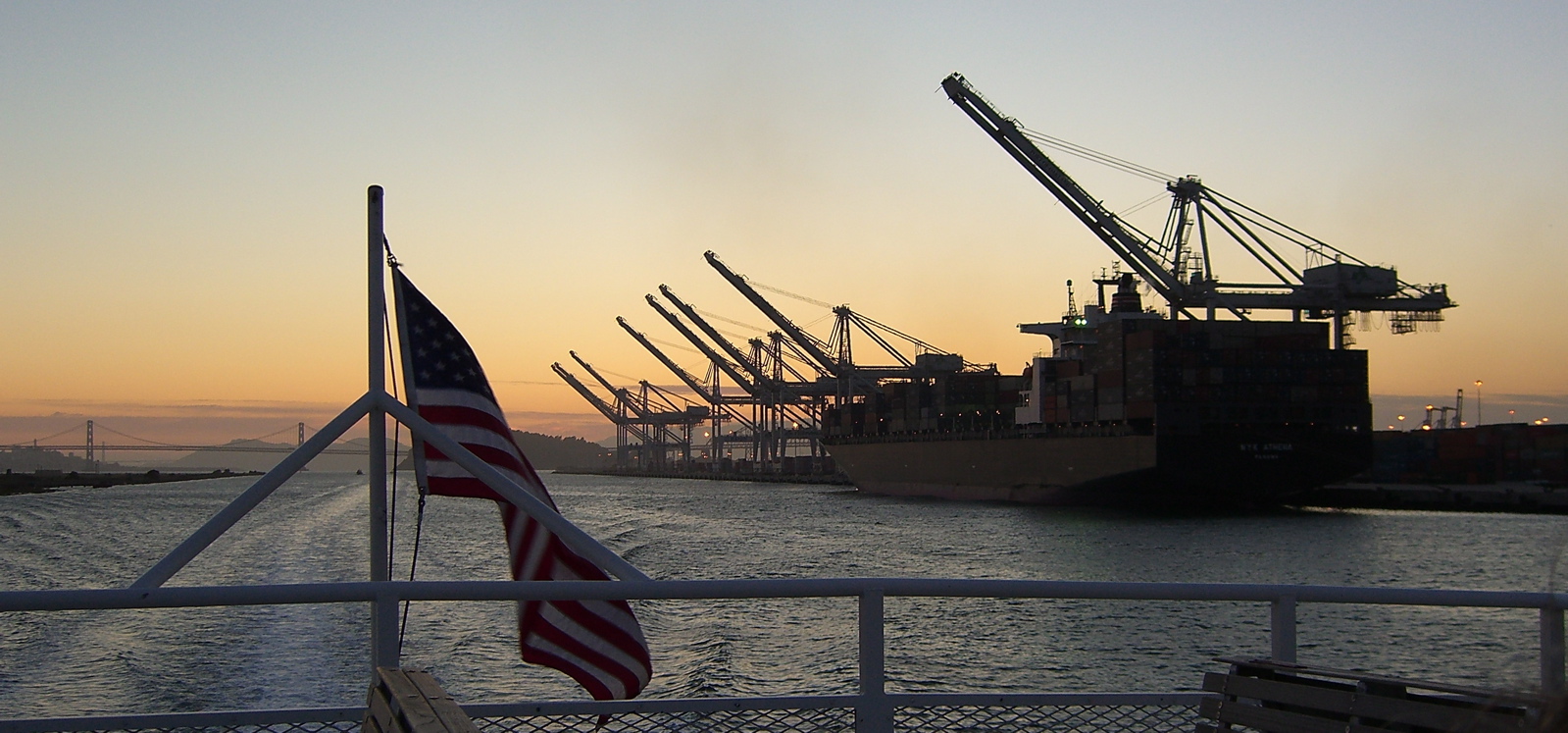
Ferry070506

Oakland ferry

Stern view

Bay Bridge well aft

Cargo carrier Athena and cranes to starboard

July 5

Returning from a San Francisco dinner

Celebrating another’s half-century of excellence

Full ahead

Many happy returns of the day

Technorati Tags: , ,

July Fourth (II)

A New York Times tradition: Publishing an image of the original printed version of Declaration of Independence, complete with John Hancock and others’ signatures. Always inspiring to read when you need to have your civic idealism refreshed, though yesterday I didn’t read the declaration but found myself thinking about the non-PCness of one phrase: “merciless Indian savages” (from this passage: The king “has excited domestic insurrections amongst us, and has endeavoured to bring on the inhabitants of our frontiers, the merciless Indian Savages, whose known rule of warfare, is an undistinguished destruction of all ages, sexes and conditions”).

Later, or earlier — I can’t remember which — Kate pointed out the San Francisco Chronicle’s lead editorial for the day: “Patriots, awaken.” I don’t expect much these days from the mostly tired and uninspired Chron, but its little Fourth of July essay was very good. In part:

“…Perhaps it is the lingering shock effects of Sept. 11, 2001, or maybe it is the complacency of a half-century of growing affluence, but too many Americans seem all too willing to ignore Benjamin Franklin’s admonition about the danger of sacrificing essential liberties for temporary security. The Bush administration has been adroit at invoking the war on terrorism to justify policies that should be setting off alarms in this democracy.

“At what point will Americans draw the line at these intrusions on civil liberties and usurpations of power by the White House? Revelations that the National Security Agency eavesdropped on phone calls and e-mails without getting the required warrants didn’t do it. The disclosure that the government has compiled a vast database of Americans’ phone records didn’t do it. The hundreds of examples of President Bush’s unprecedented expansion of the number and scope of “signing statements” in which he gave himself the option to ignore parts of laws he objected to — such as torture — didn’t do it.

“Just last week, the U.S. Supreme Court struck down the Bush administration’s system for military tribunals at Guantanamo Bay that openly defied congressional law and international rules on the treatment of prisoners of war. So, what was the reaction in Congress? Regrettably, but not surprisingly in this era, there were immediate moves to give the president such authorization. ”

July Fourth (I)

Diablo070406

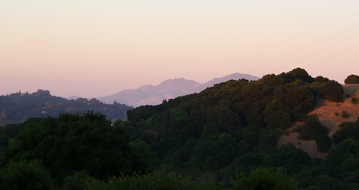
Mount Diablo, from El Toyonal, in the East Bay hills above Orinda. Kate and I took Scout — our dog — up there for an early evening walk on the Fourth of July; the road starts down in the village of Orinda and climbs high up the ridge; the northern section was closed by a slide in 1982 and was never reopened; it’s a great walking and cycling spot that I’d heard lots about but never ridden until my friend Bruce suggested using it as a shortcut to a climb we wanted to do.

Dead Horse Beaten, with Gusto

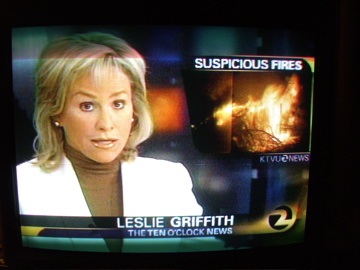
Leslie062906

“An arsonist may be on the loose in Contra Costa County. We’ll tell you about the string of suspicious spires.”

The way it works with TV news shows and anchors is this: A group of writers and producers craft the bulk of the script for the hour or half-hour; the anchors appear on camera and read what has been written for them. The best anchors will write some of their own material. A competent one will go over the script before going on the air and perhaps work with producers or writers to tweak it.

One of the fun aspects of TV newswriting is to learn how the talent — the on-air people — read and talk. You learn by trial and error, by writing something that comes out sounding great or something that causes the talent to trip over the words. If you get to write for the same people long enough, the process is a little bit the way I imagine playwriting might be: The anchor or reporter becomes a character; when you write for them, you’re seeing and hearing them speaking the words on stage, as part of a dramatic production.

The goal in TV newswriting is short, straight-ahead sentences. They’re easy to read and understand. In my single on-air writing and editing gig, for TechTV’s “Tech Live” daily news show, I had to unlearn my habits of inserting all sorts of clauses and parenthetical comments into sentences. Not because TV news writing is dumber by nature, but because those kinds of sentences are harder to read aloud as they scroll up the teleprompter. Those clauses and asides become invitations to falter when they go from the page to oral delivery. That having been said, you learn which talent can handle a complex thought and sentence structure when it can’t be avoided and which ones can’t.

Which brings us to KTVU’s Leslie Griffith. (There’s nothing that makes her stand out from the mass of bad news anchors. She just happens to be one I see fairly often.) On one hand, you’ve got her trademark fumbles and stumbles; “suspicious spires” for “suspicious fires” right off the top of tonight’s newscast, for instance. On the other, you’ve got her tendency to plow through a story with odd pauses, misplaced emphases and out-of-breath gasps — the way most people would sound if they were reading something they had never seen before in public.

What does someone make for a performance like that? Well, the president of the United States makes $400,000 a year. Rumor has it that Leslie makes a quarter-million more than that, though I have to admit that despite her problems, she’s a better reader and hasn’t started a single war during her tenure.

Technorati Tags: , ,

Diversion

“Fiftieth birthday:

From now on,

It’s all clear profit,

Every sky.”

–Issa (from “The Essential Haiku,” translated by Robert Hass)

(And note, my 50th is well past. But others’ — they’re always arriving.)

Diversions

What I meant to be doing this week was doing a long, hard ride in Washington state (3.75 days, 770 miles). But my crash on the 1st and subsequent slow healing took care of that. It’s hardly the next-best or next-worst thing, but the organizers of the ride, the Cascade 1200, have a pretty neat blog going that really gives a good feel for what it’s like out there (and what it’s like out there is: hilly, very hot, and dry. “Very hot” and “dry” aren’t words we normally associate with Washington, which has a pretty solidly entrenched reputation as cool and rainy. But two-thirds of the state lie east of the Cascades, a range that effectively wrings out storms blowing in from the Pacific and Gulf of Alaska; as in California and Oregon, the mountains wall out cool marine air from reaching the interior, so the summers are hot and dry (and maybe a little more so than usual right now with a high-pressure system keeping rain out of the entire Pacific Northwest).

***

Saturday, when I thought I’d be up near Seattle, riding down the western flank of the Cascades, I was up in the Napa Valley with my friend Pete, doing a short ride. The main event of the day occurred after we got off the bikes, though. Pete and his 6-year-old son, Niko, built a wood-fired stove in their backyard for pizza and bread-baking. A pretty amazing father-son project, the result is absolutely gorgeous. The only question was: Would it work? On Saturday, we dismantled and burned about half of an old oak wine barrel in getting the thing good and hot (nothing’s more fun than an outdoor fire, especially if you can keep it under an acre). Then Niko and Pete made some personal-size pizzas. Then we ate and ate and ate. (Pete blogged the event, complete with pictures).

Today, 130 Years Ago

June 25, 1876:

“Crazy Horse did not behave as usual. Ordinarily he was composed, even when battle was imminent, but it is said that this morning he rode back and forth, hurried into his lodge, and quickly reappeared with his medicine bag. After moistening one hand he dipped it in maroon pigment and printed a hand on each side of his pony’s hips. On both sides of the neck he drew an arrow and a bloody scalp. All of which suggests intuitive knowledge of things to come, or else he had been talking with Oglala scouts who told him what to expect. Most Indians, however, seem to have felt secure in the belief that only a great fool would attack. …

“Rain in the Face had been invited to a feast. The guests were eating when they heard bluecoat guns, which did not sound like their own. Rain habitually carried a stone-headed war club, even to parties, but he rushed back to his lodge for a gun, his bow, and a quiver of arrows. Then … he and his friends saw troops on the eastern ridge. While riding against these troops they discovered a young woman — Tashenamini, Moving Robe — riding with them. Her brother had been killed … and now she was holding her brother’s war staff above her head. Rain declared that she looked as pretty as a bird. ‘Behold, there is among us a young woman!’ he called out, because this would make everybody brave. ‘Let no young man hide behind her garment.’

“Custer’s soldiers were almost surrounded by the time Rain got there. They had dismounted, he said, but climbed back on their horses, dismounted again, and split into several companies. They were shooting very fast. After a while some of them began riding toward Reno’s troops, but Indians followed them like blackbirds following a hawk.”

–“Son of the Morning Star,” Evan S. Connell (1984)