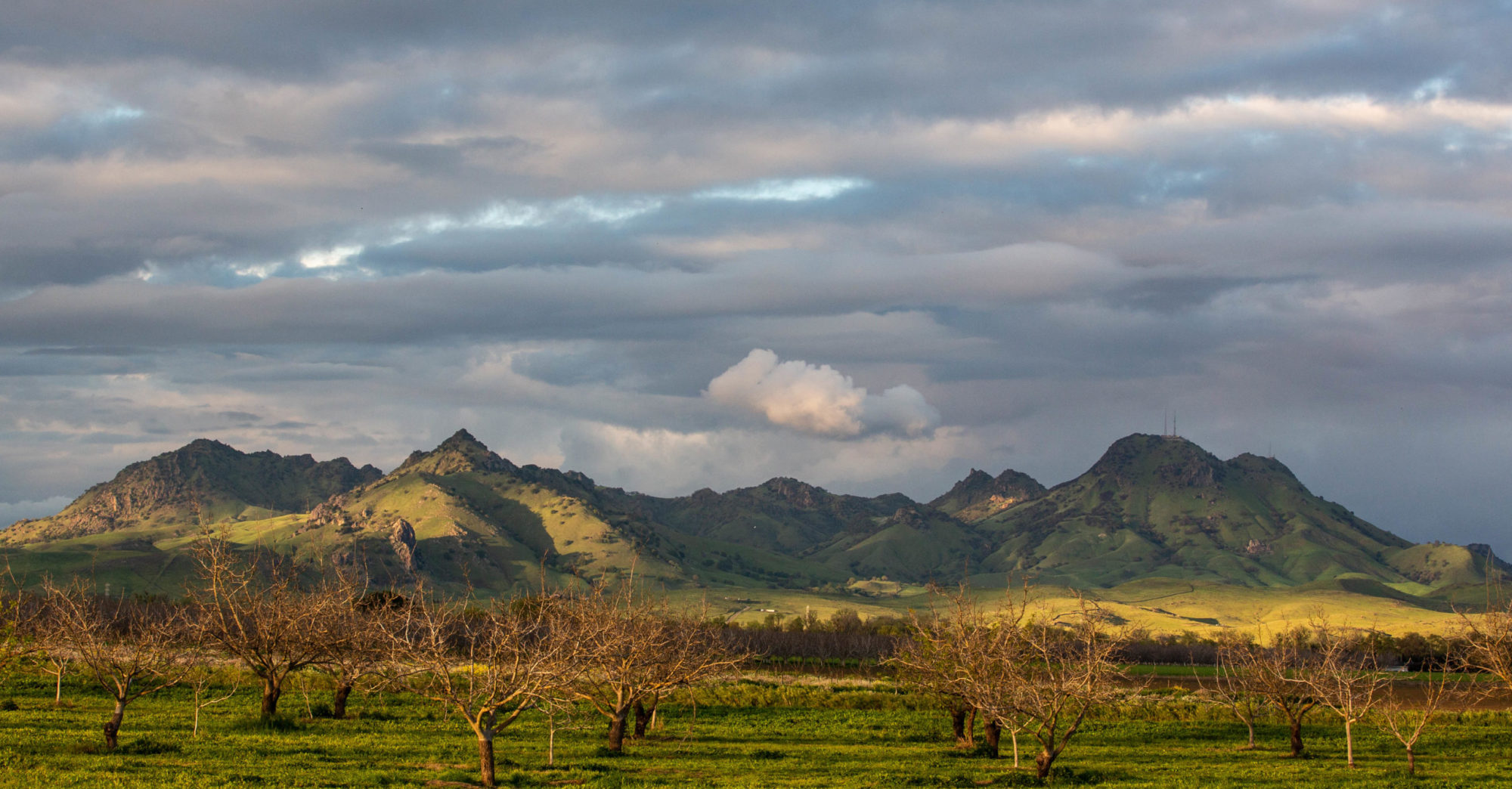
Anatomy of a Toot

As promised, photographic documentation of what’s called locally “a toot.”

But having spent two hours posting 11 pictures in that little photo album, I’m reminded why I don’t do it more often. I mean, it takes two hours. Part of the problem is the seeming inflexibility of the TypePad photo albums: The pictures appear on your working site in the reverse order you chose them; when you post them, they appear in reverse order again — or, to look at it another way, in the same order you orginally picked them. That always confuses me and I wind up writing absurdly prolix captions (also time consuming) that are supposed to have some sort of narrative order but come out rather jumbled. The current effort’s a case in point. Could be that later I’ll go back in and try to fix my fractured storytelling. But for now: Bed.

Brief Road Blog

In Chico (just west of Paradise) after a quick un-air-conditioned ride up Interstate 5 in a red ’93 Honda Civic hatchback (aka “The Machine Messiah) to visit a Sacramento Valley monastery celebrating its 50th anniversary. Temperature: 106. Relative humidity: 9 percent. The backstory: The monastery figures in a long tale involving Leland Stanford (in a cameo), William Randolph Hearst, and a 12th century Spanish abbey. I’ll relate all — as many others have done — later. With dramatic photographic evidence.

August 6

At the tail end of the day — actually, tale end would work just as well — a moment’s pause to acknowledge the Hiroshima anniversary.

On one of the bike club email lists I subscribe to, one mostly for Berkeley folks and our ilk, one member sent out a mildly worded note that he planned a ride out to Lawrence Livermore National Laboratory today to reflect on “human intelligence and human stupidity.” Good for him. Then, to underline his feelings, I guess, he appended a simplistic screed copied and pasted from someplace on the Web that declared that the nuclear attacks on Hiroshima and Nagasaki were the “two worst terror acts in human history.”

That set off a chain reaction of responses that fell into two familiar camps:

–It was essential to use the bomb to avoid the slaughter that would have attended a U.S. invasion of Japan’s home islands. And besides, war is hell. And here were similar or worse atrocities and mass deaths during the war, some due to Allied bombing.

–Japan was about to collapse. The argument about preventing mass casualties is a myth. The bombings were entirely avoidable and amount to mass murder, plain and simple.

At one point, I would have veered toward the second camp. And I still can’t accept there was no acceptable alternative to dropping the bomb on a virtually defenseless civilian target. That being said, it’s disappointing that the discussion is reduced to such absurd oversimplifications and dominated by the need for an uncomplicated answer.

Easy for us, most of whom have no direct experience of the magnitude of violence unleashed in modern warfare to try to justify or condemn the bombing. The reality was terrible, and terribly complex. Just one example: The immediate backdrop to the bombing was the battle of Okinawa. Three months. Two hundred fifty thousand killed; 100,000 civilians killed. There was good reason to dread the next step in an invasion of Japan.

As I said, I can’t buy that dropping the bomb was the only option. But what did the decision really come down to? Callous disregard for life? Desire to avoid sacrificing U.S. troops in a bloody invasion? Reckless use of a lethal and perhaps imperfectly understood technology? Lasting animosity for a nation that hit us with a sneak attack? Underlying racial and cultural hatred? Desire to show the Soviets what would be in store for them if they got out of hand? Impulse to do something, anything to finish off a fierce and much-feared enemy?

I choose all of the above.

My Call to Stanley Kunitz

Yesterday, Stanley Kunitz was possibly the only 99-year-old former U.S. poet laureate with a listed phone number. That’s no longer true. He turned 100 today. I tried the number to see if it is really his. If someone had picked up, I was going to say “happy birthday” or “sorry, I must have dialed the wrong number” if my nerve failed me. But there was no answer. From the centenary stories I’ve seen, he spends his summers in Massashusetts.

Well, happy birthday, anyway. Honestly, I don’t know his work well and don’t think I’d ever read any of it before I heard him read a poem called “The Layers” when he was interviewed on the “NewsHour” a few years ago. What got my attention was how forceful this man of 95 sounded:

Q.: … You’ve said that a poem is present even before it’s written down.

Kunitz: Yes. I think a poem lies submerged in the depths of one’s being. It’s an amalgamation of images, often the key images out of a life. I think there are certain episodes in the life that really form a constellation, and that’s the germinal point of the poems. The poems, when they come with an incident from the immediate present, latch on to those images that are deep in one’s whole sensibility, and when that happens, everything starts firing at once.

Q.: And how have you kept in touch with that? How have you stayed so intellectually and physically vital all these years? You’ve been… you have a poem in this book that goes back to 1914. … How have you done that?

Kunitz: Because I haven’t dared to forget. I think it’s important for one’s survival to keep the richness of the life always there to be tapped. One doesn’t live in the moment, one lives in the whole history of your being, from the moment you became conscious.

A Cyclist, 1884

“In appearance, he was anything but a holiday wheelman. Brown as a nut, and mud-bespattered, all surplus fat had been worn off by his severe and protracted work. His blue flannel shirt was a deal too large for him and much weather-stained. His knickerbockers had given way to a pair of blue overalls, gathered at the knees within a pair of duck hunting leggings, once brown, but now completely disguised as to texture and color by heavy alkali mud.”

Description of Thomas Stevens in Cheyenne, Wyoming, during his transcontinental bicycle “ride” (he pushed his cycle nearly as much as he pedaled it) in 1884. I wanted to read about Stevens because his trip began in Oakland. An account of his journey appears in an 1887 book called “Ten Thousand Miles on a Bicycle,” by Karl Kron; Kate got me a facsimile reprint a few years ago.

Naturally, I did a little search for more information on Stevens. The very first Google listing brings up an account from Harper’s Weekly with an illustration of someone considerably less weather-beaten than the character described above. Kron’s account mentions that Stevens took his bicycle across the Atlantic the following spring and set out across Europe and western Asia, getting as far as Tehran, Iran, before winter weather stopped him. The Wikipedia account discloses the next chapter (and what happened to Stevens’s bike much, much later): He made it to Japan and sailed back to San Francisco in 1886, the first person, apparently, to have cycled around the world.

And finally, Stevens’s own story of his journey is online, thanks to Project Gutenberg. Here’s how the ride starts:

“With the hearty well-wishing of a small group of Oakland and ‘Frisco

cyclers who have come, out of curiosity, to see the start, I mount and

ride away to the east, down San Pablo Avenue, toward the village of the

same Spanish name, some sixteen miles distant. The first seven miles are

a sort of half-macadamized road, and I bowl briskly along.

“The past winter has been the rainiest since 1857, and the continuous

pelting rains had not beaten down upon the last half of this imperfect

macadam in vain; for it has left it a surface of wave-like undulations,

from out of which the frequent bowlder protrudes its unwelcome head, as

if ambitiously striving to soar above its lowly surroundings. But this

one don’t mind, and I am perfectly willing to put up with the bowlders

for the sake of the undulations. The sensation of riding a small boat

over “the gently-heaving waves of the murmuring sea” is, I think, one

of the pleasures of life; and the next thing to it is riding a bicycle

over the last three miles of the San Pablo Avenue macadam as I found it

on that April morning. …”

A Stillness in Iraq

It’s been quiet lately in Iraq, what with last week’s baseball All-Star Game, the Karl Rove Affair, the coming-party for our next Supreme Court guy, and the new Suzanne Somers show on Broadway.

Every once in a while you hear something, though. Maybe it’s a suicide bomber blowing up a gasoline tanker, immolating himself and scores of others. Or the raucous debate surrounding the birth of Iraq’s new democracy, complete with reduced constitutional rights for non-men. Or the insistent thump of improvised explosive devices and car bombs and other detonations (the “coalition” toll this month: 28 dead). Or the nearly inaudible sound of our future mortgaged to war (price tag for our crusade on evil-doers so far: $313 billion, and get ready for much, much more). Or the utter silence of the 24,865 Iraqi civilians who have died in the war.

Quiet week.

‘Jeopardy’ Almanac

–European history for $1,000, Alex.

–According to an Irish ditty, every July 12th, Bob Williamson played this colorful instrument to the accompaniment of a drum.

(All respectful answers will be entertained. Remember: Put them in the form of a question.)

–I’ll take European history for $2,000, Alex.

–Of this day, France’s Louis XVI wrote in his diary, “Rien.” (“Nothing.”)

(All respectful answers &c. &c.)

For Final Jeopardy, give the years attached to each notable date above.

July 2, 1863

An account of one incident on Gettysburg’s second day from Shelby Foote, who died earlier this week (Slate published this analysis of his complex place in Civil War lore and historiography on Friday):

“[Union General Winfield Scott Hancock] ordered Gibbon and Hays to double-time southward along the ridge and use what was left of their commands to plug the gap the rebels were about to strike.

“He hurried in that direction, ahead of his troops, and arrived in time to witness the final rout of Humphreys, whose men were in full flight by now, with Wilcox close on their heels and driving hard for the scantily defended ridge beyond. As he himself climbed back up the slope on horseback, under heavy fire from the attackers, Hancock wondered how he was going to stop or even delay them long enough for a substantial line of defense to be formed on the high ground. Gibbon and Hays ‘had been ordered up and were coming on the run,’ he later explained, ‘but I saw that in some way five minutes must be gained or we were lost.’ Just then the lead regiment of Gibbon’s first brigade came over the crest in a column of fours, and Hancock saw a chance to gain those five minutes, though at a cruel price.

” ‘What regiment is this?’ he asked the officer at the head of the column moving toward him down the slope.

” ‘First Minnesota,’ Colonel William Colvill replied.

“Hancock nodded. ‘Colonel, do you see those colors?’ As he spoke he pointed at the Alabama flag in the front rank of the charging rebels. Colvill said he did. ‘Then take them,’ Hancock told him.

“Quickly, though scarcely a man among them could have failed to see what was being asked of him, the Minnesotans deployed on the slope … 262 men present for duty … and charging headlong down it, bayonets fixed, struck the center of the long gray line. … The Confederates recoiled briefly, then came on again, yelling fiercely as they concentrated their fire on this one undersized blue regiment. The result was devastating. Colvill and all but three of his officers were killed or wounded, together with 215 of his men. A captain brought the 47 survivors back up the ridge, less than one fifth as many as had charged down it. They had not taken the Alabama flag, but had held onto their own. And they had given Hancock his five minutes, plus five more for good measure.”

July 1, 2005

Iraq, 835th Day:

“… It is indeed better to fight here. If Iraq has become a training ground for terrorism, so be it. It is then fortunate that the best military in the world just happens to be here ready to locate, close with, and destroy them before they spread. Here in Iraq we are a target for terrorism. Good! They know where to find us, and we invite them to do so. We are wining this fight. One shot at a time. One block at a time, one pair of shoes on a child’s feet at a time, one vote at a time, one free election at a time. To a soldier this is simply duty, nothing more. To the Iraqis, this is a gift, paid with the blood of youth, paid for in missed anniversaries, paid for in bitter combat, paid for in the hopes and dreams of Americans being forever extinguished on streets called, Haifa, and 60th, in towns called Dora, and Karadda. In a country called Iraq, in a place once called the cradle of civilization. We are the light by which the new democracy of Iraq will traverse through the darkness. We are Americans!”

From a U.S. soldier’s blog: Si Vis Pacem, Para Bellum

July 1, 1863

Gettysburg, First Day:

“… Wadsworth’s division was falling back…, the rebs pushing rapidly on and cheering. They were also attacking the Eleventh Corps at the same time. The Cashtown Road being our most important point, each one had aimed to take care of it. Robinson had ordered Stewart (Battery B, 4th US) to take post on each side of the railroad. Doubleday had ordered Stevens (Battery E, 5th Maine Artillery) from where I had placed him at the left to the road itself. Cooper (Battery B, 1st Pennsylvania) had his four guns immediately in front of the main building… Thus there eighteen pieces on a frontage of not over two hundred yards. But there was no time to make changes, for the rebs were coming steadily on down the ridge in front only five hundred yards off and all the guns were blazing away at them as lively as possible. In a little time I went to the right and front of (Lieutenant) Wilbur’s section, one piece of which was on the Cashtown Road. I found Lieutenant Davison had thrown his half of Battery ‘B’ around so as to get an oblique, almost enfilading fire on the rebel lines. His round shot, together with the canister poured in from all other guns, was cutting great gaps in the front line of the enemy. But still they came on, the gaps being closed by regiments from the second line, and this again filled up a third column which was coming over the hill. Never have I seen such a charge. Not a man seemed to falter. Lee may well be proud of his infantry; I wish ours was equal up to it.”

–From “A Diary of Battle, The Personal Journals of Colonel Charles S. Wainwright, 1861-1865