The closing lines of “A Child’s Christmas in Wales.” My favorite part of one of my favorite poems. Merry Christmas, wherever you are on this Christmas night.
… Always on Christmas night there was music.
An uncle played the fiddle, a cousin sang
‘Cherry Ripe,’ and another uncle sang ‘Drake’s Drum.’
It was very warm in the little house.
Auntie Hannah, who had got on to the parsnip
wine, sang a song about Bleeding Hearts and Death,
and then another in which she said her heart
was like a Bird’s Nest; and then everybody
laughed again; and then I went to bed.
“Looking out my bedroom window, out into
the moonlight and the unending smoke-colored snow,
I could see the lights in the windows
of all the other houses on our hill and hear
the music rising from them up the long, steadily
falling night. I turned the gas down, I got
into bed. I said some words to the close and
holy darkness, and then I slept.”
Welcome to live coverage of the 19th Annual Holly Street Luminaria and Festival of Wonders.
No, I won’t keep that up for long. But it is the 19th year we’ve done the luminaria here. And unlike that first year (1992, for the historically minded), dozens of blocks surrounding us and many in other neighborhoods are having their own light celebrations tonight.
So, here’s a running account (below the slideshow):
[Christmas night: So much for the live blog. What happened was we set up our table in the driveway, as usual, to serve hot cider (and treats from many neighbors), and that was that. I spent the next three hours or so out there. Dozens of people came by, and we ladled up about three gallons of cider.
After that, I came inside and posted some pictures. And after that, we drove around North Berkeley with the Martinuccis, our long-ago co-conspirators in the luminaria game, to see where we might find them. We saw some as far north as Solano Avenue and Tulare Street, as far south as Ohlone Park at McGee and Grant streets, as far east as Martin Luther King Jr. Way and Vine Street, and as far west as Stannage Street between Hopkins and Page. The extreme northern and western points were not connected to our neighborhood, but someone out there has ideas about this.
When we were finished with the drive, a couple people in the van were nodding out. Kate and I came home, wrapped some presents while a Season Five episode of “Lost” played, then went to bed. This morning, there was nothing to do but pick up bags from the street, then go on with our holiday.]
6: 20 p.m. The first sign of the luminaria was reported this morning by Kate, who saw a block on California Street, around the corner from us, marked at 7 a.m. That was somebody getting a very early start. And tonight, bags are out and lit already on Cedar and California streets. Our street? Well, across the way, the Martinuccis and other neighbors are folding bags. We’re getting our cider ready, and have the table set up in the driveway. The sidewalks are marked.
With a dry day and an early shift at work, and inspired by seeing our across-the-street neighbors hanging lights in their big front-yard oak, the pieces fell into place for me to put up our Christmas lights late this afternoon and this evening. Yes, the job was stretched by having to run to the store to replace a couple of strands of dead or mostly dead lights.
After dark, another neighbor was stringing lights along her porch. And some friends across the street had their full holiday show on. And just in time for the first nights of winter and the longest nights of the year.
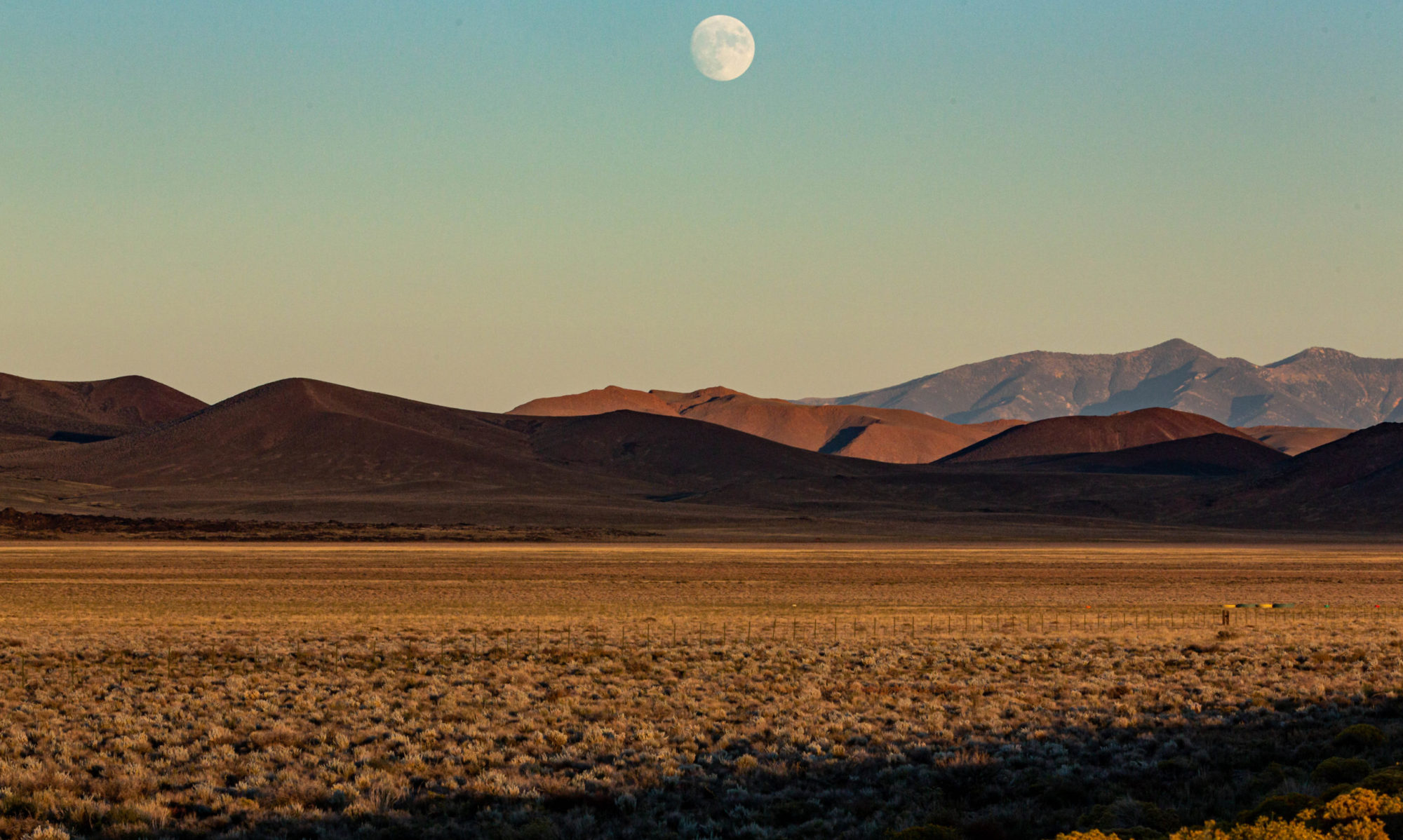
It’s been cloudy most of the day here, creating some minor suspense about whether tonight’s eclipse will be visible.
Well, at least the start of it is–despite appearances, the shot above is through some high clouds. No telling when the thicker cloud cover will return. The shot immediately below: a few minutes later, as the clouds got a little thicker. And the last, about an hour after the first, and just a few minutes before the eclipse was supposed to enter it’s “total” stage. Thing is–down here in the Berkeley flatlands, anyway, that’s when the clouds really moved in. I have to be up early, so no late-night moongazing to see if it re-emerges.
The Sunday morning walk with the dog talk us through the rain to University Avenue (coffee stop) then to Strawberry Creek Park, just to the south of University along the old Santa Fe Railroad right of way. When I first visited the neighborhood, back in the mid-1970s, the former rail route was just a flat, brushy expanse. Then the city came up with the money to turn it into a park. Part of the project was to daylight Strawberry Creek, which tumbles down from the hills above the University of California, through the campus, then (for the most part) under central Berkeley. When the park was new, it seemed kind of barren. When the creek was freed from its culvert, it was engineered with a couple of nice aesthetic bends and short drops, though the banks were lined with unaesthetic slabs of broken concrete. All this time later, trees and shrubs have grown up and the place has a nice, green, lived-in air about (maybe a little too lived-in, to be honest–not everything’s pristinely maintained).
Anyway, there we were by the creek, listening to the water spill down the channel. From nowhere, Kate come out with: “The impeded stream is the one that sings.” She has a great memory for poetry and lyrics and still surprises me with her ability to produce the apt quotation.
” ‘The impeded stream is the one that sings,’ ” I said. “Who said that?” Kate didn’t know, but I offered that it sounds like Thoreau. She didn’t think so, and looked it up when we got home. It’s from Wendell Berry, a poem called “The Real Work”:
“It may be that when we no longer know what to do
we have come to our real work,
and that when we no longer know which way to go
we have come to our real journey.
The mind that is not baffled is not employed.
The impeded stream is the one that sings.”
I think that I shall never see A poem lovely as a tree.
And surely there's no harm in Calling a tree "live standing carbon."
Yea, verily we are far from the world of Joyce Kilmer, the only man I've ever heard of named Joyce, a poet whose career was cut short by a sniper's bullet during the waning months of World War I. Back in his day, one might rhapsodize unironically about trees and not be called a tree-hugger. Back in his day, whole forests could be brought crashing to the ground and few in the wider world would doubt it was the sound of progress.
We're wiser now. Look at California. We've got a law on the books that mandates that we cut our greenhouse gas emissions. We're about to embark on a new carbon "cap and trade" system that recognizes the value of forests. So it is that later this week, when the California Air Resources Board meets to consider adopting the cap and trade protocols, trees will turn into "standing live carbon" and forests will become places where the market stores carbon. I'll hardly think of those big wood things the same way.
According to some who have studied the Air Resources Board's plan (131-page PDF) for using forests as an offset opportunity for we who pollute elsewhere, the plan appears to reward the timber industry for clear-cutting forests and "improving" them with species that store more carbon. A single company that might benefit from this arrangement: Sierra Pacific Industries, which has long been the bete noir of those who believe that chainsaws, bulldozers, tree plantations, and biodiversity don't mix.
But apparently, the head of the air board, Mary Nichols, thinks they can co-exist profitably. A story on KQED's California Report today quoted her as saying the board's plan seizes on "an opportunity to actually improve the management of forested land and to make a contribution to the health of the forests and the atmosphere." (Speaking of the atmosphere, the board's "Improved Forest Management" protocol appears to exclude the effect of running heavy machinery as part of the overall emissions cost of "improvement" projects.)
Mark Schapiro, a reporter with the Center for Investigative Journalism in Berkeley, is publishing a new story on the board's forest plans this week. On The California Report today, he summarized the controversy over the air board's work this way: "What the protocol does not do is take further measures to preserve forests, and that's where you have the central tension right now: having as a goal purely the storage of more carbon in trees versus the idea of preserving the biodiversity and the larger ecological function of forests."
Word was out toward the end of last week that coho salmon had appeared in Lagunitas Creek and tributaries in western Marin County, to the north and west of us here in Berkeley. Coho are endangered on our part of the coast, so their annual appearance is an occasion; and also a rarity, because Lagunitas Creek has one of the few viable wild population on the north-central California coast. I had heard that the fish–were talking about five dozen fish so far–were spawning both in the main creek and in a couple of tributaries: San Geronimo Creek and Devil’s Gulch Creek. San Geronimo flows into Lagunitas Creek after skirting several small West Marin townlets and passing a golf course; to get into San Geronimo Creek, the salmon (and the steelhead trout who migrate later in the season) have to make their way up a series of low falls and rapids called the Ink Wells. With few salmon returning the last couple of years, very few have made it up there, but this year maybe 30 fish have gotten past the barrier and started to spawn.
Devil’s Gulch Creek was an unknown to me and appeared on maps to be a tiny little thing. Frankly, it’s hard to imagine big fish going some of the places these big fish want to go. I was told a few days ago by a watershed biologist that salmon were spawning in Devil’s Gulch, though, so I went this afternoon to check it out (yes–the sad truth is that for all my interest in California salmon, I’ve never seen truly wild fish spawning).
I didn’t see any today, either. But I can confirm the creek is small, rocky, and full of the things that biologists say the coho need: gravel beds (for spawning) large woody debris (to provide refuge for growing salmon in the year-plus they’ll spend in the stream before migrating to the ocean), and lots of shade (to keep the water cool–salmon don’t tolerate warm water). Next time I’ll try to give myself more than the tail end of daylight to conduct my explorations (it was pretty much dark when I got back to the car).
(Picture above: Devil’s Gulch creek, just upstream from the Sir Francis Drake Boulevard bridge–you can see the road in the background. Here’s a Flickr Devil’s Gulch slideshow.).
More than a day of a sort of strange, dripping-down rain. It reminded me of a long-ago hitch-hiking trip down the coast side of the Olympic Peninsula in the middle of winter, but warmer, and with no rain forest. Kate drove off to work in the fog. I went outside to snap a couple of pictures and ran into a couple of neighbors. All of us had some variation on the same thing to say: “What a beautiful morning.” Gray. Foggy. Drippy. And yes, beautiful.
The public radio station where I work–its call letters begin with a K and end with D and also include an E and a Q, though not necessarily in that order–is blogging. Our Sacramento bureau chief has a blog. We have a project called Climate Watch that has a blog. Over the summer, we started a daily general news blog. As part of a nationwide NPR effort called Project Argo, we’ve launched a blog on education technology. I’ve written occasionally for most of them; in fact, on a day I was standing in for our regular news blogger, I got a chance to post something on odd developments in California’s high-speed rail project (“High-Speed Rail’s Central Valley Section: Build It and Who Will Come?“).
Yesterday, I was the designated blogger for another project: producing a “live” (i.e., continuously updated) account of the proceedings in the federal appeals court hearing on California’s Proposition 8 (that’s the 2008 initiative that essentially overrode an earlier state Supreme Court decision and banned same-sex marriage).
I live-blogged a couple of baseball games (here, here, and here) during the Giants playoff run. It’s fun, a way to play sportscaster and mine one’s rich store of deeply internalized sports idioms. Live-blogging a court hearing during a case that rests on some highly technical issues and lots of people care about? It’s not exactly second nature.
But here’s the result: Proposition 8 Appeals Hearing: Live Blog. The hearing was two and a half hours, and it went by in a blur. While it was going on, I felt like I was battling to keep up. Reading it now–not bad. I did better than the lawyer for the deputy clerk of Imperial County, anyway (see the top part of this post).
On our Saturday morning walk, which takes us through the school garden at King Middle School, Kate spotted the apparition above pictured. We’ve seen this sort in our neighborhood before. It’s a latticed stinkhorn, also known as Clathrus ruber. (Why stinkhorn? The organism reportedly smells like rotting flesh. “Reportedly”–I haven’t had the pleasure myself). The orange fungi apparently emerge from the white objects you can see on the ground nearby. (Here’s a nice collection of pictures from that shows the stinkhorn in various stages of development. Note the plea for advice on how to eradicate them.)